Writing long-form content is not just about putting words together; it is about keeping readers interested from the first paragraph to the last. Whether you are writing detailed blog posts, website articles, guides, or book manuscripts, maintaining quality throughout a lengthy document can be challenging. Repeated phrases, overused words, complex sentences, inconsistent writing styles, and unnecessary passive voice can gradually affect readability and make even valuable content difficult to follow.
This is where a structured editing process becomes important. Effective long-form content editing goes beyond correcting grammar and spelling. It involves reviewing sentence structure, improving sentence variation, removing unnecessary repetition, simplifying complicated expressions, and maintaining consistency across the entire document. The goal is not to make every sentence sound different but to ensure that each one communicates its intended message clearly.
Tools such as ProWritingAid can support this process through writing reports that highlight repeated phrases, sentence structure patterns, readability issues, sticky sentences, and consistency problems. These insights can help writers identify areas that may need attention before publishing. However, automated suggestions should always be reviewed carefully to preserve the original meaning and natural writing voice.
At Technology Moment, we explore practical writing tools and digital solutions that help creators work more effectively. In this guide, we will explain how to edit long-form content systematically, identify common writing problems, and use ProWritingAid’s editing reports to improve repetition, sentence structure, readability, and manuscript consistency. Whether you are a blogger, author, or content editor, these techniques can help you produce clearer, more polished, and reader-friendly content.
What Is Long-Form Content Editing and Why Does It Matter?
Long-form content editing is the process of reviewing and improving detailed written material, such as blog posts, website guides, research articles, reports, and book manuscripts. Unlike basic proofreading, which mainly focuses on spelling, grammar, and punctuation, content editing examines how effectively the entire document communicates its message. It involves checking sentence structure, paragraph flow, word choice, readability, repetition, and writing consistency. The objective is to make lengthy content easier to understand while preserving its original meaning and the writer’s natural voice.
As a document becomes longer, maintaining quality across every section becomes increasingly difficult. Writers may unintentionally repeat the same words, use similar sentence openings, introduce unnecessary explanations, or switch between different writing styles. These issues can affect readability and make an otherwise informative article feel monotonous. This is particularly important for authors, bloggers, and content editors who regularly work with long manuscripts or publish detailed online resources. Effective long-form writing editing helps maintain reader engagement without removing valuable information.
A reliable editing process also considers sentence complexity and communication clarity. For example, a sentence containing several unnecessary clauses may make a simple idea difficult to understand. Similarly, excessive passive voice can sometimes make explanations less direct. Reviewing these elements helps writers improve sentence clarity, strengthen paragraph connections, and communicate important information more effectively. Readability scores and sentence structure analysis can provide additional insights into areas that may require attention, although these measurements should support editorial judgment rather than replace it.
Tools such as ProWritingAid can make this process more manageable through specialized writing reports. Its reports help identify overused words, repeated phrases, sentence structure patterns, readability concerns, and consistency issues. Writers can use these insights to review their manuscripts more systematically instead of relying entirely on manual proofreading. However, automated suggestions should always be evaluated in context.
How to Find and Fix Repeated Words and Phrases in Long-Form Content
Repetition is one of the most common problems in long-form writing. When working on a detailed article or manuscript, writers often use the same words and expressions without realizing how frequently they appear. Although some repetition is necessary for clarity and topic consistency, excessive repetition can make paragraphs sound predictable and reduce the overall quality of the reading experience. Learning how to find repeated phrases in writing is therefore an important part of an effective content editing process.
The first step is to identify words and phrases that appear more frequently than necessary. Start by reviewing each paragraph and looking for repeated sentence openings, similar expressions, and unnecessary explanations. Pay particular attention to words that appear several times within a short passage. For example, repeatedly using expressions such as “in addition,” “important,” or “it is essential” can make an article sound mechanical. Instead of automatically replacing every repeated word, consider whether it contributes meaningful information or simply adds unnecessary repetition.
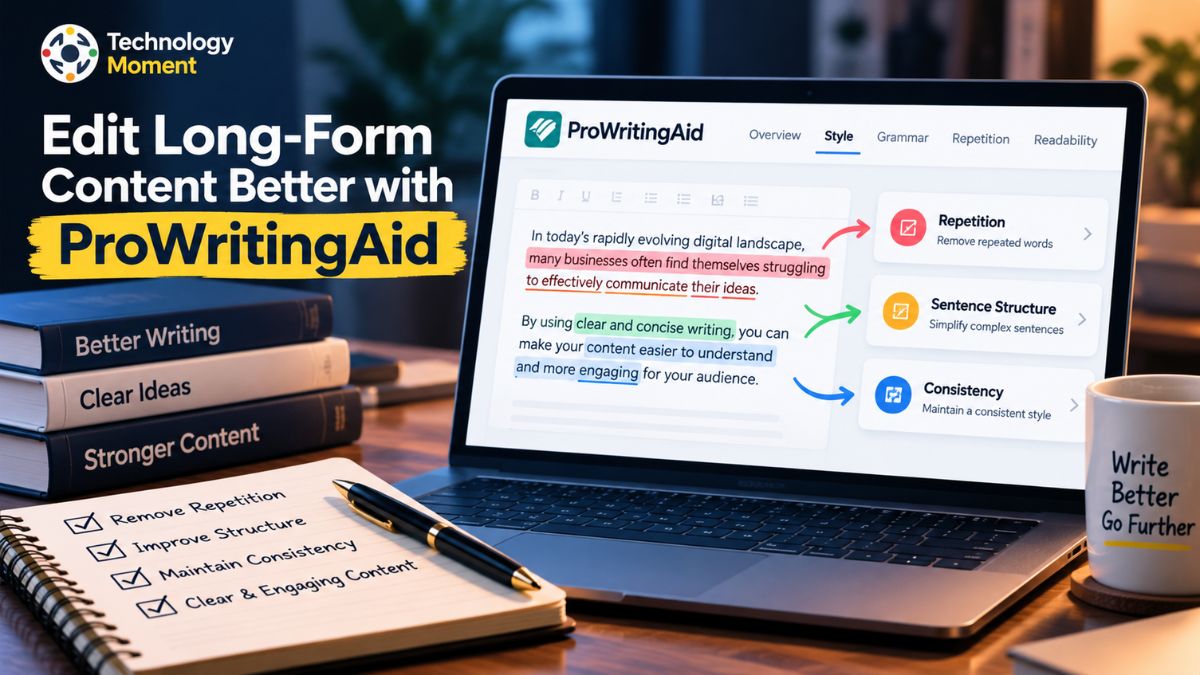
A repetition checker can make this task easier, especially when editing lengthy documents. ProWritingAid offers several reports that help writers identify different repetition patterns. Its All Repeats Report highlights repeated words and phrases throughout a document, while the Echoes Report focuses on repetitions appearing close to one another. The Overused Words Report also helps identify vocabulary that may be used more frequently than intended. These features allow writers to examine repetition beyond what they might notice during a normal reading session.
However, finding repeated phrases is only the beginning. The next step is deciding how to improve them without changing the intended meaning. Depending on the context, writers can remove redundant expressions, combine sentences, restructure paragraphs, or choose more precise vocabulary. For instance, if two consecutive sentences communicate nearly identical information, combining them may improve clarity more effectively than replacing individual words with synonyms. Similarly, repeated sentence openings can often be improved by changing the sentence structure.
It is also important to recognize that not every repeated word is a writing mistake. Technical articles, educational guides, and product reviews frequently require specific terminology to maintain accuracy. Replacing essential keywords with unrelated alternatives may confuse readers. The goal should be to remove unnecessary repetition rather than eliminate every recurring expression. By combining careful manual review with ProWritingAid’s repetition detection features, writers can create more natural paragraphs, improve vocabulary variation, and maintain a consistent writing style throughout longer documents.
How to Improve Sentence Structure and Sentence Variation
Sentence structure plays an important role in determining how readers understand and experience long-form content. Even when an article contains useful information, repetitive sentence patterns can make it difficult to follow. For example, using several sentences with identical openings or similar grammatical arrangements may create a monotonous reading experience. Improving sentence structure involves varying sentence length, adjusting word order, strengthening transitions, and presenting ideas in a clear and logical sequence.
One practical way to improve sentence variation is to combine short, medium, and long sentences according to the information being communicated. Short sentences are useful when introducing important points or emphasizing a specific message. However, consistently writing long sentences may overwhelm readers, while using too many short sentences can make paragraphs feel disconnected. A balanced sentence rhythm helps maintain natural paragraph flow and keeps readers engaged.
Writers should also pay attention to repeated sentence beginnings. Starting multiple consecutive sentences with the same word or phrase can make an article sound mechanical. Instead, consider restructuring sentences to introduce different subjects, actions, or supporting information. For example, rather than beginning every sentence with “Writers can,” alternate the construction by introducing the relevant challenge, action, or outcome. These small adjustments can make paragraphs feel more natural without unnecessarily changing their meaning.
Another important consideration is sentence complexity. Sentences containing too many clauses, unnecessary transitions, or complicated expressions can reduce clarity. During editing, identify ideas that could be communicated more directly. Remove unnecessary words, replace vague expressions with precise language, and ensure that each sentence contributes something useful. The purpose is not to make every sentence extremely short but to communicate information efficiently.
ProWritingAid can support this process through its Sentence Structure Report and Sentence Length Report. The Sentence Structure Report identifies patterns that may make writing repetitive, while the Sentence Length Report provides a visual overview of sentence-length variation. Writers can use these insights to identify sections that need more structural variety. Its Writing Style Report can also highlight repeated sentence starts and other potential style improvements.
Nevertheless, automated recommendations should not determine every editorial decision. Some repeated structures are intentional, particularly when emphasizing an idea or creating a specific rhetorical effect. The best approach is to review each suggestion in context, preserve the writer’s voice, and prioritize clarity over artificial variation. A thoughtful approach to sentence structure analysis improves readability, strengthens communication, and makes long-form writing more engaging. By combining manual editing with ProWritingAid’s sentence analysis tools, writers can develop a more balanced and effective writing style.
How to Improve Readability and Simplify Complex Sentences
Readability plays an important role in how effectively long-form content communicates information. Even a well-researched article can become difficult to follow when it contains unnecessarily complicated sentences, unfamiliar vocabulary, or lengthy paragraphs. Readers generally prefer content that explains ideas clearly without making them work harder than necessary to understand the message. This is why improving readability should be an essential part of every long-form content editing process.
One practical way to improve readability is to identify sentences that contain too many ideas. When several explanations, examples, and supporting details appear in a single sentence, the main point can become difficult to recognize. Instead of keeping everything together, consider separating complex sentences into shorter, more focused statements. Use familiar words where appropriate, remove unnecessary expressions, and make sure each paragraph communicates one central idea. These changes can improve sentence clarity without reducing the depth of the information.
Readability scores can also help writers understand how accessible their content may be to different audiences. Tools such as Flesch Reading Ease, Flesch-Kincaid Grade Level, and Coleman-Liau Index evaluate different aspects of written text, including sentence length and vocabulary complexity. However, these scores should be treated as useful indicators rather than absolute measures of writing quality. A technical guide may naturally require more specialized language than a general lifestyle article.
ProWritingAid’s Readability Report helps identify paragraphs that may be difficult to read and provides readability measurements based on established readability scales. Its Sticky Sentences Report can also highlight sentences containing excessive glue words, while the Writing Style Report identifies potential readability improvements and awkward phrasing. Writers can review these suggestions to decide which sentences need simplification.
Another important consideration is maintaining a natural writing rhythm. Short sentences are useful for emphasizing key information, while longer sentences can provide necessary explanations. Combining different sentence lengths creates a more engaging reading experience. Ultimately, effective readability improvement is not about removing every complex expression. It is about presenting useful information in a clear, logical, and accessible way that respects the reader’s time.
How to Reduce Passive Voice and Improve Writing Clarity
Passive voice is a common feature of long-form writing, but excessive use can sometimes make sentences less direct and reduce communication clarity. In an active voice sentence, the subject performs the action, whereas in a passive voice construction, the subject receives the action. Both structures are grammatically correct, but choosing the appropriate one can significantly influence how information is presented to readers.
For example, consider the sentence, “The final report was prepared by the editorial team.” Although the meaning is clear, the active alternative, “The editorial team prepared the final report,” communicates the same information more directly. The second version identifies the person responsible for the action immediately, making the sentence easier to understand. This type of revision can be particularly useful in blog articles, business reports, educational guides, and professional documentation.
To reduce passive voice in long-form writing, begin by reviewing sentences that hide the person or organization performing an action. When the responsible subject is important, consider restructuring the sentence to place that subject before the verb. You should also look for weak verbs, unnecessary introductory expressions, and hidden verbs that make sentences longer than necessary. Replacing vague constructions with precise language can improve writing clarity and make explanations more effective.
It is useful when the person performing an action is unknown, unimportant, or less relevant than the result. Scientific writing, research reports, and technical documentation may use passive constructions when the process or outcome deserves greater attention than the individual responsible. Therefore, the objective of passive voice editing should be better communication rather than achieving a zero passive voice percentage.
ProWritingAid’s Writing Style Report helps writers identify passive verbs and review their passive voice usage through its Passive Index. It also highlights other potential style problems, including unnecessary adverbs, hidden verbs, long subordinate clauses, and repeated sentence starts. These suggestions can help writers identify areas that deserve closer attention during editing. By reviewing passive voice in context, selecting stronger verbs, and removing unnecessary wording, writers can create clearer and more direct sentences. A balanced approach to active and passive voice improves readability while preserving the appropriate tone and purpose of the document.
How to Maintain Writing and Manuscript Consistency
Writing consistency is essential when producing long-form articles, professional reports, educational resources, or book manuscripts. A document may contain accurate information and well-structured sentences, but inconsistent spelling, punctuation, capitalization, or terminology can make it appear unfinished. These small differences become especially noticeable in lengthy documents because readers encounter the same names, expressions, and formatting conventions across multiple sections.
One of the first areas to review is spelling consistency. Writers should choose a preferred English variety, such as American English or British English, and apply it throughout the document. For example, using “organize” in one section and “organise” in another may create an unnecessary inconsistency. Neither spelling is incorrect, but switching between conventions without a clear reason can affect the professional presentation of the manuscript.
Capitalization and punctuation also require attention. Product names, headings, abbreviations, technical terms, and proper nouns should follow consistent formatting rules. Similarly, writers should establish a clear approach to hyphenation and compound words. Expressions such as “long-form content,” “long form content,” and “longform content” should not be used interchangeably without considering the relevant style convention. Maintaining a simple writing style guide can help prevent these inconsistencies during the editing process.
Another important consideration is terminology. When an article introduces a specific concept, product, or technical expression, writers should use the same terminology throughout the document unless a different expression is genuinely necessary. This is particularly valuable for business articles, technology guides, and educational manuscripts where changing terminology may confuse readers or weaken the accuracy of an explanation.
ProWritingAid’s Consistency Report can support manuscript editing by identifying differences in spelling, capitalization, hyphenation, and punctuation. Its official writing reports also include tools for checking acronyms and following house style rules. These features can help authors and editors review lengthy documents more systematically rather than depending entirely on manual proofreading.
For better results, create a style guide before beginning the final editing stage. Define spelling preferences, capitalization rules, punctuation choices, terminology, and formatting conventions. Then review the complete manuscript to identify inconsistencies across chapters and sections. Combining a consistent editorial process with ProWritingAid’s manuscript editing features helps produce polished, professional, and easier-to-follow content. Ultimately, consistency is not about making every sentence identical; it is about ensuring that the entire document follows a clear and recognizable writing standard.
How to Use ProWritingAid Writing Reports for Long-Form Content Editing
Editing a lengthy article or manuscript requires more than checking grammar and spelling. Writers also need to identify repeated phrases, improve sentence variation, evaluate readability, and maintain consistency throughout the document. ProWritingAid writing reports make this process more organized by examining different aspects of written content and highlighting areas that may benefit from revision. Instead of reviewing every sentence manually, writers can use these editing tools to identify specific writing problems and decide where to focus their attention.
Start with the Summary Report to understand the overall condition of your document. It provides an overview of writing strengths and areas that may need improvement. After reviewing the summary, use the All Repeats Report to identify frequently repeated words and phrases. The Echoes Report helps detect repetitions appearing close together, while the Overused Words Report highlights vocabulary that may be used too frequently. These reports are particularly useful when editing lengthy blog posts, website guides, and book manuscripts.
Next, examine sentence structure and variation. The Sentence Structure Report helps identify repetitive grammatical patterns, while the Sentence Length Report provides a visual overview of sentence-length variation. Writers can use these insights to recognize sections where the writing feels monotonous or unnecessarily complicated. The Readability Report can then help evaluate how accessible the content may be for its intended audience. If certain passages feel difficult to follow, review their sentence construction and simplify unnecessary complexity.
The Writing Style Report is another useful option for identifying potential improvements. It highlights issues involving passive verbs, readability, hidden verbs, repeated sentence starts, and other writing style concerns. Meanwhile, the Consistency Report helps identify differences in spelling, capitalization, and hyphenation across a document. Together, these reports support a more systematic approach to manuscript editing.
However, running every report does not mean accepting every recommendation. Review each highlighted issue in context and consider whether the suggested change improves the original sentence. ProWritingAid provides editorial feedback, but writers remain responsible for protecting meaning, tone, and accuracy. By selecting relevant writing reports and reviewing their suggestions carefully, you can develop a more effective long-form content editing process.
Step-by-Step ProWritingAid Long-Form Content Editing Workflow
A structured editing workflow makes it easier to improve lengthy documents without overlooking important writing problems. Rather than correcting everything simultaneously, divide the process into manageable stages. ProWritingAid can support this approach through its writing reports, which help identify repetition, sentence structure issues, readability concerns, and manuscript consistency problems. Following a consistent workflow also reduces unnecessary revisions and helps writers maintain control over their original writing style.
Begin by preparing your complete draft in the ProWritingAid Web Editor or a supported integration. Before making changes, read the document once to understand its structure, main arguments, and intended audience. This initial review helps you recognize larger problems that automated editing suggestions may not identify, such as missing explanations, weak transitions, or poorly organized sections. You should also decide whether the document follows American English or British English conventions.
In the second stage, focus on repetition. Run the All Repeats Report, Echoes Report, and Overused Words Report to identify unnecessary repeated expressions. Review the highlighted phrases and determine whether they should be removed, replaced, or retained for clarity. Next, examine sentence structure using the Sentence Structure and Sentence Length Reports. Look for repetitive sentence openings, similar grammatical patterns, and paragraphs that contain too many long or short sentences. Make adjustments where they improve natural reading flow.
The third stage involves improving readability and writing clarity. Use the Readability Report and Sticky Sentences Report to identify potentially difficult sentences and unnecessary wording. Review the Writing Style Report to find passive voice, hidden verbs, and other possible style problems. Instead of automatically accepting every suggestion, consider the purpose of each sentence and preserve important technical details.
Finally, run the Consistency Report to review spelling, capitalization, and hyphenation differences. Check terminology, product names, abbreviations, and formatting conventions across the entire manuscript. After completing these changes, perform a final manual proofreading session to catch remaining grammar errors, awkward transitions, and factual inconsistencies.
This step-by-step approach makes ProWritingAid long-form content editing more manageable. It also creates a repeatable editorial workflow that authors, bloggers, and content editors can apply to future projects. The final objective is not simply to achieve better writing scores but to produce clear, consistent, and useful content that communicates effectively.
Frequently Asked Questions About ProWritingAid Long-Form Content Editing
How does ProWritingAid help with long-form content editing?
ProWritingAid helps writers review lengthy documents through specialized writing reports that identify repetition, sentence structure problems, readability concerns, passive voice, and consistency issues. Writers can use these insights to improve their manuscripts systematically. Its reports are particularly useful for bloggers, authors, and editors who want to refine long articles while maintaining their original writing style and intended meaning.
What is the difference between the All Repeats and Echoes Reports?
The All Repeats Report identifies repeated words and phrases throughout a document, helping writers recognize vocabulary patterns. The Echoes Report focuses on repetitions occurring close together within the text. Both reports help reduce unnecessary repetition, but they examine different patterns. Using them together can make it easier to improve paragraph flow and maintain natural vocabulary variation.
How can I improve readability scores in long-form content?
Improve readability by simplifying unnecessarily complicated sentences, removing redundant expressions, and using familiar vocabulary where appropriate. Divide lengthy paragraphs when they contain multiple ideas, and create smoother transitions between sections. ProWritingAid’s Readability Report and Sticky Sentences Report can help identify passages that deserve attention. However, readability scores should support editorial judgment rather than determine content quality.
Does ProWritingAid check passive voice and sentence structure?
Yes. ProWritingAid offers a Writing Style Report that highlights passive verbs and other potential style problems. Its Sentence Structure Report examines sentence construction patterns, while the Sentence Length Report helps writers evaluate sentence-length variation. These reports can reveal areas where writing may become repetitive or difficult to follow, allowing authors to make more informed editorial improvements.
Is ProWritingAid good for editing book manuscripts?
ProWritingAid can be useful for book manuscript editing because it offers reports for repetition, readability, sentence structure, writing style, and consistency. Authors can use these features to review individual chapters and improve their overall writing quality. However, automated editing tools cannot replace professional developmental editing, factual verification, or careful human proofreading when preparing a manuscript for publication.