Finding relevant academic papers is only the first step in conducting a strong research project. As researchers explore a topic, they often need to examine hundreds of publications, understand how different studies relate to one another, identify influential papers, and discover connections that may not be obvious through traditional keyword searches. Managing this growing body of information can become challenging, particularly when preparing a dissertation, PhD thesis, systematic literature review, or academic research paper.
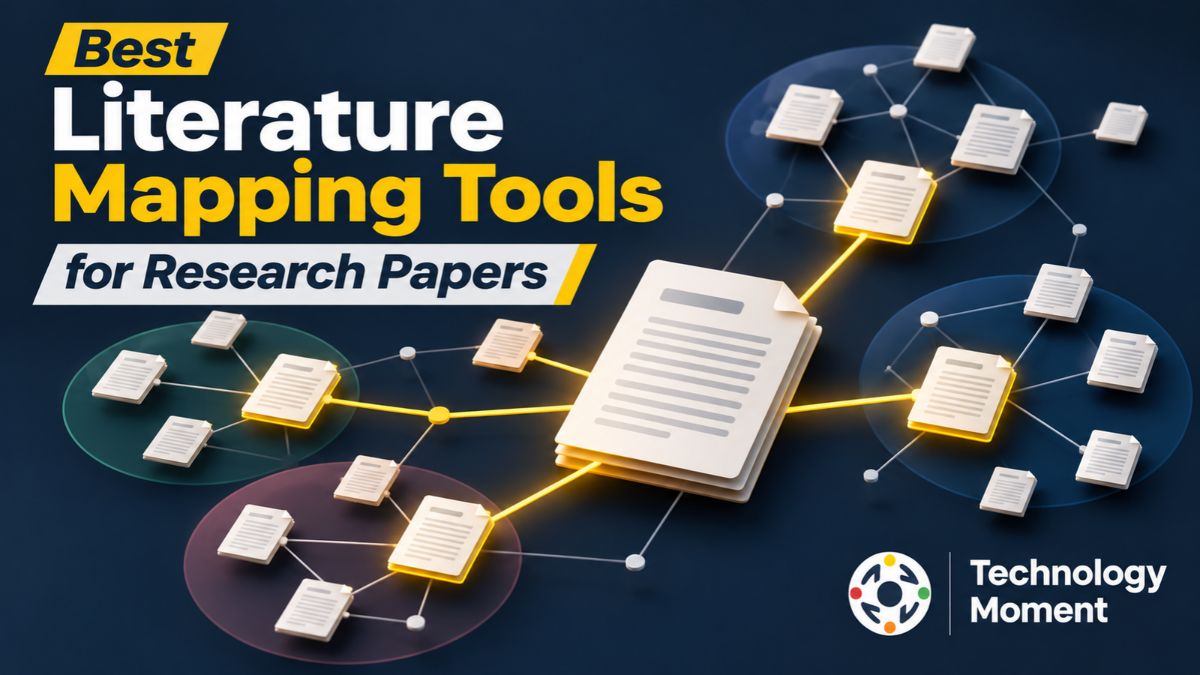
This is where literature mapping tools become useful. These tools help researchers explore academic literature through visual networks, citation relationships, research connections, and topic-based maps. Instead of working with a simple list of search results, users can examine how publications connect, follow references to earlier studies, and discover newer research building on existing work. Tools such as Connected Papers, ResearchRabbit, Litmaps, and VOSviewer offer different approaches to literature discovery and research visualization.
However, choosing the right literature mapping software depends on your research objectives, preferred workflow, technical experience, and budget. Some tools are designed for discovering related papers, while others focus on citation network analysis, bibliometric mapping, or tracking developments within a research field.
At Technology Moment, we explore useful technology and research resources to help readers make informed decisions. In this guide, we compare some of the best literature mapping tools for research papers, highlighting their key features, practical uses, advantages, limitations, and pricing considerations. Whether you are an undergraduate student, postgraduate researcher, academic, or experienced scholar, this guide will help you identify a suitable tool for organizing and exploring academic literature more effectively.
What Are Literature Mapping Tools and How Do They Work?
Literature mapping tools are research applications that help users discover, organize, and visualize relationships between academic publications. Instead of displaying research papers as a simple list of search results, these tools create visual networks that show how different studies connect through citations, shared references, authors, and research topics. They are particularly useful for students, academics, and researchers who need to understand a large collection of scientific literature before beginning a detailed literature review.
Most literature mapping software works by using an existing research paper or a collection of publications as a starting point. This starting document is often called a seed paper. The software examines its references, identifies other publications that cite it, and finds related studies based on available citation or similarity data. It then presents these connections through interactive maps, graphs, or network visualizations. Researchers can explore individual nodes to discover additional publications and gradually build a broader understanding of their research area.
Different tools use different methods to establish these connections. Citation network visualization shows relationships between papers through their citation links. Co-citation analysis identifies publications that are frequently cited together, while bibliographic coupling connects studies that share similar references. Some research mapping tools also examine keyword relationships, publication dates, authorship patterns, and subject areas to reveal broader research trends.
For example, a researcher studying renewable energy can begin with an important paper on solar technology. A mapping application may reveal earlier foundational studies, newer publications that reference the original research, and related work exploring alternative energy technologies. This makes scholarly literature discovery more organized and helps researchers identify influential publications and possible research directions.
However, literature mapping tools do not replace traditional academic database searches or critical reading. Their results depend on available publication records, citation coverage, and the selected starting papers. A newly published study may have few citations, while an important publication from a less-covered journal may not appear in the network. Researchers should therefore combine visual literature mapping with reliable database searches and independent evaluation of academic sources.
Best Literature Mapping Tools for Research Papers
Choosing the best literature mapping tools depends on the type of research you are conducting and how you want to explore academic publications. Some applications focus on discovering related papers, while others specialize in citation analysis, bibliometric mapping, and research network visualization. The following tools offer different approaches for undergraduate students, PhD researchers, academics, and experienced scholars.
1. Connected Papers: Connected Papers helps researchers create visual graphs of related academic publications using an existing paper as a starting point. It is useful for exploring influential studies, discovering earlier research, and finding newer publications connected to a particular subject. Its visual presentation makes it easier to understand relationships within an unfamiliar research area. It is particularly suitable for researchers who want a quick overview of related literature.
2. ResearchRabbit: ResearchRabbit is a literature discovery platform that helps users explore connections between academic papers, authors, and research collections. Researchers can organize publications, discover related studies, and follow different research directions through interactive visualizations. Its collection-based workflow makes it useful for longer research projects that involve continuously discovering and organizing academic literature.
3. Litmaps: Litmaps focuses on citation mapping and tracking developments within academic research. Users can create visual maps from selected publications, explore citation relationships, organize relevant studies, and monitor newly published research. It is particularly useful for researchers who want to maintain an evolving literature map throughout a dissertation or extended research project.
4. VOSviewer: VOSviewer is a free bibliometric mapping application designed to construct and visualize research networks. It supports co-authorship, co-citation, bibliographic coupling, and keyword co-occurrence analysis. Researchers can use it to identify publication clusters, influential authors, and relationships between research topics. It is especially suitable for large-scale scientific literature mapping.
5. Inciteful: Inciteful helps researchers discover academic publications through citation relationships. It can generate networks from selected research papers and provide additional publications worth investigating. Its citation-focused approach makes it useful for exploring connections that may not appear in ordinary keyword searches.
6. Open Knowledge Maps: Open Knowledge Maps provides visual overviews of research topics and organizes related publications into thematic groups. It is useful when researchers are beginning with a broad subject and want to understand its major research areas before narrowing their investigation.
7. Citation Gecko: Citation Gecko supports citation-based literature discovery by helping researchers explore connections between selected publications. It is particularly relevant when building a collection of related studies and identifying additional references through citation relationships.
8. CitNetExplorer: Researchers can examine publication relationships, identify influential studies, and explore how scientific literature develops over time. It is more suitable for structured citation analysis than general paper discovery.
9. CiteSpace: CiteSpace is a scientific literature visualization application used to investigate research trends, emerging topics, citation bursts, and intellectual structures within academic fields. It is valuable for researchers conducting advanced bibliometric studies and examining how a research area changes over time.
10. Bibliometrix: Bibliometrix is an open-source R package for comprehensive bibliometric analysis. It supports publication analysis, author networks, keyword relationships, collaboration patterns, and scientific mapping. It is particularly useful for researchers comfortable working with R and structured bibliographic datasets.
11. Biblioshiny: Biblioshiny provides a graphical interface for Bibliometrix, making bibliometric analysis more accessible through an interactive environment. Researchers can explore publication trends, collaboration networks, thematic maps, and other research indicators without writing every analysis command manually.
Literature Mapping Tools Comparison: Features, Pricing and Best Use Cases
Not every literature mapping tool serves the same purpose. Some applications are designed for discovering related research papers, while others provide advanced analytical capabilities for understanding citation networks and scientific publications. Comparing their features, access models, and practical applications can help researchers select suitable software for their projects.
The following table compares 11 literature mapping tools based on their primary purpose, notable capabilities, access model, and recommended users. Pricing and free-plan availability should be checked on the official websites because subscription limits and product features can change.
| Tool | Main purpose | Key features | Access model | Best use case |
|---|---|---|---|---|
| Connected Papers | Visual paper discovery | Related-paper graphs, earlier and later research exploration | Limited free access and paid plans | Quickly exploring a research topic |
| ResearchRabbit | Literature discovery | Paper collections, author networks, related-paper recommendations | Free access with optional paid features | Discovering and organizing academic papers |
| Litmaps | Citation mapping | Interactive maps, citation tracking, publication monitoring | Free tier and paid plans | Tracking research developments |
| VOSviewer | Bibliometric mapping | Co-citation, co-authorship, keyword networks, cluster visualization | Free software | Large-scale research network analysis |
| Inciteful | Citation discovery | Citation connections, related-paper exploration | Free access | Finding connected academic studies |
| Open Knowledge Maps | Topic visualization | Thematic maps, grouped research publications | Free access | Exploring unfamiliar research subjects |
| Citation Gecko | Citation-based discovery | Citation networks and paper exploration | Check current availability | Building reference collections |
| CitNetExplorer | Citation network analysis | Citation relationships, network exploration, clustering | Free software | Studying publication connections |
| CiteSpace | Scientific literature analysis | Citation bursts, research fronts, temporal visualization | Free software | Identifying emerging research trends |
| Bibliometrix | Advanced bibliometric analysis | Statistical analysis, collaboration networks, thematic mapping | Open-source R package | Comprehensive bibliometric studies |
| Biblioshiny | Interactive bibliometric analysis | Graphical analysis, research indicators, visual reports | Open-source interface | Exploring bibliometric data without manually writing R commands |
For researchers who primarily want to discover related academic publications, Connected Papers, ResearchRabbit, Litmaps, and Inciteful are practical starting points. Connected Papers provides a visual overview around selected publications, while ResearchRabbit supports ongoing literature exploration through collections. Litmaps is useful when citation tracking and monitoring new publications are important. Inciteful offers another way to explore relationships between research papers through citation connections.
For more advanced research visualization, VOSviewer, CiteSpace, CitNetExplorer, Bibliometrix, and Biblioshiny serve different analytical requirements. VOSviewer is particularly useful for constructing bibliometric networks, including co-authorship and keyword co-occurrence maps. CiteSpace focuses on identifying research trends and citation bursts, while CitNetExplorer provides tools for examining citation networks. Bibliometrix and Biblioshiny offer broader bibliometric analysis capabilities.
Open Knowledge Maps and Citation Gecko provide additional options for exploring research topics and discovering related publications. Their usefulness depends on whether the researcher needs thematic discovery or citation-based exploration.
Which Literature Mapping Tool Should You Choose?
The right choice depends on your research objectives, available data, technical experience, and budget. Undergraduate and postgraduate students can begin with ResearchRabbit or Connected Papers to discover related publications. Researchers preparing an extended literature review may prefer Litmaps for organizing and monitoring academic literature. Those conducting bibliometric studies involving large publication datasets may find VOSviewer, CiteSpace, or Bibliometrix more appropriate.
It is also important to understand that literature mapping tools cannot independently establish a comprehensive literature search or prove that a research gap exists. Their visual networks should support, rather than replace, traditional database searching, reference checking, and critical evaluation of original publications. Combining the right research mapping tools with a structured search strategy provides a more reliable approach to exploring academic literature.
Best Free Literature Mapping Tools for Researchers
Researchers do not always need expensive subscriptions to explore academic publications and understand connections between studies. Several free literature mapping tools provide useful features for discovering related papers, visualizing citation networks, and organizing academic references. These applications can help undergraduate students, postgraduate researchers, and academics explore scholarly literature without committing to a paid subscription. However, free access does not always mean unlimited usage, so it is important to understand the limitations of each platform.
ResearchRabbit is one of the useful starting points for researchers who want to discover related publications and explore connections between papers and authors. It supports visual literature discovery through collections and research networks. Its free access makes it particularly attractive for students working on dissertations and extended literature reviews. VOSviewer is another strong option for researchers interested in bibliometric mapping. This free desktop application can visualize co-authorship networks, keyword relationships, citation connections, and publication clusters using bibliographic data.
Open Knowledge Maps is useful when researchers want to explore a broad subject through visual topic maps. It groups related publications into thematic areas, helping users understand different research directions. Inciteful provides citation-based discovery and helps researchers explore connections between academic papers. Its Literature Connector is particularly useful for investigating how two publications are connected through other studies.
Connected Papers offers visual graphs of related research based on a selected starting paper. Its free access is limited, making it more suitable for occasional exploration than unrestricted use. Litmaps helps users create citation maps and monitor new publications, although its free plan has limitations on maps and other features. Bibliometrix is an open-source R package for researchers who need more advanced bibliometric analysis, while Biblioshiny provides a graphical interface for exploring its analytical capabilities.
The best free literature mapping tools depend on the size and complexity of your research project. Students exploring a new subject may prefer ResearchRabbit or Open Knowledge Maps, whereas researchers analyzing large publication datasets may benefit more from VOSviewer or Bibliometrix. Before selecting a platform, check its current access conditions, supported data sources, export options, and technical requirements. A combination of free research discovery tools and traditional academic databases can provide a practical starting point for building a reliable literature review.
How to Choose the Best Literature Mapping Tool for Your Research Needs
Selecting the best literature mapping tool requires more than comparing the number of features offered by different platforms. Researchers should first understand what they want to accomplish. Someone preparing an undergraduate assignment may only need to discover related academic papers, while a PhD researcher conducting a large bibliometric study may require advanced citation network analysis and publication visualization. Choosing software according to the research objective can save time and prevent unnecessary complexity.
The first consideration is the type of literature discovery you need. If your main goal is finding related research papers from an existing publication, Connected Papers, ResearchRabbit, and Inciteful offer useful approaches. If you want to track citations and monitor newly published studies, Litmaps may be a better option. For researchers investigating publication trends, keyword relationships, and collaboration networks, VOSviewer and Bibliometrix provide more specialized analytical capabilities.
Database coverage is another important factor. Different literature mapping software uses different scholarly data sources, and no single platform necessarily includes every relevant publication. Check whether the tool covers the journals, disciplines, conference papers, and publication types relevant to your research. This is particularly important in interdisciplinary subjects and fields where books or conference proceedings play an important role.
You should also consider visualization, export, and collaboration features. A useful research mapping tool should make it easy to understand citation connections, organize relevant papers, and transfer bibliographic records into a reference management workflow. Export formats, integration options, and the ability to save or share research collections can become especially important during longer projects.
Finally, compare pricing, free-plan restrictions, ease of use, and technical requirements. Some tools operate directly through a web browser, while others require desktop installation or familiarity with R. Students with limited budgets may prefer free options such as VOSviewer and ResearchRabbit, while advanced researchers may find additional paid features worthwhile. Before making a decision, test the platform with a few relevant papers and check whether its recommendations genuinely improve your literature discovery process. The right choice is the tool that supports your research workflow rather than simply offering the largest feature list.
How to Use Literature Mapping Tools for a Research Paper
Using literature mapping tools effectively begins with a clear research question. Before creating a visual literature map, identify the subject you want to investigate and collect a few reliable academic publications related to it. These initial publications are commonly known as seed papers. Selecting relevant starting papers is important because many research mapping tools use their references, citations, or similarities to identify additional studies.
Start by choosing a suitable platform based on your research objective. For example, Connected Papers can help you explore related publications from a selected paper, while ResearchRabbit allows you to build collections and investigate connections between papers and authors. Litmaps is useful for citation mapping and tracking new publications, whereas VOSviewer is more appropriate when you want to visualize larger bibliographic datasets. Enter the title, DOI, or other supported publication details and allow the software to generate the relevant map.
Once the visual map is available, examine the connections between publications. Depending on the tool, nodes may represent individual research papers, while connecting lines indicate citation relationships, shared references, or other forms of similarity. Some applications also use node size, position, and color to communicate additional information, such as citation counts or research clusters. Always check the platform’s explanation of its visualization rather than assuming that every connection represents the same relationship.
The next step is to identify publications that are relevant to your research question. Explore earlier studies, newer publications, frequently connected papers, and related research topics. Open the original publications, read their abstracts, and evaluate their methodology, findings, and limitations. Save useful references in an organized collection or transfer them into your preferred reference management software.
Finally, use the discovered publications to develop a structured literature review. Group studies according to themes, research methods, findings, or chronological developments. Look for similarities, differences, unanswered questions, and areas that require further investigation. A visual literature map can help you identify possible research gaps, but it cannot independently prove that a gap exists.
For systematic or scoping reviews, literature mapping should complement a documented search across appropriate academic databases rather than replace it. Record your starting papers, search methods, dates, and selection decisions where reproducibility is required. By combining visual mapping with careful reading and critical evaluation, researchers can build a more organized understanding of academic literature and develop stronger research papers.
Benefits and Limitations of Literature Mapping Tools
Literature mapping tools offer a practical way to explore academic publications, understand research relationships, and organize information during a literature review. Instead of examining individual search results without seeing their connections, researchers can use visual literature mapping to understand how studies relate through citations, shared references, authors, and research topics. These capabilities are particularly valuable when investigating unfamiliar subjects or working with a large collection of scientific literature.
One of the main benefits is faster academic literature discovery. Citation mapping tools can help researchers identify earlier publications, discover newer studies that cite important papers, and find related research that may not appear in an ordinary keyword search. This process can reveal influential publications, established authors, and research communities within a particular field. For example, Connected Papers and ResearchRabbit help users explore related academic papers through visual networks, while Litmaps supports citation tracking and ongoing literature discovery.
Another advantage is the ability to understand research relationships more clearly. Citation network visualization, co-citation analysis, and bibliographic coupling can help researchers examine connections between publications and identify clusters of related studies. Tools such as VOSviewer and CiteSpace are particularly useful for scientific knowledge mapping, bibliometric analysis, and research trend visualization. These features can support the identification of emerging subjects, influential research areas, and possible directions for further investigation.
However, literature mapping software also has limitations. Its results depend on the coverage and quality of the underlying scholarly databases. Some publications, disciplines, books, conference proceedings, and recently published studies may be missing or underrepresented. Citation-based methods can also favour older and highly cited papers, potentially making newer or less-established research harder to discover.
Another limitation is that visual connections do not automatically indicate that two studies share the same findings or scientific quality. Researchers must read original publications and evaluate their methods, evidence, and relevance independently. Some platforms also require accounts, impose free-plan restrictions, or have a learning curve for advanced analysis.
Most importantly, literature mapping tools cannot replace comprehensive academic database searches or independently establish research gaps. They should complement traditional searching, reference checking, and critical evaluation. When used carefully, they make scholarly literature discovery more organized while helping researchers develop a broader understanding of their chosen subject.
Final Thoughts: Which Literature Mapping Tool Should You Choose?
Choosing the best literature mapping tool ultimately depends on your research objectives, the size of your publication collection, and the type of analysis you want to perform. There is no single application that works equally well for every academic project. Some researchers need a simple way to discover related papers, while others require advanced citation network analysis, bibliometric visualization, or continuous monitoring of new publications.
For students and researchers beginning a new topic, Connected Papers and ResearchRabbit are useful starting points. Connected Papers provides a visual overview of publications related to a selected research paper, while ResearchRabbit supports the discovery and organization of related studies through collections and author connections. These tools can help users understand an unfamiliar research area without immediately working with complex bibliometric datasets.
If your project involves following new publications and maintaining an evolving literature collection, Litmaps is worth considering. Its citation mapping and monitoring features can support longer research projects, including dissertations and PhD research. Inciteful is another option for researchers who want to explore citation relationships and discover additional academic publications.
For more advanced scientific literature mapping, VOSviewer, CiteSpace, Bibliometrix, and Biblioshiny offer specialized analytical capabilities. VOSviewer is suitable for visualizing co-authorship, citation, and keyword networks. CiteSpace helps investigate research trends and citation patterns, while Bibliometrix and Biblioshiny support comprehensive bibliometric analysis. Open Knowledge Maps can also help researchers explore broad research topics through visual thematic organization.
Before selecting any platform, consider its data coverage, export options, access requirements, technical complexity, and current pricing. A free tool may be sufficient for a small research assignment, whereas a large bibliometric study may require more specialized software and structured datasets.
Frequently Asked Questions About Literature Mapping Tools
What Are the Best Literature Mapping Tools for Research Papers?
Some popular literature mapping tools include Connected Papers, ResearchRabbit, Litmaps, Inciteful, VOSviewer, and CiteSpace. Connected Papers and ResearchRabbit are useful for discovering related publications, while VOSviewer and CiteSpace support advanced bibliometric analysis. The best option depends on your research objectives, technical experience, and budget.
Which Is the Best Free Literature Mapping Tool?
VOSviewer is a strong free option for bibliometric mapping and citation network visualization. ResearchRabbit and Open Knowledge Maps are also useful for discovering academic publications. Researchers can additionally explore Inciteful for citation-based discovery. Compare their current features and access conditions before choosing.
How Do Literature Mapping Tools Work?
Literature mapping tools analyze relationships between academic publications using citations, shared references, authors, or research similarities. Researchers usually begin with a relevant paper or collection of publications. The software then generates a visual map that helps users discover related studies and explore connections across a research topic.
What Is the Difference Between Literature Mapping and Citation Mapping?
Literature mapping is a broader approach to visualizing relationships between academic studies, research topics, and publications. Citation mapping specifically focuses on citation relationships, such as which papers cite other publications or share references. Citation mapping is therefore one method used within the wider field of literature mapping.
How Can Researchers Visualize Connections Between Research Papers?
Researchers can use applications such as Connected Papers, ResearchRabbit, Litmaps, and VOSviewer. These tools create visual networks in which publications appear as connected nodes. Depending on the application, connections may represent citations, shared references, authorship relationships, or similarities between research topics.
Which Literature Mapping Tool Is Best for PhD Students?
ResearchRabbit and Litmaps are useful for discovering and organizing publications throughout a PhD project. Connected Papers can help explore related studies, while VOSviewer and Bibliometrix are suitable for advanced bibliometric analysis. The best choice depends on whether the research requires literature discovery, citation tracking, or statistical mapping.
Can Literature Mapping Tools Help Identify Research Gaps?
Yes. Literature mapping tools can help researchers identify less-explored topics, disconnected research areas, and changes in publication trends. However, a visual map cannot prove that a research gap exists. Researchers must examine original studies, conduct comprehensive database searches, and critically evaluate the available evidence before identifying a genuine gap.
Are Literature Mapping Tools Suitable for Systematic Literature Reviews?
Literature mapping tools can support systematic literature reviews by helping researchers discover additional publications and examine citation relationships. However, they should not replace documented database searches, predefined eligibility criteria, or reproducible screening procedures. Researchers should follow an established review methodology and record how mapping tools were used.