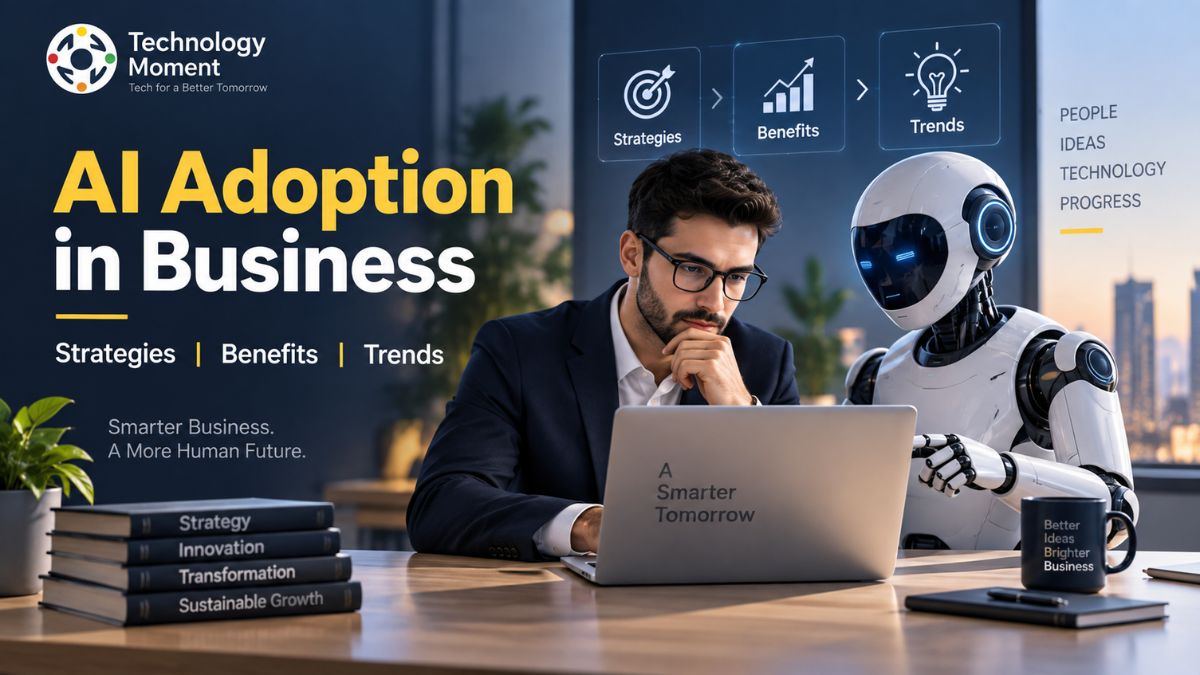
Artificial intelligence is no longer just an emerging technology discussed by researchers and technology companies. Businesses of all sizes are now exploring AI to automate routine work, improve productivity, understand data, support customers, and make faster decisions. From generative AI and AI assistants to intelligent automation and predictive analytics, businesses are finding increasingly practical ways to integrate AI into everyday operations.
But adopting AI is not as simple as choosing a tool and adding it to a workflow. Companies need to understand which problems AI can actually solve, how it fits into existing processes, what data and infrastructure are required, and what risks come with its use. Questions around cost, security, employee training, accuracy, privacy, and measurable return on investment can make AI adoption challenging.
This is where understanding the bigger picture matters. At Technology Moment, we focus on making complex technology easier to understand and more useful in real-world situations. Our goal is to help readers look beyond the hype and understand how technologies such as AI can influence the way businesses work, make decisions, and grow.
In this guide, we’ll explore how businesses are adopting AI, the most important business use cases, the benefits and challenges of AI adoption, practical implementation strategies, and the technologies shaping the future of AI in business. Whether you are running a small business, working in a growing company, or evaluating AI from an enterprise perspective, this guide will help you understand where AI can create meaningful value and where careful planning is essential.
What Is AI Adoption in Business?
AI adoption in business refers to the process of using artificial intelligence technologies to solve business problems, improve existing processes, and support employees in their daily work. Instead of treating AI as a standalone technology, companies increasingly integrate it into workflows, software systems, and decision-making processes.
Businesses can use different forms of AI depending on their objectives. Machine learning can help analyze patterns and make predictions, while natural language processing can help systems understand and generate human language. Generative AI, AI assistants, and AI agents can support tasks such as research, content creation, communication, and knowledge management.
Successful AI adoption is closely connected with digital transformation. Companies may use AI-powered automation to reduce repetitive work, AI analytics to understand business data, or AI decision support to help employees evaluate information more efficiently. Enterprise AI adoption can also involve integrating AI infrastructure with existing business systems.
However, adopting AI is not simply about purchasing AI software or subscribing to an AI tool. Businesses need a clear AI strategy, appropriate data, secure systems, trained employees, and measurable objectives. The most effective approach is to identify genuine business needs first and then determine where AI can provide meaningful value.
How Are Businesses Adopting AI?
Businesses are adopting AI in different ways depending on their industry, size, resources, and operational requirements. Some companies begin with simple AI tools for business productivity, while larger organizations may develop enterprise-wide AI strategies and integrate AI into multiple departments.
One common approach is automating repetitive tasks. Businesses can use AI automation to organize information, summarize documents, process routine requests, and support workflow automation. This allows employees to spend more time on activities requiring creativity, judgment, and human interaction.
Companies are also using AI for decision-making. AI-driven decision-making can help teams analyze large amounts of information, identify patterns, generate insights, and support forecasting. AI-powered business operations can similarly improve how organizations manage processes and respond to changing conditions.
Customer-facing functions are another major area of adoption. Businesses can use AI-powered customer service systems to answer common questions, assist support teams, and provide faster responses. Marketing and sales teams can use AI for research, personalization, content workflows, lead analysis, and customer engagement.
The most sustainable AI adoption strategy is usually gradual. Businesses can start with a well-defined use case, measure its results, address security and data privacy requirements, and then expand successful solutions across additional workflows.
Top AI Use Cases in Business
AI applications in business now extend across many departments and industries. The most valuable use cases are generally those that solve repetitive, time-consuming, data-intensive, or difficult decision-making problems. Customer service is one important area. AI-powered customer service tools can help answer frequently asked questions, summarize conversations, classify requests, and assist human support agents. This can improve response times while allowing employees to focus on more complex customer needs.
Marketing teams are using AI-powered marketing systems for content workflows, audience research, personalization, campaign analysis, and market insights. Sales teams can use AI-powered sales tools to research prospects, summarize customer information, prioritize opportunities, and automate parts of their sales workflows.
AI analytics and predictive analytics can help businesses examine large datasets and identify trends or patterns. Financial teams may use intelligent automation for routine processes, while operations teams can apply AI to forecasting, optimization, monitoring, and process improvement.
Businesses are also applying AI to human resources, software development, product research, knowledge management, and internal communication. AI assistants can help employees find information and complete routine tasks, while AI agents may eventually handle more complex multi-step workflows.
The key is not to adopt AI simply because a technology is popular. Businesses should evaluate each AI use case based on potential value, implementation complexity, risk, data requirements, and measurable business outcomes.
How Businesses Are Using Generative AI
Generative AI has become one of the most visible areas of AI adoption in business because it can create and transform different types of information. Businesses are using generative AI to support employees rather than limiting its role to experimental projects.
One common application is content creation. Marketing and communications teams can use generative AI to create initial drafts, summarize information, develop ideas, and adapt content for different audiences. Human review remains important when accuracy, brand standards, or specialized knowledge are involved.
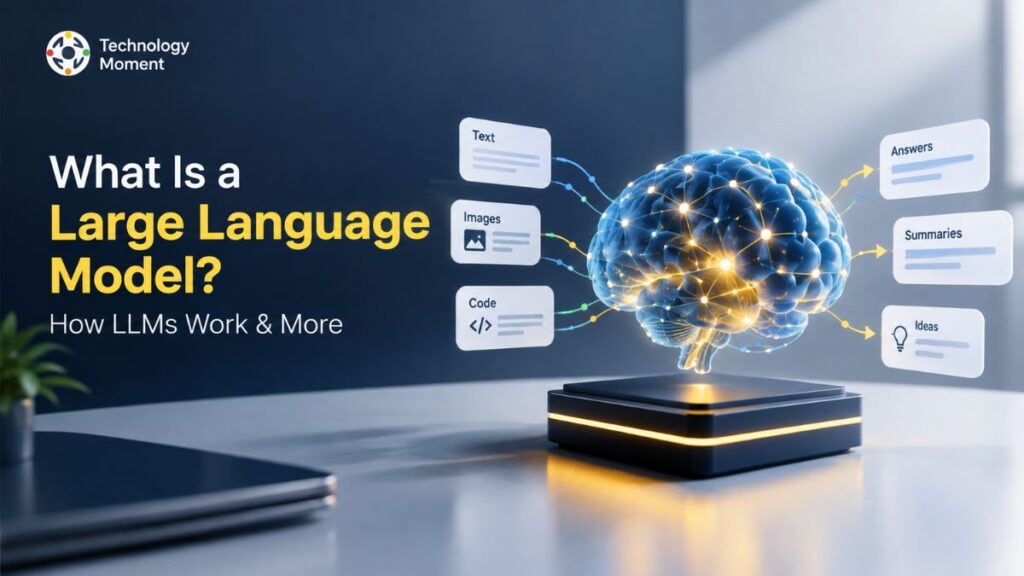
Businesses are also using large language models for research and knowledge management. Employees can use AI assistants to summarize lengthy documents, extract important information, organize notes, and interact with internal knowledge resources. These capabilities can make information easier to access across an organization.
Software development is another growing application. Generative AI tools can assist developers with code generation, explanation, debugging, documentation, and repetitive programming tasks. This can improve productivity while keeping human developers responsible for reviewing and validating the output.
Some organizations are also experimenting with AI agents that can perform multiple steps within defined workflows. However, greater autonomy introduces additional concerns around security, accuracy, permissions, and oversight.
Generative AI adoption in business therefore requires more than selecting a powerful model. Companies need responsible AI practices, data privacy controls, security measures, clear usage policies, and employee training to ensure these systems create value without introducing unnecessary risks.
Benefits of AI Adoption for Businesses
The benefits of AI adoption for businesses can extend beyond simple automation. When implemented carefully, AI can improve productivity, operational efficiency, decision-making, customer experiences, and the way employees interact with information.
One of the most immediate benefits is employee productivity. AI productivity tools can handle or accelerate repetitive activities such as summarization, information processing, drafting, classification, and routine analysis. This gives employees more time to focus on higher-value responsibilities.
AI can also improve operational efficiency by identifying bottlenecks and automating parts of business processes. Intelligent automation can reduce manual work and help organizations manage repetitive workflows more consistently. Depending on the use case, this may contribute to cost reduction and better resource allocation.
Another important benefit is faster and more informed decision-making. AI analytics and predictive analytics can help teams process large volumes of information and identify patterns that may be difficult to detect manually. AI decision support can then provide useful insights while keeping final decisions with human professionals.
Customer experience can also improve when AI is used thoughtfully. Faster support responses, better personalization, and easier access to relevant information can make interactions more convenient.
Over time, effective AI adoption can contribute to innovation and competitive advantage. However, these benefits are not automatic. Businesses need appropriate implementation, reliable data, security controls, employee involvement, and continuous measurement to determine whether an AI solution is actually delivering meaningful results.
AI Adoption Strategies for Businesses
A successful AI adoption strategy for businesses should begin with a clear business objective rather than with a particular AI tool. Companies should first identify processes where AI can solve a genuine problem, reduce unnecessary manual work, improve decision-making, or create a better customer experience. This approach helps organizations avoid investing in technology that delivers little practical value.
The next step is to prioritize AI use cases according to potential business impact, implementation effort, data requirements, and risk. A small pilot can help a company evaluate an AI solution before expanding it across the organization. Businesses should also establish an AI strategy that defines ownership, security requirements, performance expectations, and responsible AI practices.
Employee involvement is equally important. AI adoption can change existing workflows, so employees need appropriate training and a clear understanding of how AI will support their roles. Companies should encourage human-AI collaboration rather than assuming that automation should replace every manual activity.
As successful projects demonstrate measurable results, organizations can gradually scale AI-powered workflows across departments. Regular performance reviews can identify what is working and what needs improvement. A practical AI transformation strategy therefore combines technology, people, processes, governance, and measurable business outcomes instead of treating AI adoption as a one-time technology project.
How to Implement AI in Business
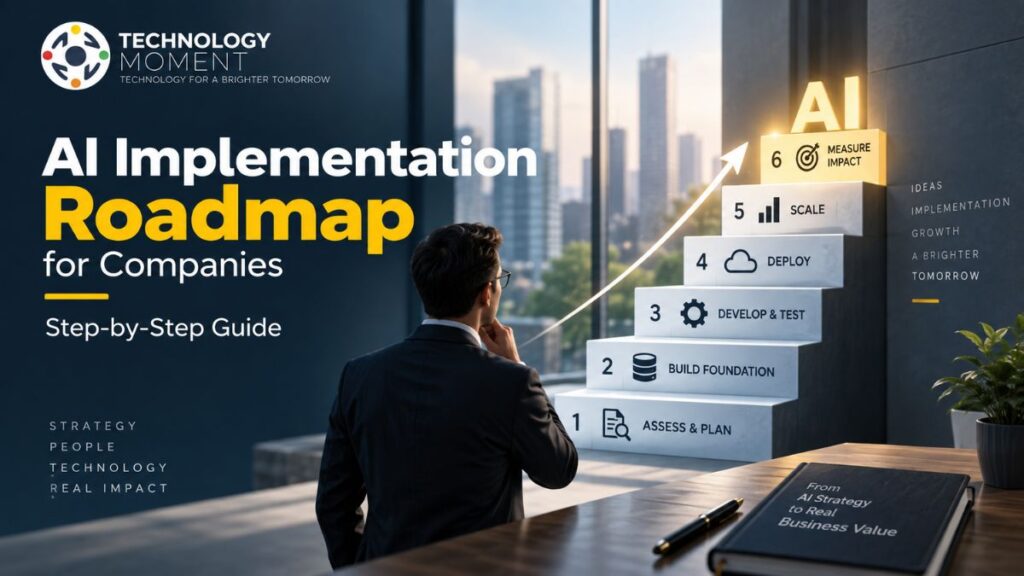
Learning how to implement AI in business requires a structured process that connects technology with measurable business goals. The first step is to define the specific problem the organization wants to solve. This could involve improving customer support, reducing repetitive work, analyzing data, or increasing employee productivity.
After identifying the objective, businesses can select an appropriate AI use case and evaluate potential solutions. Factors such as functionality, integration capabilities, security, scalability, cost, and data requirements should be considered before choosing AI software or an AI service.
Data preparation is another important part of AI implementation for businesses. Organizations need to understand what data an AI system will access, where that information is stored, and how sensitive data will be protected. Existing systems may also require technical integration before AI can become part of everyday workflows.
A controlled pilot is often useful before a wider deployment. During this stage, businesses can measure accuracy, productivity improvements, costs, user adoption, and other relevant performance indicators. Feedback from employees can reveal practical problems that may not appear during technical testing.
Once an AI solution demonstrates value, it can be deployed more broadly. Enterprise AI implementation may require additional infrastructure, access controls, monitoring, governance, and support. Continuous evaluation is essential because AI systems and business requirements can change over time.
Challenges of AI Adoption in Business
Although AI can create significant business value, organizations also face several challenges during adoption. AI systems may process sensitive customer, employee, financial, or business information, making appropriate access controls and data protection essential.
AI accuracy is another concern. AI systems can produce incorrect, incomplete, or misleading outputs, particularly when they operate with limited or poor-quality information. Businesses should therefore establish appropriate human oversight and validation processes for important decisions.
Cost can also become a challenge. AI implementation may require software subscriptions, computing resources, technical integration, employee training, and ongoing maintenance. Organizations need to evaluate the expected value of an AI project rather than focusing only on the initial technology cost.
Employee skills can create another barrier. Teams may need training to use AI systems effectively and understand their limitations. Resistance to change can also slow adoption when employees are uncertain about how AI will affect their responsibilities.
AI governance and responsible AI practices become increasingly important as adoption expands. Companies need clear policies covering acceptable use, security, privacy, accountability, and risk management. Integration with existing business systems can create additional technical complexity.
The most effective way to address these challenges is to treat AI adoption as an ongoing business transformation. Strong governance, employee participation, careful implementation, continuous monitoring, and realistic expectations can reduce risks while allowing organizations to capture AI’s potential benefits.
AI Strategies for Small Businesses and Large Enterprises
AI adoption can look very different for small businesses and large enterprises. Small businesses often have fewer employees, smaller technology budgets, and limited technical resources. However, they can still benefit from accessible AI solutions for small businesses, particularly when these tools address specific operational problems.
A small company might use AI productivity software for writing, research, customer communication, scheduling, data analysis, or routine administrative work. Because implementation can be relatively simple, small businesses may be able to experiment with AI without building complex infrastructure.
Enterprise AI adoption usually involves greater scale and complexity. Large organizations may have multiple departments, extensive datasets, legacy systems, strict security requirements, and complex regulatory responsibilities. Enterprise AI solutions therefore often require deeper integration, stronger governance, dedicated infrastructure, and specialized technical teams.
The decision-making process can also differ. Small businesses may prioritize affordability, ease of use, and immediate productivity improvements, while enterprises may evaluate scalability, integration, security, compliance, and long-term strategic value.
Despite these differences, the underlying principle remains similar: AI should solve a meaningful business problem. A small business does not necessarily need enterprise AI tools, while a large organization should not automatically deploy complex systems when a simpler solution would work.
The right AI strategy depends on the organization’s goals, resources, risk profile, data, and operational requirements—not simply its size.
AI Tools and Technologies Businesses Are Using
Businesses are using a broad range of AI tools and technologies to support productivity, automation, analytics, customer engagement, and decision-making. The right choice depends on the specific business process rather than the popularity of a particular platform.
AI productivity software can help employees with tasks such as drafting, summarization, research, information organization, and document analysis. AI automation tools can connect AI capabilities with existing workflows to reduce repetitive manual processes.
Organizations are also adopting AI analytics tools to examine business information, identify patterns, and generate insights. AI decision-making tools can provide analytical support for planning, forecasting, and evaluating complex information. These systems are particularly useful when employees need to process large amounts of data quickly.
Customer-facing businesses may use AI customer service tools to assist support teams, answer routine questions, and organize customer interactions. AI marketing tools can support research, content workflows, personalization, and campaign analysis, while AI sales automation can assist with prospect research, lead qualification, and workflow management.
For larger organizations, AI enterprise software and enterprise AI tools can provide more advanced capabilities, including integration with internal systems, security controls, centralized management, and scalable deployment. AI SaaS products can offer another option for organizations that prefer cloud-based services without managing extensive infrastructure themselves.
Rather than selecting tools based solely on features, businesses should evaluate security, integration, reliability, scalability, usability, total cost, and measurable business value before adopting an AI technology.
How AI Is Transforming Businesses
AI is transforming businesses by changing how organizations perform everyday tasks, analyze information, serve customers, and make decisions. Instead of being limited to individual experiments, AI is increasingly becoming part of broader business operations and technology strategies.
One major change is the growth of AI-powered business operations. Organizations can use intelligent automation and AI-powered workflows to reduce repetitive processes and help employees manage information more efficiently. This can improve operational efficiency while allowing teams to focus on work that requires creativity, communication, and professional judgment.
AI is also contributing to workforce transformation. Employees can work alongside AI assistants and other AI systems to research information, analyze data, create drafts, and complete routine activities. This human-AI collaboration can change job responsibilities without necessarily removing the need for human expertise.
Another important transformation involves decision-making. AI-driven decision-making and AI analytics can help businesses identify patterns across large datasets and provide decision support to managers and teams. This can make business intelligence more accessible and potentially improve the speed of analysis.
Customer expectations are changing as well. Businesses can use AI-powered customer service, personalization, and automated communication to provide faster and more relevant experiences.
Ultimately, AI transformation is not simply about replacing manual work with software. It represents a broader shift toward intelligent, data-driven, and increasingly automated business processes.
AI Adoption Trends and the Future of AI in Business
AI adoption trends in business are moving from isolated experiments toward deeper integration with everyday workflows. Companies are increasingly evaluating AI based on practical outcomes such as productivity, automation, customer experience, and decision support rather than adopting technology simply because it is new.
Generative AI continues to be an important part of this transition. Businesses are using large language models and AI assistants for research, communication, content workflows, knowledge management, and software development. At the same time, AI agents are emerging as a potential next step, with systems capable of handling multiple tasks within defined business processes.
Another important trend is AI-powered automation. As AI systems become easier to connect with business applications, organizations can create more intelligent workflows that combine automation with reasoning, analysis, and human oversight.
Enterprise AI adoption is also likely to place greater emphasis on governance, security, data privacy, and responsible AI. As organizations deploy AI at larger scale, controlling access, monitoring performance, and managing risk will become increasingly important.
The future of AI adoption in business will likely involve greater human-AI collaboration rather than a simple replacement model. Employees may increasingly use AI as a digital assistant, analyst, researcher, or workflow partner.
Businesses that focus on solving meaningful problems, building appropriate AI skills, and developing a clear technology strategy will be better positioned to adapt as AI capabilities continue to evolve.
Common Mistakes Businesses Should Avoid When Adopting AI
Businesses can make AI adoption more difficult when they focus on technology before understanding the problem they want to solve. One common mistake is adopting AI without a clear business objective. A tool may appear impressive but provide little value if it does not improve a meaningful process or outcome.
Another mistake is choosing AI tools based only on popularity or features. Businesses should evaluate security, data privacy, integration, scalability, reliability, usability, and total cost before selecting an AI solution.
Organizations may also try to automate processes that should still involve human judgment. AI-powered automation works best when businesses clearly define which activities can be automated and where human oversight remains necessary. Ignoring employee training is another significant risk. Employees need to understand how AI systems work, what their limitations are, and how to use them responsibly. Without appropriate AI skills, even a technically capable system may produce limited results.
Businesses should also avoid expecting immediate results from every AI implementation. Some projects require testing, workflow changes, data preparation, and continuous improvement before their value becomes clear. Finally, failing to establish AI governance can create security, compliance, and operational risks. Companies should define responsible AI policies, access controls, data protection requirements, and monitoring processes.
A successful AI strategy is therefore based on realistic expectations, measurable objectives, responsible implementation, and continuous evaluation rather than chasing every new AI trend.
Conclusion
AI adoption in business is becoming an important part of how organizations improve productivity, automate processes, analyze information, and serve customers. From small businesses using AI productivity tools to enterprises implementing sophisticated AI systems, organizations are finding different ways to integrate artificial intelligence into their operations.
However, successful adoption is not simply a matter of purchasing AI software. Businesses need to identify valuable use cases, develop an appropriate AI strategy, prepare their data, evaluate security and privacy requirements, train employees, and measure the results of each implementation.
The most practical approach is to start with a specific business problem. A focused pilot can help an organization understand whether an AI solution delivers measurable value before it is expanded across additional workflows. As successful projects grow, businesses can develop broader AI-powered operations while maintaining appropriate governance and human oversight.
The future of AI in business will likely involve deeper human-AI collaboration, intelligent automation, generative AI, AI agents, and increasingly personalized business systems. Companies that approach these technologies strategically can use AI not only to reduce repetitive work but also to improve decision-making, innovation, and competitive advantage.
For businesses beginning their AI journey, the goal should not be to adopt as much AI as possible. The better goal is to adopt the right AI for the right problem, with measurable outcomes and responsible implementation.
Frequently Asked Questions About AI Adoption in Business
What is AI adoption in business?
AI adoption in business is the process of integrating artificial intelligence into business processes, workflows, products, or decision-making systems to solve problems and improve measurable outcomes.
How are businesses adopting AI?
Businesses are adopting AI for automation, productivity, customer service, marketing, sales, analytics, research, software development, and decision support. Adoption can range from individual AI tools to enterprise-wide AI systems.
What are the main benefits of AI adoption for businesses?
Key benefits can include improved employee productivity, operational efficiency, faster analysis, cost reduction, better customer experiences, and new opportunities for innovation and revenue growth.
What are the biggest challenges of AI adoption?
Common challenges include data privacy, AI security, implementation costs, inaccurate outputs, integration difficulties, employee training, governance, and responsible AI requirements.
How can a small business start using AI?
A small business can begin by identifying one repetitive or time-consuming process and testing an appropriate AI solution. Starting with a focused use case makes it easier to measure value before expanding adoption.
What is the role of generative AI in business?
Generative AI can help businesses with content creation, research, document analysis, communication, software development, knowledge management, and other information-intensive workflows.
What is the future of AI adoption in business?
The future is likely to include broader AI integration, intelligent automation, AI agents, generative AI, advanced analytics, and greater human-AI collaboration. Businesses will also need stronger AI governance, security, and responsible AI practices as adoption grows.