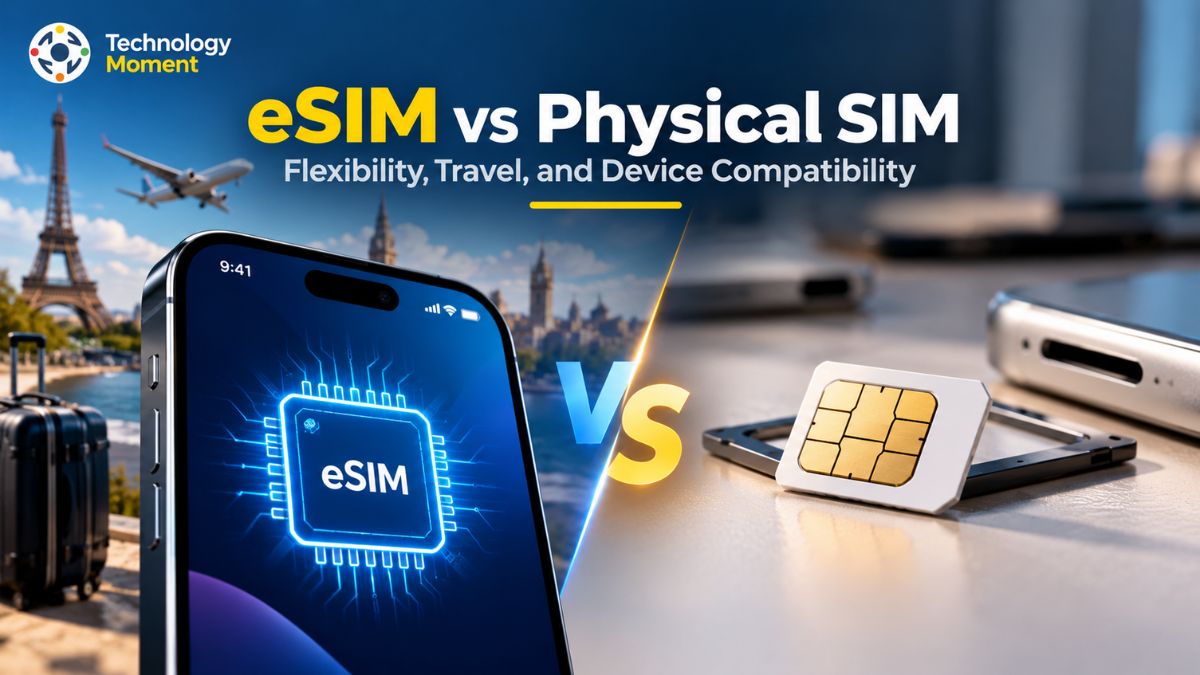
Choosing between an eSIM and a physical SIM card may seem like a small decision, but it can affect how you connect, switch devices, and stay connected while traveling. Both options serve the same essential purpose: connecting your phone to a mobile network. However, they differ in how you activate, transfer, and manage them. Understanding these differences can help you choose the option that fits your everyday needs.
An eSIM is built into a compatible device and lets you activate a mobile plan digitally. A physical SIM, on the other hand, is a removable card that you can insert into a compatible phone. With an eSIM, you may be able to set up a new plan without visiting a store or handling a separate card, while a physical SIM offers a straightforward way to move your connection between compatible devices. The exact experience depends on your phone, mobile carrier, and region.
For international travelers, the choice can be particularly important. An eSIM may make it easier to arrange mobile data before arriving in another country, while a physical SIM can be useful when you prefer a removable card or need a device that does not support eSIM technology. Neither option automatically guarantees lower costs, better coverage, or universal compatibility.
At Technology Moment, we help readers understand technology through practical comparisons and clear, useful explanations. In this guide, we compare eSIM vs. physical SIM across activation, device switching, international travel, carrier support, and recovery after losing a phone. By the end, you will have a clearer understanding of their advantages and limitations, helping you make an informed choice based on your device, connectivity needs, and travel plans.
What Is the Difference Between eSIM and Physical SIM?
The main difference between an eSIM and a physical SIM card is how your mobile network connection is stored and activated. It allows users to download and activate a mobile network profile without inserting a removable card. A physical SIM, on the other hand, is a small plastic card containing the information needed to connect a device to a mobile carrier. Both technologies provide access to mobile services, including calls, text messages, and mobile data, when supported by the device and network provider.
An eSIM uses a built-in component to store a digital SIM profile. Instead of inserting a card, users can activate a compatible mobile plan through their carrier, a QR code, or supported device settings. The exact eSIM activation process depends on the smartphone, country, and carrier. One important advantage is flexibility: users can manage multiple eSIM profiles on supported devices and switch between available plans without physically replacing a SIM card. This can be particularly useful for international travel, when a traveler wants to add a local or international data plan while keeping an existing number available.
A physical SIM card is a removable chip, commonly a nano SIM in modern smartphones. Users can generally move it from one compatible, unlocked phone to another, provided the carrier and device support the card and service. This makes physical SIM cards convenient for people who frequently change devices or prefer a familiar setup process. However, the card can be lost, damaged, or removed by someone with physical access to the phone.
An eSIM works by downloading a carrier-provided profile to the device’s embedded SIM hardware. Once activated, it connects to the supported mobile network much like a physical SIM. Therefore, the choice between eSIM and physical SIM depends on compatibility, activation preferences, travel requirements, and how easily users want to manage their mobile service.
eSIM vs Physical SIM: Key Differences at a Glance
When comparing eSIM vs physical SIM, the biggest differences involve activation, device switching, international travel, security, and carrier compatibility. Both options can provide reliable mobile connectivity, and neither automatically guarantees better network speed or coverage. Your experience depends primarily on your mobile carrier, selected plan, device capabilities, and network availability.
The following comparison table highlights the practical differences international users should consider before choosing a SIM technology.
| Comparison factor | eSIM | Physical SIM |
|---|---|---|
| SIM format | Embedded digital SIM | Removable plastic card |
| Activation | Digital setup through supported methods | Insert card and activate service |
| Switching devices | May require a supported transfer or carrier assistance | Usually move the card to a compatible phone |
| International travel | Convenient for adding supported travel plans | Useful for purchasing and inserting local SIM cards |
| Device compatibility | Requires compatible hardware and carrier support | Requires a compatible SIM slot and supported network |
| Multiple plans | Multiple profiles may be stored on supported devices | Usually requires multiple cards or dual SIM support |
| Recovery after loss | Carrier reactivation or profile transfer may be needed | Replacement card may be required |
| Physical damage | No removable SIM card to damage or lose | Card can be damaged, lost, or misplaced |
| Carrier restrictions | Activation and transfer rules may apply | Device locks and carrier restrictions may apply |
| Internet during setup | Internet access may be needed for activation | Often easier to insert, though service activation may still be necessary |
Activation is one of the clearest differences. An eSIM can be activated digitally, which may save time when a carrier supports remote setup. A physical SIM requires access to the card, but transferring it to another compatible phone can be straightforward. However, eSIM transfers are increasingly supported on modern devices, so they are not always more difficult.
For frequent travelers, an eSIM can simplify access to international data plans. Users may purchase a compatible travel eSIM before departure instead of searching for a SIM vendor after arrival. A physical SIM remains useful when a destination’s preferred carrier offers better local options through removable cards. Users should compare coverage, data allowances, roaming charges, and plan validity rather than assuming one option is always cheaper.
Device compatibility is equally important. Some smartphones support both technologies, while others support only eSIM or have regional limitations. Carrier support also determines whether a particular plan can be activated or transferred. eSIM offers digital flexibility, while physical SIM provides the convenience of a removable card. Checking device compatibility and carrier policies before switching helps prevent connectivity problems.
eSIM vs Physical SIM: Pros and Cons
Understanding the advantages and disadvantages of eSIM and physical SIM technology can help you choose the right option for your everyday connectivity needs. An eSIM is particularly attractive to people who prefer digital activation, manage several mobile plans, or travel internationally. A physical SIM can be more convenient for users who frequently move their service between compatible devices or prefer a removable card. The best option depends on your circumstances rather than a universal winner.
The main eSIM benefits include digital activation, convenient plan management, and easier access to supported travel data plans. Users can add a compatible mobile plan without waiting for a physical card to arrive. Since an eSIM is embedded in the device, there is no removable SIM card to lose or physically damage. Supported smartphones may also store multiple profiles, making it easier to manage personal, work, and travel connections.
However, eSIM has limitations. The smartphone must support the technology, and the carrier must offer a compatible activation method. Transferring an eSIM to a new phone may require device verification, a carrier app, a QR code, or customer support. If your phone is lost or damaged, restoring service may require assistance from the carrier. These restrictions can make switching devices less convenient in some situations.
The biggest physical SIM advantage is portability. In many cases, users can remove their existing card and insert it into another compatible phone without downloading a new SIM profile. This is especially useful when borrowing a device, replacing a damaged phone, or using an older smartphone that does not support eSIM. Nevertheless, physical SIM cards have disadvantages. They can be lost, damaged, or stolen, and replacing them may require visiting a carrier store or requesting a replacement. Travelers may also need to purchase a separate card at their destination and physically install it. Using multiple numbers can require additional SIM slots or a compatible dual SIM setup.
| Factor | eSIM | Physical SIM |
|---|---|---|
| Main advantage | Digital activation and plan flexibility | Simple card transfer between compatible phones |
| Travel convenience | Easy access to supported travel plans | Useful for local removable SIM options |
| Device changes | Transfer procedures may be required | Usually straightforward card swapping |
| Main limitation | Device and carrier compatibility | Physical handling and SIM slot requirements |
| Best suited for | Compatible devices and digital plan management | Users who value removable SIM portability |
For international travelers with compatible devices, eSIM is often a convenient choice. For users who prioritize quick physical transfers or own incompatible phones, a physical SIM may be more practical. Before deciding, compare carrier support, device compatibility, plan costs, and recovery procedures to determine which option best fits your needs.
eSIM vs Physical SIM for International Travel
Choosing between an eSIM and a physical SIM for international travel depends on your destination, mobile data requirements, budget, and smartphone compatibility. Both options can keep you connected abroad, but they offer different ways to access mobile networks. An eSIM allows you to download a supported mobile plan digitally, while a physical SIM requires you to insert a removable card. For frequent travelers, understanding these differences can help avoid unexpected roaming charges and connectivity problems.
An international eSIM can be convenient because you can purchase a travel data plan before departure and install it on a compatible phone. Some travel eSIMs cover multiple countries, making them useful for international trips involving several destinations. However, check whether the plan includes calls and text messages or provides data only. Also confirm its coverage, validity period, and activation requirements.
A physical SIM card remains a practical alternative. You can purchase a local SIM after arriving, provided you meet the carrier’s identification requirements and have a compatible, unlocked phone. Local SIM plans may offer competitive data rates or a local phone number. However, finding a retailer, completing registration, and changing cards can take additional time. Keeping your home SIM safe is also important if you need your usual number.
| Travel factor | eSIM | Physical SIM |
|---|---|---|
| Getting connected | Digital plan setup | Purchase and insert a card |
| Before departure | May be installed in advance | Usually purchased separately |
| Multiple countries | Some plans cover several destinations | May require different local cards |
| Home number | Can remain available if supported | May remain available with dual SIM |
| Cost | Depends on plan and coverage | Depends on local SIM and plan |
| Compatibility | Requires eSIM support | Requires a compatible SIM slot |
An eSIM is often convenient for travelers who want to arrange mobile data in advance or use several international plans. A physical SIM may suit travelers who prefer local prepaid services or have phones without eSIM support. Neither option is automatically cheaper. Compare international roaming charges, prepaid travel SIM prices, data allowances, and carrier coverage before choosing.
eSIM vs Physical SIM: Activation and Switching Devices
The activation process is another important difference when comparing eSIM vs physical SIM. A physical SIM card generally requires you to insert the card into a compatible phone and complete any required carrier activation. An eSIM uses a digital profile that can be installed through supported methods, such as a QR code, a carrier application, device settings, or a direct carrier activation process. The exact steps vary by smartphone and mobile network provider.
For eSIM activation, you may need an internet connection, your carrier’s instructions, and a compatible device. Some phones allow users to activate an eSIM during initial setup, while others provide an option to add a plan later through settings. Before starting, confirm that your carrier supports eSIM and that your phone is eligible. Keep in mind that purchasing an eSIM plan does not always mean the service is immediately active.
Switching devices can be different, too. With a physical SIM, you can often remove the card from your old phone and insert it into another compatible, unlocked device. The new phone must support the SIM format and the relevant network. By contrast, transferring an eSIM may require a supported device-to-device transfer, a new QR code, a carrier application, or assistance from your provider. Some carriers offer quick transfer features, while others require additional verification.
| Task | eSIM | Physical SIM |
|---|---|---|
| Initial activation | Download a supported profile | Insert the SIM and activate service |
| Internet requirement | May be needed for setup | Usually not needed just to insert the card |
| Transfer to a new phone | Supported transfer or carrier assistance | Move the card to a compatible phone |
| Convert SIM type | Carrier and device support required | Can sometimes be converted to eSIM |
| Number retention | Possible when the carrier supports transfer | Usually retained when moving the same active card |
| Main limitation | Transfer procedures can vary | Physical card and SIM slot required |
A physical SIM can be simpler when you frequently move your number between compatible phones. An eSIM can be equally convenient when both devices and the carrier support quick transfer. Before upgrading your phone, check the transfer process and avoid deleting an active eSIM until your new connection is working. This helps reduce the risk of temporary service interruptions.
eSIM vs Physical SIM: Device Compatibility and Carrier Support
Device compatibility is essential when deciding between an eSIM and a physical SIM. Although eSIM technology is available on many modern smartphones, it does not work on every phone or with every mobile carrier. Support can vary by model, country, regional device version, and network provider. Therefore, checking your smartphone’s specifications is an important step before purchasing a digital SIM plan.
To check eSIM compatibility, look at your manufacturer’s official specifications or open your phone’s cellular or SIM settings to see whether an option to add an eSIM is available. You can also contact your carrier to confirm that your device is supported. Some providers may ask for your device’s IMEI or another identifier before activating service. A phone that supports eSIM hardware may still be unable to use a particular carrier if the device is locked or the provider does not support that model.
Physical SIM cards are widely supported by many smartphones, particularly devices with a removable SIM tray. However, some newer phone models and certain regional versions are eSIM-only. Other devices may support a physical SIM, an eSIM, or both. Never assume that two phones with the same product name have identical SIM capabilities across every country.
| Compatibility factor | eSIM | Physical SIM |
|---|---|---|
| Device requirement | eSIM-capable hardware | Compatible SIM slot |
| Carrier support | Provider must support eSIM activation | Provider must support the SIM and network |
| Unlocked phone | Often needed for another carrier’s plan | Often needed for another carrier’s SIM |
| Regional differences | Features may vary by market | SIM tray availability may vary |
| Dual SIM use | Depends on supported profiles and device settings | Depends on SIM slots and device configuration |
| International plans | Requires a compatible device and supported provider | Requires a compatible card and supported network |
No. Carrier eSIM support varies by country, plan, and device. Some providers support prepaid eSIM plans for international travelers, while others restrict availability or require additional verification. Similarly, a physical SIM may not work with a carrier-locked phone or an incompatible network.
Before switching, verify your device’s eSIM requirements, carrier restrictions, and available plans. If you regularly travel internationally, check whether your phone supports the destinations and networks you intend to use. Choosing a SIM technology that matches your device and carrier can help you avoid activation delays and unexpected connectivity issues.
eSIM vs Physical SIM: Security and Recovery After Phone Loss
Security and recovery are important considerations when comparing eSIM vs physical SIM. Both technologies can protect access to your mobile service, but they behave differently if your phone is lost, stolen, or damaged. An eSIM is embedded in the device, whereas a physical SIM is removable. This difference affects how someone might access your SIM, how you restore service, and what steps you need to take to protect your phone number.
One advantage of eSIM technology is that a thief cannot simply remove a physical SIM card from the device because no removable card is present. This may make it harder to disconnect the phone from its mobile network by removing the SIM. However, an eSIM does not automatically prevent account takeover, unauthorized access, or other security threats. A strong screen lock, account protection, and carrier security measures remain essential.
A physical SIM can be transferred to another compatible phone if it is active and not protected by a SIM PIN. This portability is convenient when replacing a damaged device, but it also means someone with physical access to an unprotected SIM may be able to use it in another phone. A SIM PIN can add protection, although users should follow their carrier’s instructions to avoid locking the card.
| Security and recovery factor | eSIM | Physical SIM |
|---|---|---|
| Physical removal | Cannot be removed as a separate card | Can be removed from the SIM tray |
| Unauthorized transfer | Usually requires supported transfer or carrier procedures | May be transferred if accessible and usable |
| Lost phone recovery | Carrier reactivation or eSIM transfer may be required | Replacement SIM may be needed |
| Damaged phone | Profile recovery depends on carrier support | Card may be reusable if undamaged |
| Security protection | Screen lock, account security, and carrier controls remain important | Screen lock and SIM PIN can help |
| Main limitation | Recovery may require digital verification or carrier assistance | Card may be lost, stolen, or damaged |
Contact your carrier promptly to suspend the service if necessary, secure your accounts, and ask how to restore your number. Use your device’s official remote-lock or erase feature where appropriate. For an eSIM, the carrier may issue a replacement profile or help transfer the number to a new device. For a physical SIM, you may need a replacement card. Recovery procedures vary by provider, so keep your account recovery details secure.
eSIM vs Physical SIM: Which Is Better for Different Users?
There is no single winner in the eSIM vs physical SIM comparison because different users have different connectivity needs. Some people prioritize international travel and digital activation, while others value the ability to move a SIM card between compatible phones. Your ideal option depends on your device, carrier support, budget, travel frequency, and how often you change smartphones.
For international travelers, an eSIM can be especially convenient. You may be able to purchase a travel data plan before departure and activate it on a supported phone. Some plans cover several countries, reducing the need to buy separate local SIM cards. However, coverage, prices, plan validity, and the availability of calls or text messages vary between providers. Travelers should compare the full plan details rather than assuming every eSIM offers cheaper service.
An eSIM can also be transferred conveniently when the carrier and both devices support the required process. Users with older phones may prefer a physical SIM if their devices do not support embedded SIM technology. Conversely, users with eSIM-only smartphones will need a supported digital plan.
| User type | Recommended option | Why |
|---|---|---|
| Frequent international travelers | eSIM, if supported | Convenient access to compatible travel plans |
| People who frequently change phones | Depends on transfer support | Physical SIM swapping or supported eSIM transfer |
| Owners of older phones | Physical SIM, if supported | Many older devices lack eSIM functionality |
| Users with eSIM-only phones | eSIM | Required by the device |
| People needing multiple numbers | Either, depending on the phone | Dual SIM capabilities vary by model |
| Users who prefer local prepaid plans | Either | Depends on local carrier availability |
| People concerned about losing a SIM card | eSIM | No separate physical card to misplace |
Choose eSIM if your device supports it and you value digital activation, flexible plan management, or convenient access to travel data. Before deciding, verify carrier compatibility, transfer procedures, network coverage, and recovery options. These checks matter more than choosing a technology simply because it is newer.
Frequently Asked Questions
Is eSIM Better Than Physical SIM?
An eSIM is often more convenient for digital activation, managing mobile plans, and accessing travel data. Neither option guarantees better network coverage or faster internet. Your device, carrier, location, and mobile plan determine which technology is more suitable for your needs.
Is eSIM Cheaper Than Physical SIM?
International eSIM plans can offer convenient prepaid data packages, while local physical SIM cards may provide competitive rates. Compare data allowances, validity periods, roaming charges, and coverage before purchasing. The most affordable option depends on your destination, usage, and available carrier plans.
Does eSIM Work Internationally?
An eSIM can work internationally when your device supports it, and your selected plan covers the destination. Some travel eSIM plans support multiple countries, while others operate in specific regions. Before traveling, check network coverage, data limits, plan validity, activation requirements, and whether calls or text messages are included.
Can I Use eSIM Without an Internet Connection?
Downloading or activating an eSIM may require Wi-Fi or another internet connection, depending on your device and carrier. Once activated, the eSIM connects to a supported mobile network without needing Wi-Fi. Check your provider’s setup requirements before traveling or switching devices to avoid activation difficulties.
Which SIM Is Better for International Travel?
An eSIM is often convenient for international travel because you can purchase a compatible data plan before departure. A physical SIM may suit travelers who prefer local prepaid services or use phones without eSIM support. Compare prices, coverage, roaming conditions, and plan limits before deciding which option fits your trip.