The smartphone industry has changed dramatically over the years, but the basic phone design has remained surprisingly familiar. Foldable technology is beginning to challenge that formula by offering a larger display in a device that can still be carried like a conventional smartphone. Now, Apple’s entry into this category is attracting attention because a foldable iPhone could introduce a very different approach to how people use their phones.
The iPhone Duo Explained represents this new direction for Apple’s smartphone experience. Instead of simply making the screen larger, a foldable design can change how the display, software, multitasking, portability, and everyday interactions work together. When unfolded, the device could provide more screen space for reading, browsing, productivity, entertainment, and using multiple apps. When folded, it can return to a more compact smartphone form.
But understanding a foldable iPhone requires looking beyond the novelty of a folding screen. Questions about the display technology, folding mechanism, design, software experience, and practical benefits are just as important. It also raises an interesting comparison with established foldable smartphones, particularly Samsung’s Galaxy Z Fold lineup.
At Technology Moment, we focus on making complex technology easier to understand by separating meaningful developments from speculation and noise. In this guide, we break down what the iPhone Duo means, how a foldable iPhone could work, how it may change everyday smartphone use, and what could make Apple’s approach different from existing foldable devices.
What Is the iPhone Duo?
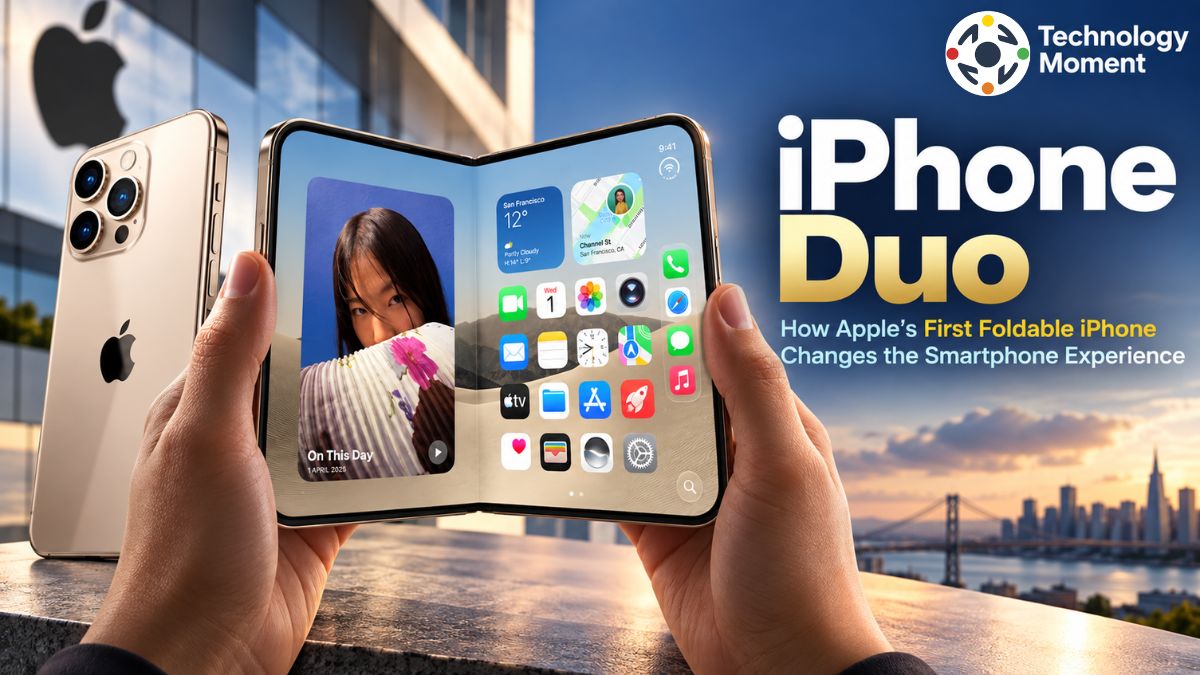
The iPhone Duo refers to Apple’s foldable iPhone concept, representing a potential shift from the traditional smartphone form factor toward a device that can provide a larger display while remaining relatively compact when folded. Rather than treating a foldable phone simply as a smartphone with a flexible screen, the idea behind an Apple foldable iPhone is more significant because the folding design can influence how people interact with the entire device. A conventional iPhone provides a fixed display and familiar smartphone proportions, while a foldable iPhone could offer both a compact mode and an expanded screen experience.
The term iPhone Duo is useful when discussing this new type of Apple smartphone because the experience can be understood through two physical states: folded and unfolded. In its compact form, the device could function like a conventional smartphone for everyday tasks such as messaging, calling, browsing, and quick interactions. When opened, the larger display could provide additional space for reading, entertainment, multitasking, and productivity. This approach could make the foldable iPhone more versatile than a traditional smartphone while preserving the familiar iPhone experience.
However, it is important to separate the broader concept from confirmed product specifications. Details such as the final design, screen dimensions, hardware configuration, and commercial availability should be treated according to reliable reporting or official Apple information. What makes the iPhone Duo important is therefore not simply the folding mechanism, but the possibility of changing how an iPhone balances portability, screen space, and everyday usability.
How Does Apple’s Foldable iPhone Work?
Understanding how the foldable iPhone works starts with the technology required to create a display that can bend without functioning like a conventional rigid smartphone screen. A folding display generally depends on flexible display technology, with flexible OLED being particularly relevant to foldable smartphone designs. Unlike a traditional fixed display, a flexible panel is designed to accommodate repeated movement while maintaining its ability to display images and interact with touch input. This technology is central to the concept of an Apple foldable smartphone because the screen needs to operate across both folded and unfolded positions.
The iPhone Duo display and folding mechanism would work together as one integrated system. The hinge mechanism is important because it controls how the two sides of the device move relative to each other. A carefully engineered hinge can influence the folding motion, device thickness, durability, and the overall feel of opening and closing the phone. Another consideration is the visible or perceived crease on a foldable display, which has become one of the defining characteristics users consider when evaluating foldable smartphones.
When unfolded, the iPhone foldable display could provide a larger working area than a conventional iPhone, potentially making activities such as reading, browsing, watching content, and multitasking more comfortable. When folded, the device could return to a more compact configuration. The important point is that a foldable smartphone is not simply a screen that bends; the display, hinge, frame, software, and user interface all need to work together.
Because specific Apple hardware details should be confirmed through authoritative sources, it is better to discuss the technology without presenting unverified specifications as established facts. The broader significance is that flexible displays and folding mechanisms can create a different relationship between portability and available screen space.
iPhone Duo Design and Display Explained
The iPhone Duo design could represent one of the biggest changes to the traditional iPhone form factor. For years, smartphones have generally followed a fixed rectangular design, with improvements focused on cameras, processors, displays, software, and materials rather than fundamentally changing how the device opens. A foldable iPhone introduces another possibility: a smartphone that can physically transform between a compact and expanded configuration. This makes the design itself an important part of the user experience rather than simply a visual change.
The display would naturally be at the center of this approach. A foldable screen can provide an unfolded display with more usable space while allowing the device to return to a smaller folded display configuration. This creates a different balance between screen size and portability. Users could potentially carry a device that takes up less space when folded while accessing a larger interface when additional screen area is useful.
The design also raises practical questions about the smartphone form factor. How easily does it open? Does the transition between folded and unfolded modes feel natural? How does iOS adapt to different screen configurations? These questions matter because a successful foldable experience depends on more than hardware. The iPhone user experience must make the additional screen space genuinely useful.
Apple’s design philosophy could also play an important role. Rather than focusing only on technical novelty, an Apple folding iPhone would need to make the technology feel integrated into everyday use. The combination of Apple design, foldable technology, flexible display technology, and the wider Apple ecosystem could determine whether the form factor feels like a meaningful evolution of the iPhone or simply another type of foldable smartphone.
How the iPhone Duo Changes the Smartphone Experience
The biggest potential change created by the foldable iPhone is not the ability to fold the device itself; it is what the additional screen space could enable people to do. A conventional smartphone is designed around a relatively fixed display area, which can sometimes limit how comfortably users handle multiple tasks at once. A foldable smartphone can introduce an expanded workspace, creating opportunities for more practical multitasking on foldable phones and potentially improving mobile productivity.
For example, a larger unfolded screen could make reading long articles, reviewing documents, browsing detailed websites, viewing media, or working across multiple applications more comfortable. Instead of switching constantly between applications or navigating within a small display, users could potentially take advantage of the additional space. The value of the iPhone Duo would therefore depend heavily on how effectively its software takes advantage of the expanded screen rather than simply making everything appear larger.
Entertainment could also benefit from the different form factor. A larger display may create a more immersive environment for video, gaming, photography, and other visual content. At the same time, the folded configuration could retain the convenience expected from a compact smartphone. This combination is one of the most interesting aspects of foldable technology: users do not necessarily have to choose between portability and a larger display.
The experience could also extend into Apple’s wider ecosystem. If the hardware and software are designed to work seamlessly with other Apple devices and services, the foldable iPhone could become another part of an interconnected workflow. However, the exact benefits will depend on Apple’s final implementation and software support. Ultimately, how the iPhone Duo changes the smartphone experience will be determined not by the folding mechanism alone, but by whether the design provides meaningful advantages in everyday communication, entertainment, multitasking, and productivity.
iPhone Duo vs. Other Foldable Phones
The iPhone Duo vs. Samsung Galaxy Z Fold comparison is particularly relevant because Samsung has helped establish the modern foldable smartphone category. However, comparing the devices should involve more than screen size or folding mechanisms. The more meaningful question is how Apple’s approach to a foldable smartphone could differ from the approaches already used by other manufacturers. A foldable iPhone would enter a category where users already have expectations around flexible displays, hinge mechanisms, multitasking, durability, and software optimization.
One potential point of distinction is Apple’s broader ecosystem. The Apple ecosystem connects the iPhone with services and devices such as Macs, iPads, Apple Watches, and other products. If a foldable iPhone integrates its expanded display into this ecosystem effectively, the experience could become more than simply having a larger screen. Continuity between devices, applications, and services could influence how useful the foldable format becomes in everyday situations. However, specific capabilities should not be assumed until Apple officially confirms them.
The comparison also extends to design philosophy. Existing foldable phones have demonstrated different approaches to folding displays, including book-style designs that open into a larger screen. An Apple folding iPhone would likely be judged not only by its hardware but also by how naturally the design fits into the familiar iOS experience. Questions around the foldable iPhone display, hinge design, portability, software, and multitasking will therefore be important.
Ultimately, Apple foldable vs. Samsung foldable should be viewed as a comparison of approaches rather than simply a specification contest. Each manufacturer can prioritize different aspects of the foldable experience, and the practical value depends on how well hardware and software work together.
How Will a Foldable iPhone Affect Everyday Smartphone Use?
A foldable iPhone could affect everyday smartphone use by changing how people balance portability with available screen space. Traditional smartphones provide a fixed display, which works well for communication, browsing, photography, entertainment, and everyday applications. A foldable design introduces another possibility: users could carry the phone in a compact configuration and open it when they need more screen area. This could make the iPhone Duo particularly interesting for people who frequently move between quick smartphone tasks and activities that benefit from a larger display.
Reading is one potential use case. Long articles, documents, websites, and other text-heavy content could become more comfortable on an expanded screen. Entertainment could also benefit from additional display space, particularly when watching videos or interacting with visual applications. For people who use their smartphones for work, the larger interface could potentially support better multitasking on foldable phones, allowing more information to remain visible at once.
The concept could also influence mobile productivity. Users may be able to manage documents, communication, research, and other tasks more comfortably when the display is unfolded. However, simply providing a larger screen does not automatically improve productivity. The software needs to make effective use of the available space, and applications need appropriate support for the foldable form factor.
Portability remains another important consideration. The appeal of a foldable smartphone comes partly from its ability to offer an expanded display without requiring the user to carry a permanently larger device. The real impact will therefore depend on Apple’s final balance between size, weight, durability, software, and usability.
For everyday users, the most meaningful change would be the ability to choose the display configuration that matches the task. The foldable iPhone could potentially make a smartphone feel more adaptable, moving between a compact communication device and a larger productivity or entertainment platform when needed.
Why Is Apple Moving Toward a Foldable iPhone?
The move toward a foldable iPhone represents a broader change in the way smartphone manufacturers are thinking about screen space, portability, and device design. Traditional smartphones have largely followed the same basic form factor for years, with improvements coming through faster processors, better cameras, brighter displays, and software features. A foldable smartphone introduces another way to improve the experience by allowing the physical form of the device to change. For Apple, an Apple foldable phone could potentially bring a larger display experience to the iPhone without requiring users to carry a permanently larger device.
One important reason foldable technology has attracted attention is the balance between portability and screen size. A larger screen can make reading, video, multitasking, and mobile productivity more comfortable, but increasing the size of a conventional smartphone also affects portability. A folding display offers a different solution by allowing the device to remain more compact when folded and provide additional screen space when unfolded. This is one of the central ideas behind the Apple foldable smartphone concept.
The potential move also fits into the wider evolution of smartphone innovation. Consumers increasingly use phones for tasks that once required larger devices, including document work, content consumption, research, communication, and multitasking. A foldable design could bring some of those larger-screen capabilities into the iPhone experience.
However, Apple’s exact reasoning should not be presented as confirmed unless the company explicitly states it. Reports, industry trends, and product developments can indicate where the market is heading, but they do not necessarily establish Apple’s internal strategy. The more useful question is how a foldable iPhone could solve real user needs. If Apple can combine its design approach, iOS experience, hardware, and Apple ecosystem into a genuinely useful foldable format, the technology could become more than a novelty.
What to Expect From Apple’s Foldable iPhone
What users should expect from an Apple foldable iPhone depends heavily on information Apple officially confirms and reliable reporting about the product. The broad expectation is a smartphone built around a flexible display and folding form factor, but the final product could differ significantly from early concepts or rumors. For that reason, terms such as foldable iPhone rumors, expected specifications, and possible features should be treated carefully rather than as confirmed information.
The display will likely be one of the most important aspects of the experience. A flexible OLED panel could allow the device to move between folded and unfolded configurations, potentially giving users access to a larger screen when required. The iPhone foldable display would also need to work with the software in a way that makes the additional space genuinely useful. Screen size alone does not guarantee a better experience; application layouts, multitasking, touch interaction, and the transition between display modes will all matter.
Users may also pay close attention to the iPhone Duo hinge, overall thickness, portability, durability, and the appearance of the folding area. These elements can have a significant effect on whether a foldable smartphone feels practical for everyday use. The design will need to balance mechanical complexity with the simplicity users typically expect from an iPhone.
Software could ultimately become one of the most important differentiators. A foldable iPhone would need an iOS experience that takes advantage of its changing screen configuration rather than simply adapting an existing interface. Multitasking, media, productivity, and other applications could potentially benefit from additional space. Ultimately, the best way to evaluate Apple’s foldable direction will be through confirmed hardware, software capabilities, pricing, availability, and real-world usability rather than speculation alone.
Frequently Asked Questions About iPhone Duo Explained
How does the foldable iPhone change the smartphone experience?
A foldable iPhone could change the smartphone experience by combining portability with additional screen space. When unfolded, the larger display could benefit reading, entertainment, multitasking, and mobile productivity. When folded, the device could offer a more compact experience. The practical benefits would depend on Apple’s final hardware and software implementation.
What are the features of the iPhone Duo?
The expected concept includes a foldable form factor, flexible display technology, a folding mechanism, and an expanded screen experience. Software optimization would also be important for multitasking and productivity. However, specific iPhone Duo features and specifications should be considered unconfirmed until Apple provides official details.
How does the iPhone Duo fold?
The iPhone Duo concept would use a hinge mechanism to allow the device to move between folded and unfolded states. The flexible display would need to accommodate that movement. The exact hinge architecture, folding angle, durability, and display crease characteristics depend on the final product design and should be confirmed from authoritative sources.
What kind of display does the foldable iPhone use?
A foldable iPhone would require a flexible display capable of bending during normal operation. Flexible OLED technology is widely associated with foldable smartphone designs because it can support flexible form factors. However, the exact display technology, specifications, size, and implementation of Apple’s product should be confirmed through official information.
How does the iPhone Duo compare with other foldable phones?
The iPhone Duo vs. other foldable phones comparison should consider design, display, software, multitasking, portability, durability, and ecosystem integration. Samsung’s Galaxy Z Fold series provides an established reference point. Apple’s approach, if launched, would ultimately need to be evaluated using confirmed specifications and real-world user experience rather than rumors alone.
Is the iPhone Duo a foldable iPhone?
The term iPhone Duo is used here to describe Apple’s anticipated foldable iPhone concept. In that context, yes, it refers to a foldable iPhone design. However, readers should distinguish between the concept and officially confirmed product information, particularly when discussing specifications, features, naming, availability, or technical details.
Why is Apple making a foldable iPhone?
Apple has not necessarily disclosed every strategic reason behind a potential foldable iPhone. Possible industry drivers include demand for larger displays, new smartphone form factors, improved multitasking, and greater flexibility between portability and screen size. These should be treated as potential factors rather than confirmed statements about Apple’s internal strategy.
What makes Apple’s foldable iPhone different?
The potential difference could come from how Apple combines foldable hardware with its iOS experience, design philosophy, and broader ecosystem. A successful product would need more than a flexible screen; it would need useful software, practical ergonomics, reliable hardware, and meaningful benefits in everyday smartphone use.
How will a foldable iPhone affect everyday smartphone use?
A foldable iPhone could provide users with two different experiences in one device. The folded configuration could prioritize portability and quick tasks, while the unfolded configuration could provide more space for reading, entertainment, multitasking, and productivity. The actual impact will depend on the final design, software support, and application optimization.