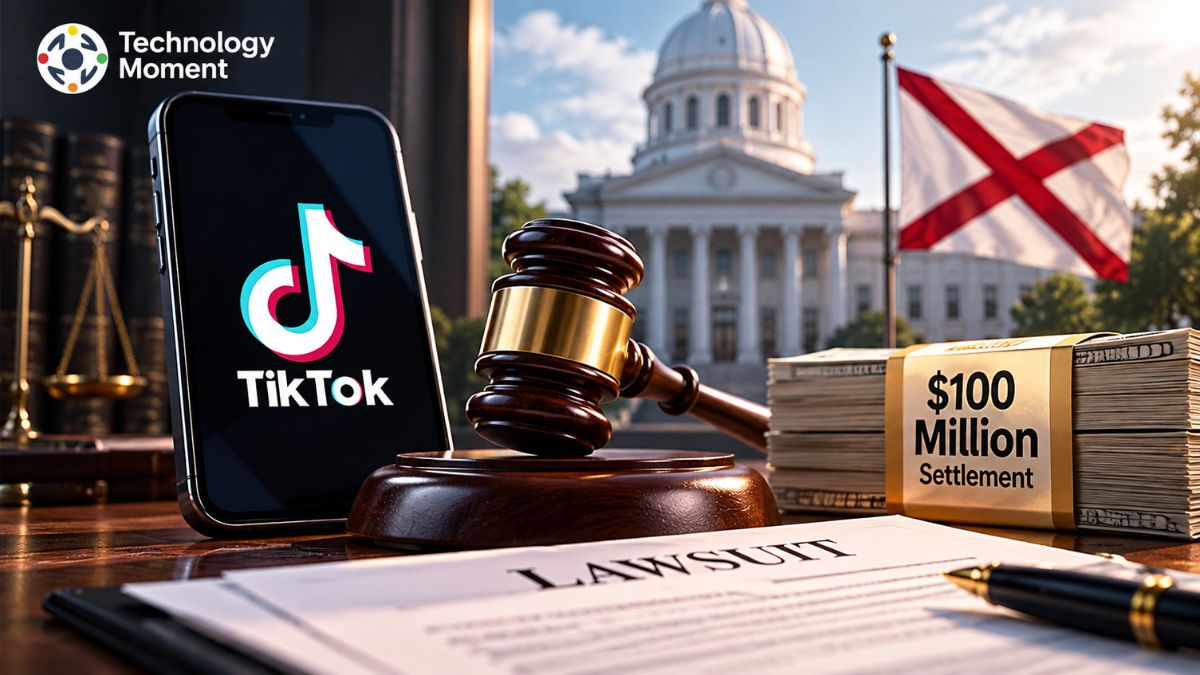
TikTok is facing another major legal development after agreeing to settle a social media lawsuit brought by the state of Alabama for $100 million. The settlement puts one of the platform’s legal disputes under renewed attention, particularly because the case involves broader concerns surrounding how social media platforms operate and protect users.
The TikTok Alabama lawsuit has attracted interest beyond the state itself because TikTok remains one of the world’s most widely used social media platforms. Legal actions involving the company can have implications for how platforms address issues such as child safety, user privacy, and their practices involving younger users. For users, parents, technology professionals, and policymakers, understanding what the settlement actually means is more useful than simply focusing on the headline figure.
In this report, Technology Moment breaks down the TikTok $100 million settlement in straightforward terms. We look at what the Alabama lawsuit was about, the allegations involved, why TikTok agreed to the settlement, and what the agreement means for the company and its users. We also examine what happens after the settlement and whether it changes TikTok’s broader legal position.
Technology Moment focuses on explaining important technology developments with context rather than unnecessary speculation. As social media companies face increasing scrutiny from regulators and lawmakers around the world, understanding the facts behind major legal cases can help readers make sense of what these developments could mean for the future of online platforms.
What Is the TikTok Alabama Lawsuit About?
The TikTok Alabama lawsuit is a legal dispute involving the popular social media platform and the state of Alabama. At the center of the case are concerns about TikTok’s platform practices and issues connected with social media safety, particularly the experience of younger users. Like other major social media platforms, TikTok has faced increasing scrutiny over how its services affect minors, how users interact with its features, and whether its practices adequately address concerns involving child safety and user privacy. The Alabama case is therefore part of a broader discussion about the responsibilities of large technology companies and the standards that social media platforms are expected to follow.
The lawsuit attracted attention because Alabama took legal action against TikTok rather than treating these concerns simply as a matter of platform policy. The TikTok legal case highlights the growing role of state-level regulatory action in examining the practices of major technology companies. While a lawsuit does not by itself establish that every allegation is proven, legal claims can bring greater public attention to questions about how a platform operates and protects its users.
For TikTok users, the Alabama TikTok lawsuit is significant because the issues raised in cases like this can influence how social media companies approach safety, privacy, transparency, and platform design. Parents and guardians may also be interested in how these legal disputes could affect protections for minors who use social media services. The case is particularly relevant internationally because TikTok operates across numerous markets, while governments and regulators in different jurisdictions continue to examine the responsibilities of large social media platforms.
In short, the TikTok Alabama lawsuit is not simply about a dispute between one state and one technology company. It reflects a wider debate about social media regulation, platform practices, child safety, and the responsibilities of companies serving millions of users. Understanding those underlying issues provides important context for the reported $100 million settlement.
Why Did TikTok Settle With Alabama for $100 Million?
TikTok’s decision to settle the Alabama lawsuit for $100 million represents a major development in the legal dispute. A settlement allows the parties to resolve a lawsuit through an agreement rather than continuing the dispute through the full litigation process. However, the existence of a settlement should not automatically be interpreted as an admission that every allegation made in the lawsuit was proven. The precise legal meaning of a settlement depends on the terms of the settlement agreement and the positions taken by the parties involved.
The TikTok $100 million settlement has attracted attention largely because of the size of the payment and the wider issues associated with the case. The Alabama lawsuit focused attention on TikTok’s platform practices and concerns involving social media safety, minors, and user privacy. These subjects have become increasingly important as governments examine how technology companies design and operate platforms used by younger audiences. For TikTok, resolving the TikTok Alabama lawsuit provides a way to bring the particular state-level dispute toward a conclusion while avoiding the uncertainty, cost, and duration associated with continued litigation.
The reason behind the settlement should therefore be understood in its proper legal context. A company may settle a legal case for several practical reasons, including resolving specific claims, reducing litigation costs, limiting uncertainty, or reaching an agreed outcome with the opposing party. The settlement itself does not necessarily establish that all allegations are factually or legally correct.
The TikTok settlement also demonstrates the growing importance of regulatory action involving social media companies. As authorities continue examining the responsibilities of digital platforms, legal disputes can influence public discussions about safety, privacy, transparency, and platform accountability. For readers following TikTok legal news, the Alabama settlement is significant not only because of its financial value but also because it illustrates how disputes involving major technology platforms can develop. The exact obligations and consequences created by the agreement should be understood from the official settlement terms and statements from the relevant parties.
How Much Did TikTok Pay Alabama?
TikTok agreed to pay Alabama $100 million as part of the settlement of the state’s lawsuit against the company. The figure makes the TikTok Alabama settlement a significant financial development and is the central detail behind the widespread attention surrounding the case. Searches for “how much did TikTok pay Alabama?” are therefore directly answered by the reported settlement amount: $100 million.
The payment is connected to the resolution of the Alabama lawsuit and should be distinguished from the broader financial performance or business operations of TikTok and its parent company. A settlement payment is a legal resolution between the parties involved in a particular dispute. It does not mean that the same amount will necessarily apply to other lawsuits, investigations, or regulatory proceedings involving TikTok in different jurisdictions.
The TikTok lawsuit settlement amount is also important because financial penalties and settlements can become part of the wider regulatory environment surrounding major social media companies. Governments and regulators have increasingly examined questions involving social media safety, child safety, minors, privacy, and platform practices. When a major platform reaches a substantial settlement, it can draw attention to those issues even beyond the specific case in which the agreement was reached.
For users, however, the $100 million figure should not be viewed in isolation. The more important question is what the settlement agreement actually requires and whether it creates specific obligations for TikTok. Financial terms are only one component of a legal settlement. Any additional commitments, requirements, or restrictions should be assessed according to the official agreement and statements issued by the parties.
The Alabama TikTok case also illustrates why readers should look beyond a headline when following technology legal news. A large settlement figure can generate considerable discussion, but understanding the underlying legal claims, the parties’ positions, and the terms of the agreement provides a more complete picture. In this case, the $100 million payment is the headline figure, while the broader significance lies in the continuing scrutiny of social media platforms and their responsibilities toward users.
What Were the Allegations Against TikTok?
The allegations in the TikTok Alabama lawsuit centered on concerns about the company’s platform practices and the potential effects of its social media service on users, particularly younger users. Issues involving social media safety, child safety, minors, and user privacy have become important areas of scrutiny as governments examine how large technology platforms operate. In the Alabama TikTok case, these concerns formed part of the legal dispute between the state and TikTok and contributed to the broader discussion about the responsibilities of social media companies.
The case is important to understand in the context of how social media platforms are designed and operated. TikTok provides users with a highly personalized environment where content recommendations, engagement features, and interactions can encourage continued use of the service. Questions about how these platform practices affect minors have become an increasingly prominent subject of regulatory action. For Alabama, the lawsuit represented a legal mechanism for addressing its concerns about TikTok’s practices rather than relying solely on voluntary changes by the company.
However, allegations made in a lawsuit should be distinguished from facts that have been conclusively established by a court. A legal complaint represents the claims and arguments of the party bringing the case. TikTok can present its own response and position regarding those claims. This distinction is particularly important when reporting on TikTok legal news because headlines about lawsuits can sometimes make allegations appear more conclusive than the underlying legal record supports.
The allegations also matter beyond Alabama because TikTok operates internationally and social media regulation is developing in multiple jurisdictions. Governments are examining how platforms address minors, privacy, transparency, and online safety, creating an evolving regulatory environment for technology companies. As a result, the TikTok Alabama lawsuit has become part of a much larger conversation about platform accountability and the responsibilities of companies that operate services used by millions of people.
For readers trying to understand the case, the central issue is therefore not simply that TikTok faced a lawsuit. It is that the lawsuit brought specific concerns about platform practices and user safety into a formal legal proceeding, ultimately leading to the reported settlement between TikTok and Alabama.
What Does the TikTok Alabama Settlement Mean?
The TikTok Alabama settlement means that TikTok and the state of Alabama have reached an agreement to resolve the lawsuit rather than continuing the dispute through further litigation. The headline element of the agreement is the reported $100 million settlement, which has made the case particularly notable in technology and legal news. For people searching for a TikTok Alabama settlement explained, the most important point is that a settlement resolves the particular dispute between the parties according to the terms they agreed upon.
The settlement should not automatically be interpreted as a finding that TikTok was legally responsible for every allegation made against it. In a settlement, the parties agree to resolve a dispute without necessarily having a court determine every contested allegation. This distinction is especially important when discussing the TikTok $100 million settlement because the payment amount alone does not explain every legal consequence of the agreement.
For TikTok, resolving the Alabama lawsuit can bring greater certainty around this particular legal dispute. Continuing litigation can involve additional legal costs, time, uncertainty, and potential regulatory attention. Reaching an agreement provides a defined resolution under the terms negotiated by the parties. The significance of the settlement will therefore depend not only on its financial component but also on any obligations or commitments contained in the final agreement.
For Alabama and other regulators, the case reflects the continuing attention being given to social media companies and their platform practices. Issues such as child safety, minors, user privacy, and broader social media safety remain important subjects in technology regulation. The Alabama case may therefore continue to receive attention even after the settlement because it illustrates how state authorities can use legal and regulatory processes to address concerns involving major digital platforms.
For users, the TikTok Alabama settlement does not necessarily mean that the TikTok service will immediately change in every market. Any specific changes should be evaluated against the actual settlement terms and TikTok’s official announcements. The broader significance is that social media platforms continue to face scrutiny over how they design, operate, and protect users on their services.
Did TikTok Admit Wrongdoing in the Alabama Settlement?
A settlement should not automatically be treated as an admission of wrongdoing by TikTok. This is an important distinction when discussing the TikTok legal settlement because agreeing to resolve a lawsuit does not, by itself, establish that the company admitted every allegation made against it. Whether a settlement contains an admission, denial, or specific statement concerning liability depends on the language of the actual settlement agreement and the statements issued by the parties.
The Alabama lawsuit involved legal claims concerning TikTok’s platform practices and issues connected with social media safety, minors, child safety, and user privacy. Those allegations formed the basis of the dispute, but allegations in a lawsuit are not equivalent to findings of fact made after a trial. The parties can have different positions about the underlying claims while still agreeing to settle the case. This is why readers should distinguish between the allegations, TikTok’s response, and the final terms of the settlement.
The $100 million payment also should not be interpreted on its own as proof that TikTok admitted legal liability. Financial settlements can be used to resolve disputes while avoiding the uncertainty and expense of continued litigation. The legal meaning of the payment depends on the agreement itself. If the settlement contains specific language concerning liability or admissions, that language should be reported directly and in context rather than inferred from the settlement amount.
This distinction is particularly relevant when following TikTok legal news internationally. Large technology companies can face multiple lawsuits and regulatory actions in different jurisdictions, and the outcome of one case does not necessarily establish liability in another. The TikTok Alabama case should therefore be understood on its own legal terms.
For readers asking whether TikTok admitted wrongdoing in the Alabama settlement, the responsible approach is to examine the official settlement documents and statements from both sides. The existence of a $100 million settlement confirms that the parties agreed to resolve the Alabama dispute, but the settlement amount alone does not establish an admission of wrongdoing. The precise legal effect comes from the terms of the agreement itself.
What Happens After TikTok Settles With Alabama?
After TikTok settles with Alabama, the immediate focus shifts from the lawsuit itself to the terms and implementation of the settlement agreement. The reported $100 million payment resolves the particular legal dispute between TikTok and Alabama, but the broader questions surrounding social media safety, child safety, minors, user privacy, and platform practices do not necessarily disappear. The settlement should therefore be viewed as the resolution of a specific legal case rather than the end of regulatory attention toward social media platforms.
One important step after a settlement is determining what obligations, if any, the agreement places on the company. Financial terms often receive the most attention, but a settlement can also contain additional requirements or commitments. The exact effect of the TikTok Alabama settlement depends on the final agreement and any official statements issued by the parties. Readers should therefore rely on the settlement documents when assessing what TikTok is required to do after the case.
The resolution of the Alabama TikTok lawsuit also does not automatically settle unrelated legal disputes involving TikTok in other states or countries. Large social media platforms can face separate lawsuits, investigations, and regulatory actions based on different laws and circumstances. Consequently, the TikTok settlement with Alabama should not be interpreted as a universal resolution of every legal issue involving the company.
For TikTok users, the practical impact may depend on whether the settlement requires specific changes to the platform or its practices. Users should watch for official announcements concerning privacy, safety, account features, or policies rather than assuming that every aspect of TikTok will change immediately.
The case may also contribute to the wider debate about social media regulation. Governments continue to examine how technology companies should protect younger users and handle privacy and safety concerns. The TikTok Alabama settlement therefore has significance beyond its $100 million headline figure. It demonstrates how legal and regulatory scrutiny can influence discussions about accountability, platform design, and the responsibilities of major social media companies.
TikTok Alabama Lawsuit: What Users Should Know
For TikTok users, the most important fact about the TikTok Alabama lawsuit is that the company agreed to settle the dispute with Alabama for $100 million. The case involved concerns related to TikTok’s platform practices and broader questions surrounding social media safety, minors, child safety, and user privacy. However, users should distinguish between allegations made in a lawsuit and facts that have been conclusively established by a court.
The settlement does not necessarily mean that TikTok users need to take immediate action on their accounts. A legal settlement between a company and a state does not automatically mean that every user account, feature, or service will change. Any specific changes should be based on the actual settlement terms and official information from TikTok or Alabama. Users should avoid relying on social media posts or headlines that make claims beyond what the official documents establish.
Parents and guardians may have particular interest in the case because concerns about minors and social media safety are part of the broader discussion surrounding the lawsuit. Parents can review TikTok’s current safety, privacy, and parental-control options and make decisions based on the needs and age of the young people using the service. The Alabama case does not, by itself, provide a universal assessment of TikTok’s safety for every user.
Privacy is another important consideration. The TikTok Alabama settlement should not be interpreted as automatically changing the privacy rights or settings of every user. Instead, users should examine TikTok’s current privacy policies and account controls for information about how their data and interactions are handled.
International users should also understand that the Alabama TikTok case concerns a state-level legal dispute. TikTok operates across many countries, each with different laws and regulatory systems. A settlement in Alabama does not automatically create identical legal requirements worldwide. For users following TikTok legal news, the key takeaway is to focus on verified information: the $100 million settlement, the nature of the legal dispute, the official settlement terms, and any confirmed changes to TikTok’s policies or practices. This provides a clearer picture than speculation about what the settlement might mean.
Frequently Asked Questions About the TikTok Alabama Lawsuit
Why did TikTok settle with Alabama?
TikTok agreed to settle the Alabama lawsuit for $100 million, resolving the specific legal dispute between the company and the state. The case involved concerns about TikTok’s platform practices and issues surrounding social media safety, minors, and user privacy. The settlement’s precise legal effect depends on its official terms.
How much did TikTok pay Alabama?
TikTok agreed to a reported $100 million settlement with Alabama. The amount represents the financial component of the agreement resolving the state’s lawsuit. The settlement amount alone does not establish that TikTok admitted every allegation made in the case or determine liability in unrelated legal proceedings.
What is the TikTok Alabama lawsuit about?
The TikTok Alabama lawsuit concerns legal claims involving the company’s platform practices and broader concerns related to social media safety, minors, child safety, and user privacy. The allegations should be distinguished from proven facts, and the final significance of the case depends on the settlement and official legal documents.
What does the TikTok Alabama settlement mean?
The settlement means TikTok and Alabama agreed to resolve their particular legal dispute rather than continue the case through further litigation. The agreement’s broader implications depend on its terms. It does not automatically resolve separate lawsuits, investigations, or regulatory actions involving TikTok elsewhere.
What happens after TikTok settles with Alabama?
After the settlement, attention turns to fulfilling the agreement’s terms and any obligations it creates. The settlement resolves the specific Alabama dispute, but separate legal or regulatory matters can continue. Users should follow official announcements for any confirmed changes affecting TikTok’s policies, safety measures, privacy practices, or services.
What were the allegations against TikTok?
The Alabama lawsuit involved concerns surrounding TikTok’s platform practices and issues connected with social media safety, minors, child safety, and user privacy. These were allegations made within the legal dispute and should not automatically be treated as findings of fact. The settlement resolved the case without changing that distinction.
Is the TikTok Alabama lawsuit still ongoing?
The reported settlement means the specific dispute between TikTok and Alabama has been resolved through an agreement. However, that does not mean every legal or regulatory issue involving TikTok has ended. Separate proceedings in other jurisdictions can have their own timelines, claims, and outcomes.