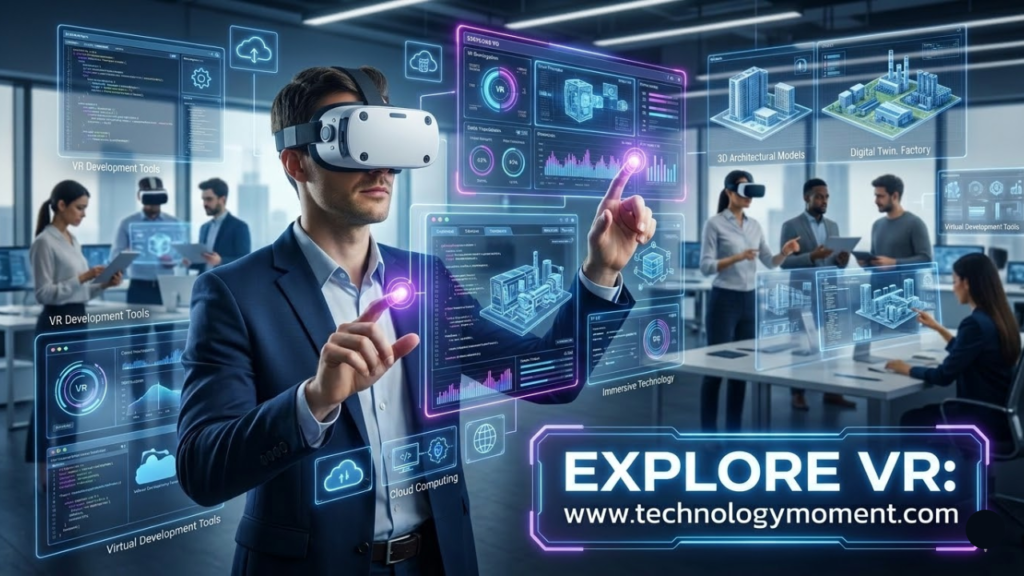
The world of business technology is moving fast, and VR development software for enterprises is becoming one of the most exciting tools companies are adopting today. At Technology Moment, we often see how emerging tech shifts the way organizations work, train teams, and design products. Virtual Reality is no longer just for games or entertainment. It is now a serious business solution. Many global companies use enterprise VR software platforms to create immersive training programs, simulate complex operations, and build better products before they exist in the real world. When people hear the phrase “explosive wins,” it might sound like marketing hype, but for enterprises using VR technology, the results are often dramatic. Faster training, fewer mistakes, and stronger collaboration are just the beginning.
One reason virtual reality development tools for enterprises are trending is simple: they solve real problems. Traditional training methods can be expensive and slow. Think about industries like manufacturing, aviation, healthcare, or construction. Training workers safely in these fields is difficult and costly. With VR simulation software for enterprise training, employees can practice tasks in a fully digital environment. They can repeat scenarios many times until they master the skill. This approach improves learning speed and reduces workplace accidents. Many organizations report that immersive VR training increases knowledge retention compared to classroom learning. When teams can experience situations rather than just read about them, learning becomes deeper and more practical.
Another major shift comes from enterprise VR application development for product design and collaboration. Companies often spend months building physical prototypes that might fail during testing. VR development software changes this process completely. Engineers, designers, and decision-makers can walk inside a digital prototype before anything is manufactured. They can examine machines, buildings, or products from every angle and adjust designs instantly. Global teams can also meet inside virtual workspaces, making remote collaboration feel far more natural. In an age where distributed teams are common, virtual collaboration platforms powered by VR technology offer a powerful advantage.
A growing number of industries are already seeing real results from VR solutions for enterprise innovation. Healthcare organizations use VR to train surgeons and medical staff. Retail brands create immersive product experiences for customers. Real estate companies offer virtual property tours to buyers across the world. Even large manufacturing firms rely on VR simulations to test equipment, improve safety procedures, and optimize production lines. These real-world use cases show that VR is not a futuristic experiment anymore. It is a practical tool that helps companies make smarter decisions and reduce costly errors.
Here at Technology Moment, our goal is to help readers understand how technology trends translate into real business value. VR development software for enterprises represents a powerful intersection of innovation and efficiency. Companies that explore this technology today gain a competitive edge tomorrow. As hardware becomes more affordable and development platforms grow stronger, VR will likely become a standard tool in enterprise digital transformation. The organizations that adopt it early will shape the next era of business innovation.
The Rise of Enterprise VR Technology
Not long ago, many people thought virtual reality was only for gaming. That idea has changed fast. Today, companies use VR to train employees, design products, and solve real business problems. The shift happened because businesses now need smarter tools for remote work, faster training, and global collaboration. When teams are spread across many countries, traditional methods often fail. VR helps people feel like they are in the same room even when they are thousands of miles apart.
Another reason behind the rise of enterprise VR technology is the rapid improvement in hardware and software. Modern VR headsets are lighter, cheaper, and far more powerful than older versions. At the same time, VR development software for enterprises has become easier to use. Companies no longer need a large team of engineers to build immersive environments. With modern platforms and development tools, businesses can create simulations, virtual workspaces, and digital twins with less effort and lower cost.
Global competition also plays a big role. Companies are always searching for ways to improve efficiency and productivity. VR allows organizations to test ideas in a virtual space before spending money in the real world. For example, a manufacturing company can build a virtual factory simulation to test workflows before constructing the real factory. This reduces mistakes, saves money, and speeds up decision-making.
You can think of enterprise VR like a digital training ground for business innovation. Instead of reading manuals or watching slides, employees can interact with machines, tools, and environments in a realistic virtual world. That immersive experience helps people learn faster and remember more. Because of these advantages, enterprise virtual reality solutions are quickly becoming a powerful tool for global organizations.
Why Businesses Are Investing in VR Development
Businesses invest in technology when it solves problems or creates new opportunities. That is exactly what VR development for enterprises does. One of the biggest reasons companies invest in VR is training. Traditional training methods often require travel, instructors, and expensive equipment. VR training removes many of these barriers. Employees can learn complex tasks inside a virtual simulation, practice multiple times, and gain confidence before performing the task in real life.
Another reason companies invest in enterprise VR software platforms is productivity. In many industries, teams must collaborate across continents. Video calls help, but they do not always create a strong sense of presence. VR collaboration tools allow people to meet inside a shared digital space. Team members can walk around a virtual prototype, analyze data together, and discuss improvements as if they were standing in the same room.
Product development is also changing because of VR. Imagine designing a car, building, or machine without waiting months for a physical prototype. With VR product design tools, engineers can build and test prototypes inside immersive environments. They can detect design flaws earlier and make adjustments quickly. This reduces development time and lowers production costs. Companies that use VR for product design often launch products faster than their competitors.
Businesses also see VR as a tool for customer experience and innovation. Retail brands use virtual showrooms where customers can explore products in 3D. Real estate companies offer virtual property tours for global buyers. Healthcare organizations train surgeons using highly realistic simulations. These examples show how enterprise VR adoption is not just about technology; it is about creating smarter ways to work, learn, and connect.
What Is VR Development Software for Enterprises
When people hear the term VR, they often think about headsets. But the real power behind VR lies in the software that creates the experience. VR development software for enterprises is a set of tools and platforms that allow developers and organizations to build immersive virtual environments. These environments can simulate real workplaces, machines, offices, stores, or even entire cities.
Think of VR development software like the engine behind a video game, but designed for business purposes. With the right platform, companies can create VR training programs, virtual meetings, digital twins, and product simulations. Developers use tools such as 3D engines, scripting systems, and integration frameworks to build interactive worlds. These tools allow users to move, interact with objects, and complete tasks in a realistic virtual environment.
Enterprise VR software is very different from simple consumer applications. Businesses require advanced features such as data security, system integration, scalability, and analytics. For example, a company might integrate VR training with its HR system to track employee progress. Managers can analyze how employees perform in simulations and identify skill gaps. This level of insight helps companies make better decisions about training and workforce development.
Another important aspect of enterprise VR development platforms is compatibility. Modern VR software must work across multiple devices, including headsets, desktops, and even web browsers. Many companies also integrate AI and cloud technology with VR applications to create smarter and more scalable solutions. As a result, VR development software is becoming a core part of digital transformation strategies for organizations around the world.
What Is VR Development Software for Enterprises
To understand enterprise VR software better, imagine building a virtual workplace where employees can interact with machines, tools, and colleagues just like they would in real life. VR development software for enterprises provides the framework to create these environments. It includes tools for designing 3D spaces, adding physics and interaction, connecting to databases, and deploying the experience to users across different devices.
At its core, enterprise VR development software combines several technologies. It uses 3D modeling tools, real-time rendering engines, programming frameworks, and cloud services. Together, these components allow developers to build immersive applications that run smoothly on VR hardware. The goal is to create experiences that feel natural and realistic so users can focus on learning or collaboration rather than technology.
With the right VR platform, organizations can create custom VR training modules, virtual collaboration spaces, and simulation environments that match their exact needs. This flexibility allows businesses to design experiences tailored to their industry, whether it is healthcare, manufacturing, education, or retail.
It allows companies to simulate real-life scenarios, experiment with new ideas, and train employees without risk. As global organizations continue to embrace immersive technology and metaverse-style workplaces, enterprise VR development tools will become even more important for innovation and competitive growth.
Top Benefits of VR Development Software for Enterprises
When you look at how modern companies operate, one thing becomes clear: businesses want faster results with fewer risks. This is where VR development software for enterprises creates real value. Virtual reality allows teams to test ideas, train employees, and explore new designs inside a safe digital world. You can simulate a factory floor, a hospital operating room, or a retail store layout without building anything physically. That means companies save money, reduce mistakes, and move faster in competitive markets. Many global organizations now see enterprise VR software solutions as a practical tool rather than an experimental technology.
Another powerful benefit is how VR improves learning and training. Traditional training methods often rely on slides, manuals, or lectures. These methods can feel boring and hard to remember. VR changes that completely. Employees can step inside interactive environments where they practice real tasks. For example, a technician can repair a machine in a virtual environment before touching the real equipment. This approach boosts confidence and reduces workplace accidents. Because of this advantage, VR training software for enterprises has become one of the fastest-growing corporate technology trends worldwide.
Companies also use VR to speed up product development. Think about the traditional process of building physical prototypes. It takes time, money, and several iterations before the final product is ready. With virtual prototyping software, engineers and designers can create and test models in a virtual space. They can rotate, modify, and inspect products instantly. Teams can spot problems early and improve designs before production begins. This not only saves resources but also helps companies bring products to market much faster.
There is also a strong customer experience advantage. Businesses today want to create memorable digital experiences. VR allows brands to offer immersive demonstrations, virtual showrooms, and interactive product tours. Imagine a customer exploring a house remotely through VR or examining a new car model without visiting a showroom. These experiences feel engaging and personal. That is why many organizations now invest in enterprise VR application development platforms to build stronger connections with global customers.
Remote Collaboration and Virtual Workspaces
Remote work has become a normal part of modern business culture. Yet many teams still struggle with communication gaps and a lack of engagement. Video meetings help, but they cannot fully replace the experience of working together in the same room. This is where virtual reality collaboration platforms bring a fresh solution. VR allows employees to meet inside shared digital spaces where they interact through avatars. They can walk around a virtual office, brainstorm on digital whiteboards, and review 3D models together. The experience feels much closer to real teamwork.
When companies adopt VR virtual workspace software, distance stops being a barrier. A designer in London, an engineer in Tokyo, and a manager in New York can meet inside the same virtual room. They can inspect products, modify designs, and discuss ideas as if they were standing side by side. This type of immersive collaboration improves communication and reduces misunderstandings. It also helps teams make decisions faster because everyone sees the same information in real time.
Another important advantage is engagement. Traditional video calls often lead to distraction. People check emails, browse social media, or simply lose focus. VR meetings feel different because participants are fully present inside the virtual environment. They move around, interact with objects, and participate actively in discussions. This sense of presence increases productivity and helps teams stay focused on important tasks.
Companies also use enterprise VR collaboration tools for training sessions, workshops, and large conferences. Instead of flying employees across the world, organizations can host immersive virtual events. Participants can explore virtual booths, attend presentations, and network with colleagues from different countries. This approach saves travel costs and reduces environmental impact while still delivering a rich interactive experience.
Trending VR Development Tools for Enterprises
As enterprise VR adoption grows, several development platforms have emerged as industry leaders. These tools help companies create immersive applications for training, product design, marketing, and collaboration. One of the most widely used platforms is Unity VR development software. Developers love Unity because it offers flexibility, strong graphics performance, and a large ecosystem of plugins. Businesses can build interactive VR simulations, enterprise training environments, and virtual product demonstrations using this powerful platform.
Another popular choice is Unreal Engine for enterprise VR development. Unreal Engine is known for its realistic visuals and advanced rendering capabilities. Companies that need high-quality simulations often prefer this engine. Industries such as automotive design, architecture, and manufacturing use Unreal Engine to create detailed virtual environments. When stakeholders step into these digital spaces, they can examine products or buildings as if they already exist in the real world.
A rising trend in enterprise technology is WebXR development platforms. Unlike traditional VR applications, WebXR allows immersive experiences to run directly in a web browser. This means users do not need to install complex software. They simply open a link and enter the virtual environment. Businesses appreciate this convenience because it makes VR experiences easier to distribute across global teams and customers.
Cloud-based VR platforms are also gaining attention. These platforms allow companies to store VR environments and applications on remote servers. Teams can access the same virtual workspace from different locations without downloading heavy files. This approach improves scalability and simplifies updates. As organizations continue adopting cloud VR development tools for enterprises, collaboration and content distribution will become faster and more efficient.
Key Features to Look for in Enterprise VR Development Software
When businesses choose VR development software for enterprises, they need more than just impressive visuals. The platform must support real business operations. One essential feature is cross-platform compatibility. Employees may use different devices such as VR headsets, desktop computers, or mobile phones. A strong VR platform should run smoothly across these systems. This ensures that teams and customers can access virtual experiences without technical limitations.
Security is another critical factor. Enterprises handle sensitive information, from product designs to internal training materials. If VR systems lack proper protection, data leaks could become a serious risk. Reliable enterprise VR software solutions include encryption, user authentication, and secure cloud storage. These features help organizations protect intellectual property while still enabling collaboration across departments and countries.
Integration capabilities also play a major role. Businesses already use many digital tools such as CRM systems, data analytics platforms, and project management software. Effective VR platforms should connect with these existing systems. When VR enterprise software integration works smoothly, teams can pull real-time data into virtual environments. For example, a manufacturing dashboard could display production metrics inside a virtual factory simulation.
Artificial intelligence is becoming an exciting addition to enterprise VR platforms. AI can analyze user behavior, track training performance, and personalize learning experiences. Imagine a VR training system that adapts difficulty levels based on employee progress. This type of intelligent system improves learning outcomes and makes training more efficient. As AI continues evolving, AI-powered VR development tools will likely become a standard feature in enterprise software solutions.
Industries Winning Big With Enterprise VR Software
Healthcare and Medical Training
The healthcare industry has become one of the biggest winners of enterprise VR development software. Hospitals, medical schools, and pharmaceutical companies now use immersive simulations to train doctors and nurses. Instead of learning only from textbooks or traditional lectures, medical professionals can step inside a virtual operating room and practice complex procedures. This approach reduces mistakes and improves confidence. A surgeon can repeat the same operation many times in a safe virtual environment before touching a real patient.
Medical training using virtual reality software for enterprises also saves time and money. Training programs that once required expensive equipment, travel, and physical labs can now happen inside a VR headset. Doctors from different countries can enter the same virtual environment and collaborate in real time. Imagine a heart surgeon in the United States guiding a trainee in India through a complex procedure inside a virtual simulation. This type of global collaboration was almost impossible just a few years ago.
Pharmaceutical companies are also exploring VR product visualization and drug development simulations. Researchers can explore molecular structures and complex medical systems in 3D environments. This immersive experience helps scientists understand data faster and identify patterns that might be missed on a traditional screen. Because of this, VR healthcare training platforms and enterprise VR medical simulations are becoming trending tools in modern hospitals and universities.
Manufacturing and Industrial Simulation
Manufacturing companies are also experiencing massive gains from enterprise VR development tools. Factories often deal with complex machines, dangerous environments, and expensive equipment. Training workers directly on real machines can be risky and costly. VR changes this completely. Workers can now learn how to operate machines inside a virtual factory simulation before entering the real production floor.
Large industrial companies use VR safety training software for manufacturing to simulate dangerous scenarios. Workers can experience equipment failures, emergencies, and safety hazards without any real risk. When employees experience these situations in VR, they remember the lessons better. Studies show immersive training can improve retention by more than 70 percent compared to traditional classroom learning.
Another major advantage is virtual prototyping and product testing. Engineers can design machines, production lines, or vehicles and test them in VR before building physical prototypes. This saves huge development costs and reduces design errors. Teams from different countries can walk through the same digital factory model and make adjustments instantly. Because of these benefits, VR development platforms for industrial enterprises are quickly becoming a must-have tool for modern manufacturing companies.
Retail and Real Estate Virtual Experiences
Retail and real estate industries are discovering powerful opportunities with enterprise VR software platforms. Imagine walking through a luxury apartment in New York while sitting in your living room in Tokyo. That experience is now possible through immersive VR property tours and virtual showrooms. Real estate companies use VR to showcase properties to international buyers without requiring travel.
Retail brands are also transforming the way customers interact with products. Using VR shopping experiences, customers can explore digital stores, test products, and visualize items in real environments. Furniture companies allow buyers to walk through a virtual version of their home and see how a sofa or table fits into their space. This technology increases buyer confidence and reduces product returns.
Luxury brands and automotive companies are taking this even further with immersive VR product demonstrations. Instead of showing static images or videos, companies allow customers to explore products in 3D virtual spaces. A customer can sit inside a virtual car, explore the dashboard, and customize features in real time. Because of this interactive experience, enterprise VR marketing solutions are becoming a powerful strategy for global brands that want to stand out in competitive markets.
Future Trends in VR Development for Enterprises
The future of VR development software for enterprises looks incredibly exciting. As technology evolves, VR will become more powerful, accessible, and integrated into everyday business operations. One of the biggest trends is the combination of artificial intelligence with virtual reality development platforms. AI can analyze user behavior inside virtual environments and personalize experiences automatically. For example, training software can adjust difficulty levels based on how quickly an employee learns a task.
Another major trend is the rise of cloud-based VR development platforms. In the past, VR applications required powerful local computers. Now, cloud technology allows companies to run complex simulations remotely. Employees can access immersive environments using lightweight devices. This makes enterprise VR collaboration tools more scalable and cost-effective for global teams.
The concept of the enterprise metaverse is also gaining attention. Companies are creating persistent virtual workspaces where employees can collaborate, attend meetings, and manage projects in 3D environments. Instead of joining a standard video call, teams may soon meet in fully interactive digital offices. These environments support brainstorming sessions, product design reviews, and global collaboration.
Hardware improvements will also drive enterprise adoption. New VR headsets are becoming lighter, more affordable, and more comfortable for long work sessions. Combined with technologies like 5G connectivity and spatial computing, VR applications will deliver smoother and more realistic experiences. As these technologies mature, VR enterprise solutions for training, design, and collaboration will become standard tools for organizations worldwide.
Conclusion
The rise of VR development software for enterprises marks a major shift in how organizations train employees, design products, and interact with customers. Businesses no longer need to rely only on physical environments or traditional learning methods. Virtual reality opens the door to immersive experiences that improve learning, reduce costs, and accelerate innovation. Companies that adopt this technology early gain a powerful competitive advantage.
Across industries like healthcare, manufacturing, retail, and real estate, VR solutions are already transforming daily operations. Medical professionals can practice life-saving procedures safely. Engineers can test complex machines before building them. Retail brands can create immersive shopping environments that attract customers worldwide. These practical benefits show why enterprise VR platforms are quickly moving from experimental tools to essential business solutions.
Looking ahead, the integration of AI, cloud computing, and advanced VR hardware will unlock even more possibilities. Global teams will collaborate inside virtual workspaces, businesses will build digital twins of real environments, and training programs will become more interactive than ever before. For organizations that want to stay competitive in a rapidly evolving digital world, investing in VR development tools for enterprises is not just an option—it is becoming a strategic necessity.
FAQs
What is VR development software for enterprises?
Enterprise VR development software refers to specialized platforms used to create immersive virtual reality applications for business use. These tools allow companies to build simulations, training environments, virtual collaboration spaces, and product demonstrations. Unlike consumer VR tools designed for gaming, enterprise platforms focus on scalability, security, and integration with existing business systems.
Which industries benefit the most from enterprise VR solutions?
Many industries benefit from virtual reality enterprise solutions, but healthcare, manufacturing, retail, education, and real estate are leading adopters. These sectors use VR for immersive training, product visualization, safety simulations, and customer engagement. The technology helps organizations reduce costs, improve efficiency, and create memorable experiences for employees and customers.
What are the most popular VR development platforms for enterprises?
Some widely used VR development platforms for enterprise applications include Unity, Unreal Engine, and WebXR-based frameworks. These tools allow developers to build advanced VR environments that run across different devices and operating systems. Companies choose platforms based on their project needs, technical expertise, and integration requirements.
Is VR development expensive for businesses?
The cost of enterprise VR development varies depending on the complexity of the project. While high-end simulations can require significant investment, many cloud-based VR platforms now offer affordable solutions. Businesses often recover their investment through reduced training costs, faster product development, and improved employee performance.
What is the future of enterprise VR technology?
The future of VR software for enterprises will likely involve deeper integration with artificial intelligence, cloud computing, and spatial computing technologies. Businesses may operate inside virtual workspaces, conduct global meetings in immersive environments, and use digital twins to manage real-world operations. As hardware becomes more affordable, VR will become a common tool in workplaces around the world.