
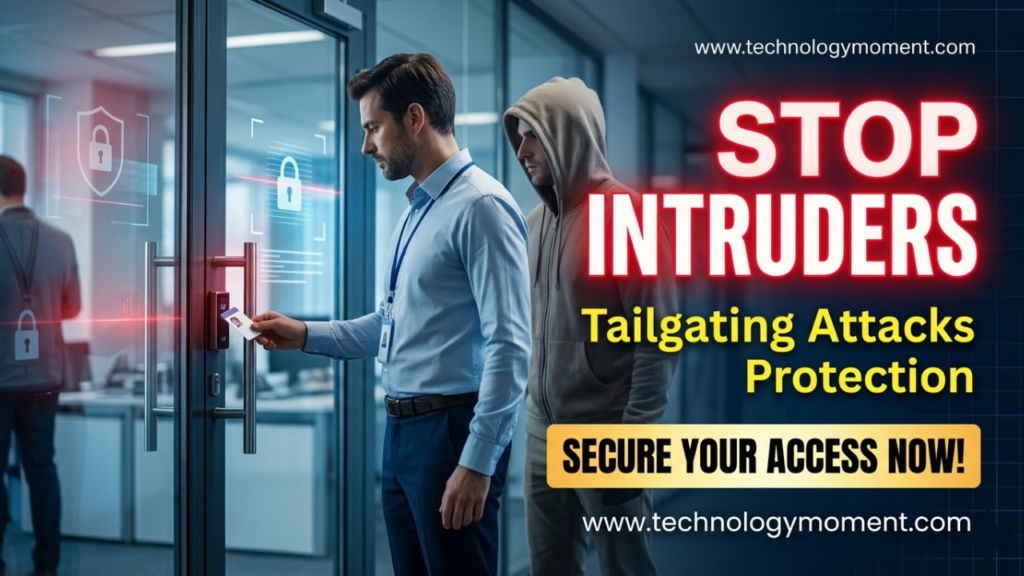
When you think about tailgating attacks in cybersecurity, you might imagine something complex or highly technical. A tailgating attack happens when someone gains unauthorized access by following an authorized person into a secure space. It could be your office, a server room, or even a co-working space. On Technology Moment, we break down such threats in a way that actually makes sense, so you can protect yourself without needing a tech degree. In today’s world, where security systems are getting smarter, attackers are getting smarter too—and they’re targeting people, not just machines.
Let’s make it real. Imagine you swipe your ID card to enter your workplace, and someone casually walks in behind you. That’s exactly how physical tailgating attack examples play out every day. Attackers often dress like employees, delivery agents, or maintenance staff to blend in. This tactic works because humans naturally trust what looks familiar. Unlike hacking software, this method doesn’t need coding skills—just confidence and timing. That’s why social engineering attacks like tailgating are rising fast in modern workplaces.
Now you might wonder—why should you care about tailgating attack prevention tips? Because the damage can be massive. Once inside, an attacker can steal sensitive data, install malicious devices, or even access restricted systems. For businesses, this can mean data breaches, financial loss, and reputational damage. For individuals, it could lead to identity theft or privacy violations. At Technology Moment, we focus on practical awareness so you can spot these risks early and act fast. Security is no longer just IT’s job—it’s everyone’s responsibility.
The good news is that preventing unauthorized access in workplaces doesn’t require expensive tools. It starts with awareness and simple habits. Don’t hold doors open for strangers. Always verify identities. Report suspicious behavior immediately. These small actions can stop a major security breach before it even begins. Think of it like locking your phone—you do it automatically because you know the risk. The same mindset applies here, and once you build it, staying secure becomes second nature.
As technology evolves, so do threats. That’s why staying updated with the latest cybersecurity trends and threats is not optional anymore—it’s essential. Platforms like Technology Moment are designed to keep you informed, aware, and one step ahead of attackers. This guide is just the beginning. Once you understand how tailgating works, you’ll start noticing patterns around you—and that awareness is your strongest defense.
What is a Tailgating Attack?
A tailgating attack is a simple but dangerous security trick. It happens when someone without permission follows an authorized person into a restricted area. It often feels like a normal, polite moment, like holding a door open. But in reality, that small act can open the door to a big security risk. Attackers do not need to hack systems or break locks. They just rely on human behavior.
Think about your daily routine. You walk into an office, a hostel, or even a secure building. You swipe your card and step inside. Someone walks behind you and smiles. You assume they belong there. That is exactly what the attacker wants. They blend in, act confident, and move quickly. In many cases, people feel awkward asking questions, so they let it happen.
This attack is part of social engineering, where people are the main target instead of technology. Attackers study how people behave. They know most of us avoid confrontation. They use this to their advantage. A tailgating attack shows that even strong security systems can fail if human awareness is weak.
Why Tailgating Attacks Are Rising?
Tailgating attacks are growing fast because workplaces and public spaces are changing. Many offices now use access cards, biometric systems, or smart locks. These tools are strong, but they only protect the door, not human behavior. Attackers know this. They look for the easiest way in, and people often become that entry point.
Another big reason is the rise of the hybrid work culture. Offices are busier on some days and empty on others. Employees may not recognize everyone in the building. This creates confusion. Attackers take advantage of this situation. They act like new hires, delivery staff, or IT support. No one questions them because no one knows everyone anymore.
There is also a growing trend of fast-paced lifestyles. People are always in a hurry. They do not stop to think twice. If someone is behind them, they hold the door without checking. It feels like a kind gesture. But attackers use this kindness as a weakness. As security becomes more digital, attackers are shifting toward human-focused tricks like tailgating.
How Tailgating Attacks Work
A tailgating attack follows a simple but effective process. First, the attacker watches the environment. They study entry points, busy hours, and employee behavior. They look for the right moment. Timing is everything. They choose a moment when people are distracted or in a rush.
Next, they approach the entry point. They stay close to someone with access. This person might be an employee or a resident. The attacker may carry something like a box or a laptop bag. This makes them look believable. When the door opens, they quickly follow inside. Most people say yes without thinking.
Once inside, the real risk begins. The attacker now has physical access. They can explore the building, access systems, or even plant malicious devices. In others, they prepare for a larger cyberattack. All of this starts from one small moment at the door.
Types of Tailgating Attacks
Tailgating attacks come in different forms, but they all use the same idea—human trust. The most common type is physical tailgating. This happens in offices, apartments, hospitals, and secure facilities. It is simple, direct, and very effective. No hacking skills are needed.
Another type is digital tailgating, which is less obvious but just as risky. In this case, the attacker gains access to systems by using someone else’s session. For example, if you leave your computer unlocked, someone can quickly use it. They “follow” your access digitally instead of physically. This is becoming more common with shared workspaces.
There is also a hybrid version of tailgating. This combines physical and digital methods. An attacker may enter a building using tailgating, then connect to internal networks. From there, they can launch cyberattacks or steal data. This makes the attack more powerful and harder to detect. As technology grows, these hybrid attacks are becoming a serious threat.
Real-World Examples of Tailgating Attacks
Real-life cases show how dangerous tailgating can be. In many corporate offices, attackers have entered buildings by simply following employees during busy hours. Once inside, they accessed meeting rooms and plugged in malicious USB devices. These small actions later led to large data breaches. The entry point was simple, but the damage was huge.
Hospitals and healthcare centers are also common targets. In one case, an attacker dressed like a staff member and walked into restricted areas. No one questioned them. They accessed sensitive patient data and systems. This shows how trust and appearance can be used to bypass security. People assume that uniforms mean authority.
Even residential buildings are not safe. Many gated communities use key cards or security guards. Still, attackers have entered by following residents through the gates. Once inside, they explore freely. In some cases, this leads to theft or surveillance. These examples prove one thing—tailgating is not just a theory. It is a real and growing threat that affects people everywhere.
Warning Signs You Should Never Ignore
You might think a tailgating attack is obvious, but in reality, it often looks completely normal. One of the biggest warning signs is when someone follows you closely into a restricted area without using their own access. They may act confident, smile, or even thank you casually. This behavior can trick your brain into thinking everything is fine. If you ever feel even a small doubt, trust that instinct. In tailgating attack prevention, your awareness is your first line of defense.
Another sign is unusual excuses. Someone might say they forgot their ID card, lost their badge, or is new and still waiting for access. These stories are designed to make you feel helpful and cooperative. But in secure environments, access rules exist for a reason. If someone truly belongs there, they should follow proper procedures. Ignoring these red flags can lead to serious physical security breaches without you even realizing it.
You should also watch for suspicious behavior like loitering near entry points, watching others enter codes, or trying to blend in with employees. Attackers often study routines before acting. They may visit multiple times to understand patterns. In today’s world, where social engineering attacks are increasing globally, even small details matter. Being alert is not about being rude; it’s about staying safe.
Risks and Consequences of Tailgating
When a tailgating attack succeeds, the damage can go far beyond what most people expect. The most immediate risk is unauthorized access to sensitive areas. This could mean confidential files, company servers, or even critical infrastructure. Once inside, attackers can steal data, install malicious devices, or gather information for future attacks. This is why tailgating attacks in cybersecurity are taken so seriously by organizations worldwide.
Financial loss is another major consequence. A single breach can cost companies millions in damages, fines, and lost trust. Think about it like leaving your front door open in a busy city. You might not notice anything missing at first, but the risk is always there. Businesses that fail to control access often face legal issues and reputation damage. In the age of digital trust, one mistake can break years of credibility.
There’s also the human impact. Employees may feel unsafe, and organizations may need to implement stricter rules, which can affect workplace culture. In some cases, attackers use tailgating to enable more serious threats like identity theft, insider attacks, or system sabotage. The consequences are not just technical; they are emotional and operational too. That’s why understanding these risks is essential for anyone working in a secure environment.
Who is Most Vulnerable to Tailgating Attacks?
You might think only large corporations are targeted, but that’s not true. Small businesses, startups, and even residential buildings can be easy targets. In fact, places with relaxed security often attract attackers because they are easier to exploit. If your workplace relies heavily on trust and has minimal access control, it becomes a prime target for tailgating attack risks.
New employees are often the most vulnerable. They may not fully understand security policies or may feel uncomfortable questioning others. This makes them more likely to allow unauthorized access without thinking twice. Similarly, employees in customer-facing roles, like receptionists or support staff, are also at higher risk. They interact with many people daily, which increases the chances of manipulation.
Even individuals working remotely or in co-working spaces are not immune. Shared environments often lack strict access control, making it easier for attackers to blend in. Globally, as hybrid work becomes more common, the attack surface is expanding. Anyone who uses secure spaces, whether physical or digital, needs to stay alert. Vulnerability is not about your role; it’s about your awareness.
How to Prevent Tailgating Attacks (Step-by-Step Guide)
Preventing tailgating attacks starts with a simple mindset shift. You need to understand that security is everyone’s responsibility, not just the IT department. The first step is to always ensure that every person entering a secure area uses their own access credentials. It may feel uncomfortable at first, but it quickly becomes a habit. This is one of the most effective tailgating attack prevention tips used globally.
The next step is to follow and support clear security policies. If your organization has rules like “no tailgating” or “no badge, no entry,” take them seriously. These policies are not just formalities; they are designed to protect everyone. If someone asks you to hold the door, politely refuse and guide them to the proper entry process. This approach keeps you safe without creating conflict.
Awareness and training also play a huge role. Regular security training helps employees recognize threats and respond correctly. You should also report any suspicious activity immediately. Think of it like spotting smoke before a fire spreads. Quick action can prevent major incidents. In a world where cybersecurity awareness is more important than ever, staying informed is your strongest defense.
Best Tools and Technologies to Stop Tailgating
Technology can make a big difference in stopping tailgating attacks, especially when combined with human awareness. One of the most effective tools is an access control system that requires individual authentication. This includes keycards, biometric scanners, or mobile-based entry systems. These tools ensure that only authorized people can enter, reducing the chances of unauthorized access.
Another powerful solution is surveillance systems. Modern CCTV cameras with AI features can detect unusual behavior, such as multiple people entering with a single access event. These systems can send real-time alerts, allowing security teams to act quickly. In today’s smart security landscape, AI-powered security systems are becoming a game-changer.
Physical barriers like turnstiles and security gates also add an extra layer of protection. They make it difficult for more than one person to enter at a time. Combined with visitor management systems, these tools create a strong defense against tailgating. While no system is perfect, using the right mix of technology and awareness can significantly reduce risks. In the end, the goal is simple—make it harder for attackers and easier for you to stay safe.
Role of Employee Awareness and Training
You might think cybersecurity is all about firewalls and software, but the truth is simpler. A single moment of distraction can open the door to a tailgating attack. That’s why employee awareness training is not optional anymore. It is one of the most powerful tools any organization can use to prevent security breaches.
When employees understand how tailgating attacks work in real life, they become alert. They start noticing unusual behavior. They question politely but firmly. It should feel real, practical, and easy to remember. Short videos, live demos, and real-world scenarios work better than long lectures.
You also need to create a culture where saying “no” feels normal. Many employees hesitate because they don’t want to appear rude. But in security, being polite can sometimes be risky. Regular cybersecurity awareness programs, mock drills, and reminders can help build confidence. When people feel responsible, they act smarter and faster.
Consistency is the key here. One training session is not enough. Threats evolve, and so should awareness. Monthly refreshers, quick quizzes, and security alerts keep everyone sharp. When employees stay informed, attackers lose their biggest advantage—human error.
Tailgating Attacks vs Other Social Engineering Attacks
Not all attacks look the same, but they often share one thing—human manipulation. Tailgating attacks are physical, while other social engineering attacks usually happen online. For example, phishing attacks trick you through emails, while pretexting uses fake stories to gain trust. Tailgating, on the other hand, happens face-to-face and feels more natural, which makes it even more dangerous.
Think about it like this. A phishing email gives you time to think. You can pause, check, and verify. But a person standing behind you at a door creates pressure. You feel rushed. You act without thinking. That moment of hesitation disappears. This is why physical security threats like tailgating are harder to detect in real time.
Another difference is visibility. Digital attacks leave logs and traces. IT teams can track them. But tailgating often goes unnoticed unless someone reports it. No alarms, no alerts—just silent access. That’s why combining physical security systems with human awareness is critical.
Even though they differ in method, all these attacks aim for the same goal—unauthorized access. Whether it’s data, systems, or buildings, attackers want entry. Understanding these differences helps you build stronger defense strategies that cover both digital and physical risks.
Future Trends in Tailgating Attacks
The way attackers operate is changing fast. Tailgating attacks in 2025 and beyond are becoming smarter and more strategic. Attackers are no longer relying only on simple tricks. They now study employee behavior, office routines, and even company culture before making a move. This makes their actions look more natural and harder to detect.
One growing trend is the mix of physical and digital attacks. For example, an attacker might gain physical access through tailgating and then plug in a malicious USB device. It shows how important it is to think beyond just doors and access cards.
Another big shift is the use of technology. Organizations are starting to adopt AI-powered surveillance systems, smart access control, and facial recognition tools. These systems can detect unusual patterns, like someone entering without authentication. While this adds strong protection, attackers are also learning how to bypass advanced systems using social tricks.
Remote and hybrid work models also play a role. Offices are less crowded, and security checks can become relaxed. This creates new opportunities for attackers. The future will demand a balanced approach—strong technology combined with continuous human awareness. The smarter the defense, the harder it becomes for attackers to succeed.
Conclusion
Staying safe from tailgating attacks is not complicated, but it does require attention. Small actions make a big difference. Not holding the door, verifying identity, and staying alert can prevent serious security risks. It may feel uncomfortable at first, but safety always comes first.
Organizations need to go beyond just installing systems. They must focus on people. When employees understand the risks, they act responsibly. When they act responsibly, the chances of a breach drop sharply. It’s a simple chain reaction that starts with awareness.
The world is becoming more connected, and threats are evolving every day. You cannot rely only on technology. You need a mindset of security. Whether you are at work, in a shared space, or even at home, staying alert is your best defense.
In the end, protecting yourself instantly means building habits. Strong habits create strong security. And strong security keeps both your data and your environment safe.
FAQs
What is a tailgating attack in simple terms?
A tailgating attack happens when someone without permission follows an authorized person into a restricted area. It usually happens because people try to be polite and hold doors open. This small action can lead to serious security risks like data theft or unauthorized access.
Why are tailgating attacks dangerous?
These attacks are dangerous because they bypass security systems without using any hacking tools. Once inside, attackers can access sensitive areas, steal information, or install harmful devices. The risk increases because these attacks often go unnoticed.
How can employees prevent tailgating attacks?
Employees can prevent these attacks by staying alert and following security rules. They should never allow unknown people to enter restricted areas. It is also important to report suspicious behavior and follow company security guidelines at all times.
Are tailgating attacks only physical?
Mostly, yes. Tailgating attacks happen in physical spaces like offices or buildings. However, they can also connect to digital threats if the attacker uses physical access to install malware or steal data from systems.
What is the best defense against tailgating attacks?
The best defense is a mix of employee awareness, strong security policies, and smart technology. Training employees regularly and using tools like access control systems can reduce the risk significantly.












Hey there! It’s so important to keep our spaces secure, and I love that you’re focusing on preventing tailgating attacks! The right tools can make all the difference. Can’t wait to see your top picks!
Hi Friend Preventing tailgating is super crucial for safety, and I’m excited to hear which tools you recommend. Let’s keep our environments secure together!
Awesome choice of topic! Tailgating attacks are a real concern, but I believe with the right tools, we can effectively prevent them. Excited to check out your list!
Tailgating attacks? No thanks! I found these 5 awesome tools that help keep those sneaky intruders at bay. Definitely worth a look!
if you’re worried about tailgating attacks (who isn’t?), these top 5 tools are seriously clutch! Let’s keep our spaces safe!”