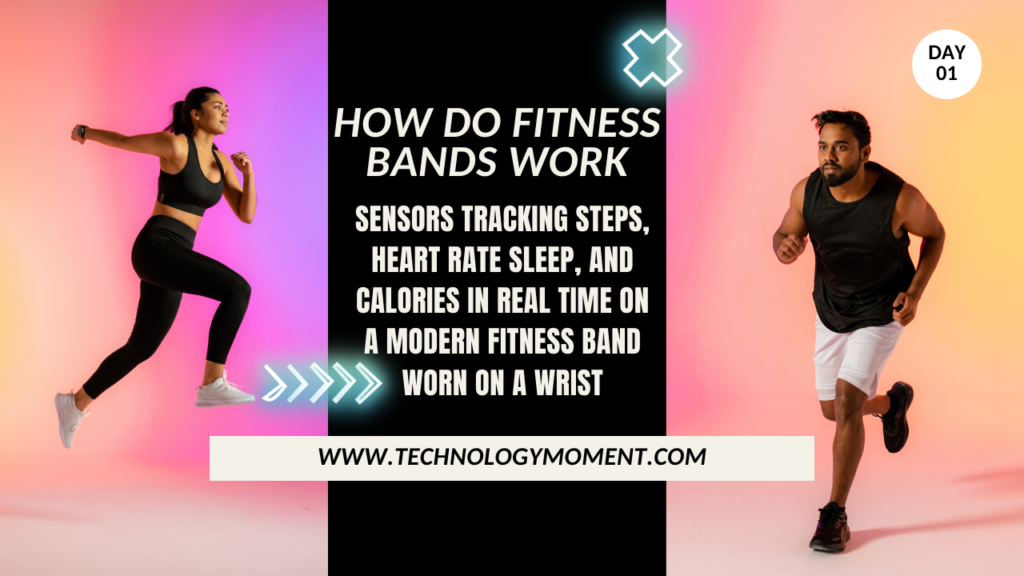
In this article, “How Do Fitness Bands Work: You Won’t Believe #4 Works!”, we explore the real technology behind fitness bands without using confusing jargon. We talk like real humans here. Short sentences. Clear ideas. No tech overload.
Fitness bands are one of the hottest wearable technology trends right now. People use them to track steps, heart rate, sleep, calories, and even stress. But most users don’t actually know how fitness bands work. That’s what makes this topic exciting. And yes, one feature—sleep tracking—might genuinely surprise you.
This post starts with a detailed Introduction to Fitness Bands, explaining what they are, why they’re trending worldwide, and how they fit into modern digital lifestyles. We then move step by step into the technology that powers them. Sensors. Data. Apps. Real-world use. Nothing skipped.
At Technology Moment, our goal is simple. We help you understand technology, not fear it. Whether you’re a beginner, a fitness lover, or just tech-curious, this guide is written for you. No assumptions. No pressure. Just useful information.
So, are fitness bands really smart?
Do they track your body accurately?
And what makes feature #4 so unbelievable?
The Science Behind Fitness Bands
Let’s start with the brain of the fitness band. Inside that slim strap sits a mini science lab. No exaggeration. Fitness bands work by combining tiny sensors, smart algorithms, and software that learns from your behavior over time.
At the core, fitness bands rely on motion sensors. These sensors detect movement in all directions. When you move your hand, the band notices it. When you stop, it knows that too. This constant observation happens thousands of times per second. Sounds intense, right? But it all happens silently.
Then comes data processing. The raw movement data alone means nothing. So the band uses pre-trained formulas, often powered by AI, to convert motion into meaningful insights. Walking, running, resting—each pattern looks different to the system. Over time, the band learns you. That’s why accuracy improves after a few days of use.
Another big part of science is light. Yes, light. Fitness bands shine invisible green light into your skin. This light helps measure blood flow and other health signals. It’s safe, low-power, and surprisingly effective.
So when people ask, “How do fitness bands work?” the short answer is this: they watch movement, read light signals, and turn them into easy-to-understand health data. Simple on the outside. Smart on the inside.
How Fitness Bands Track Your Steps
Ever wondered how a fitness band knows you took exactly 6,432 steps today? It’s not guessing. It’s calculating.
Every step you take creates a small, repeated motion. Your arm swings. Your wrist moves forward and back. The fitness band detects this rhythm using its motion sensor. When that rhythm matches a walking or running pattern, the band counts it as a step.
Here’s the clever part. The band doesn’t count random hand movements as steps. If you wave your hand while talking, it feels different from walking. The algorithm knows the difference. It filters out noise and focuses only on step-like motion.
Step tracking accuracy also depends on how you wear the band. A snug fit works best. Too loose, and the data gets messy. Too tight, and comfort suffers.
Modern fitness bands also adjust for speed. Slow walking, brisk walking, and jogging—each has a unique motion signature. The band adapts in real time. That’s why step tracking today is far more reliable than older pedometers.
How Fitness Bands Measure Heart Rate
This part feels almost unreal at first. How can a small band on your wrist measure your heart rate without wires or needles? The answer lies in light-based technology. Fitness bands use a method called optical heart rate monitoring. Don’t worry about the name. The idea is simple.
Your heart pumps blood through your veins. Blood absorbs light. The band shines green light into your skin and measures how much light bounces back. When your heart beats, blood flow changes. The reflected light changes too. The band tracks these changes and calculates your heart rate.
This process happens continuously. That’s why you can see real-time heart rate data during workouts, sleep, or rest.
Accuracy can vary. Movement, skin tone, tattoos, and loose straps can affect readings. But for everyday fitness tracking, modern bands are surprisingly dependable.
Heart rate tracking helps in many ways. It shows workout intensity. It tracks recovery. It even hints at stress levels. That’s a lot of value from a simple wrist device.
You Won’t Believe #4 Works – Sleep Tracking
Sleep tracking is the feature that shocks most users. You lie down. You sleep. And somehow, the band knows exactly what happened overnight.
Fitness bands track sleep using a mix of movement and heart rate data. When you fall asleep, your body slows down. Movement drops. Heart rate changes. Breathing patterns shift. The band notices all of this.
Based on these signals, the band estimates sleep stages. Light sleep. Deep sleep. REM sleep. Each stage has a unique signature. Deep sleep shows low movement and a steady heart rate. REM sleep shows a higher heart rate and subtle movement.
Is it perfect? No. But is it useful? Absolutely.
Sleep tracking helps you understand sleep quality, not just duration. Eight hours in bed doesn’t always mean good sleep. Fitness bands reveal patterns you might never notice otherwise.
Many users change bedtime habits after seeing sleep data. Less screen time. More consistency. Better rest. That’s why this feature feels unbelievable—because it actually changes behavior.
Calories Burned – Myth or Math?
Calories burned is one of the most searched fitness band features. And also the most misunderstood. Fitness bands do not directly measure calories. Instead, they estimate them using math. Smart math.
The calculation uses multiple inputs. Your age. Your weight. Your height. Your gender. Your heart rate. Your activity type. All of this feeds into an energy expenditure formula.
When your heart rate rises, your body burns more energy. When movement increases, calorie burn rises too. The band combines these signals to estimate total calories burned.
Is the number exact? No. It’s an estimate. But it’s a useful one.
What matters most is consistency. If your band shows higher calorie burn on active days and lower on rest days, it’s doing its job. Trends matter more than single numbers.
So calories burned are not a myth. It’s math. And when used correctly, it helps guide smarter fitness choices.
Fitness Bands and Activity Modes
Activity modes turn a fitness band into a personal coach. Walking mode. Running mode. Cycling mode. Yoga mode. Strength training mode. Each one changes how the band tracks your body.
When you select an activity mode, the band adjusts its algorithms. For running, it focuses more on steps, pace, and heart rate zones. For cycling, it prioritizes speed and duration. For yoga, it tracks heart rate stability and session length.
Some fitness bands even auto-detect activities. Start walking, and the band figures it out on its own. No button press needed. Activity modes improve accuracy. They also provide better insights after workouts. You see time spent, intensity levels, and recovery suggestions.
This feature is trending globally because people want personalized fitness without complexity. And fitness bands deliver exactly that.
How Fitness Bands Monitor Blood Oxygen (SpO2)
Blood oxygen level, also called SpO2, sounds very medical. But don’t worry. It’s actually simple. SpO2 tells you how much oxygen your blood is carrying. Your body needs oxygen to work properly, just like a car needs fuel. When oxygen levels drop, you feel tired, dizzy, or breathless.
Fitness bands measure SpO2 using light. Yes, light. Inside your band, there are tiny LEDs that shine red and infrared light onto your skin. Your blood absorbs this light in different ways depending on how much oxygen it carries. Sensors then read the reflected light. The band’s software converts this data into a percentage.
This technology became very popular after COVID-19. People all over the world started caring more about oxygen levels. That’s why “SpO2 tracking fitness band” is now a trending search term globally.
You may wonder, is it accurate? For everyday wellness tracking, yes. Fitness bands don’t replace hospital devices, but they are great for spotting patterns. For example, if your SpO2 drops during sleep, it may hint at breathing issues. That’s powerful insight from a small device on your wrist.
Most bands measure SpO2 when you are still. Some do it during sleep. This helps save battery and improve accuracy. It’s like checking the weather when the sky is calm, not during a storm.
Stress Tracking and Recovery Insights
Stress is invisible. Tight shoulders. Fast heartbeat. Restless sleep. Fitness bands try to make stress visible.
They do this using something called heart rate variability, or HRV. Don’t let the term scare you. HRV simply looks at the tiny gaps between heartbeats. When you are relaxed, these gaps change naturally. When you are stressed, your heart beats in a more rigid pattern.
Your fitness band watches these changes quietly in the background. It combines HRV, heart rate, and activity data. Then it gives you a stress score. Think of it like a traffic signal for your body. Green means calm. Red means slow down.
Recovery insights are even more interesting. After exercise or a long workday, your body needs rest. Fitness bands analyze your sleep, resting heart rate, and HRV to tell you if you are recovered or still tired. This is why “stress tracking wearable” and “recovery tracking fitness band” are trending keywords.
Is it perfect? No. But it’s helpful. It reminds you to breathe, relax, and take breaks. In a fast-paced world, that reminder matters more than ever.
Smart Features Beyond Fitness
Fitness bands are no longer just step counters. They are becoming smart life assistants.
When your phone buzzes in your pocket, your band buzzes on your wrist. Calls, messages, emails, calendar alerts—everything shows up instantly. This keeps you connected without staring at your phone all day.
Many bands also control music. You can change tracks while running without touching your phone. Some bands let you control your camera shutter. This is great for group photos or solo travel shots.
Women’s health tracking is another powerful feature. Fitness bands help track cycles and symptoms. This feature is gaining global attention and driving searches like “fitness band for women’s health.”
Some bands even support contactless payments in certain countries. Tap your wrist and pay. No wallet needed. That’s convenience wrapped around your arm.
These smart features turn fitness bands into everyday tools, not just workout gadgets.
Battery Life and Charging Technology
Battery life is where fitness bands truly shine. Unlike smartwatches that need daily charging, many fitness bands last one to two weeks. Some even go longer.
How do they do this? Simple screens. Efficient sensors. Smart software. Fitness bands only wake up when needed. The rest of the time, they sleep. Just like you should.
Charging is fast and easy. Most bands use magnetic chargers. Snap it on, and it charges automatically. Some newer models charge fully in under an hour. This makes “long battery life fitness band” a popular keyword worldwide.
Good battery life means less stress. You don’t have to worry about charging every night. You wear it, forget it, and let it work silently.
Data Syncing and Mobile Apps
A fitness band alone is useful. But the real magic happens in the app.
Your band syncs data to your phone using Bluetooth. This happens automatically when you open the app. Some bands even sync in the background. The data then goes to secure cloud servers.
The app turns raw numbers into stories. It shows trends. It compares yesterday with today. It explains your sleep, activity, stress, and health in simple charts.
This is why “fitness band app analysis” and “health tracking app” are trending search terms. People want insights, not just numbers.
Many apps also offer challenges, reminders, and coaching tips. This keeps you motivated. It feels like having a personal trainer and health coach in your pocket.
Are Fitness Bands Safe and Secure?
This is an important question. Fitness bands collect personal health data. So safety matters.
Most major brands use encryption. This means your data is locked and protected while syncing and storing. Reputed apps follow global privacy standards like GDPR.
You also control your data. You can choose what to share and what to keep private. Some apps allow you to delete data anytime. That’s empowering.
Still, it’s smart to use strong passwords and update apps regularly. Avoid unknown brands with unclear privacy policies. Searches like “fitness band data privacy” are rising because users care about security.
When used wisely, fitness bands are safe. They help you understand your body without putting your privacy at risk.
Fitness Band vs Smartwatch
This question comes up everywhere. People stand in stores, scroll online reviews, and still feel confused. A fitness band and a smartwatch may look similar, but they serve different mindsets.
A fitness band is like a quiet coach. It stays in the background. It tracks your steps, sleep, heart rate, calories, and daily movement without demanding attention. You wear it, forget it’s there, and it keeps working. That’s the beauty of it. Fitness bands focus on health first, notifications second.
A smartwatch is more like a mini phone on your wrist. It wants your attention. Calls, messages, apps, GPS, payments, music, and sometimes even games. It does fitness tracking too, but health is not always the main focus. Convenience and lifestyle features take center stage.
Another big difference is battery life. Fitness bands usually last many days, sometimes even weeks. You charge once and relax. Smartwatches often need charging every one or two days. For many people, that alone becomes a deal-breaker.
Price also matters globally. Fitness bands are affordable for students, beginners, and budget-conscious users. Smartwatches cost more, especially premium models.
So what’s the real difference? A fitness band helps you build habits. A smartwatch helps you manage digital life. If health is your main goal, the band wins. If you want an all-in-one gadget, the watch makes sense.
Who Should Use a Fitness Band?
Fitness bands are not just for gym lovers. They are for real people with real routines.
If you are a beginner, a fitness band is perfect. It doesn’t overwhelm you. It gently reminds you to move. It celebrates small wins. Ten thousand steps feel achievable when you can see progress on your wrist.
If you work long hours at a desk, a fitness band becomes your posture police and movement reminder. Sitting too long? It nudges you. Skipped steps today? It motivates you to walk after dinner. Over time, these tiny reminders change behavior.
If you are trying to improve sleep, fitness bands shine. They quietly track your nights. They show patterns you never noticed. Late phone use. Short deep sleep. Irregular bedtime. Awareness alone can improve sleep quality.
If you are older or caring for elders, fitness bands offer peace of mind. Heart rate trends. Activity levels. Sleep duration. These insights matter. They help families stay informed without being intrusive.
Even athletes use fitness bands. Not always for performance, but for recovery. Rest days, sleep quality, heart rate trends. These metrics help prevent burnout.
Simply put, if you want health guidance without distraction, a fitness band fits naturally into your life.
Future of Fitness Bands
The future of fitness bands looks exciting and surprisingly personal.
Fitness bands are moving beyond tracking. They are starting to predict. With AI and machine learning, bands will soon warn you before problems appear. Poor sleep trends. Rising stress. Declining activity. Early alerts can change outcomes.
Non-invasive health monitoring is another big trend. Blood pressure estimation. Continuous glucose monitoring. Hydration levels. All without needles. Research is moving fast, and fitness bands are becoming health companions, not just trackers.
Mental health tracking is growing, too. Stress scores, breathing patterns, and recovery insights are becoming smarter. Fitness bands will help people understand not just their bodies, but their minds.
Battery technology is also improving. Solar charging. Energy-efficient chips. Longer battery life with more features. Charging anxiety will fade away.
Design will evolve as well. Slimmer bands. Better materials. Fashion-friendly looks. Fitness bands won’t feel medical or sporty only. They will feel personal.
Conclusion
Fitness bands work quietly, consistently, and surprisingly smartly. They turn everyday movements into meaningful data. They help people walk more, sleep better, and understand their bodies without pressure.
They don’t shout. They don’t distract. They guide.
In a fast world filled with screens, fitness bands offer something rare. Awareness without overload. Motivation without stress. Health without complexity.
Whether you are starting your fitness journey or refining your lifestyle, a fitness band can be that small push that creates big change.
Sometimes, the smallest device makes the biggest difference.
FAQs
Are fitness bands accurate for daily tracking?
Fitness bands are very reliable for trends and daily habits. Step counts, sleep patterns, and heart rate trends are accurate enough to guide lifestyle changes, even if they are not medical devices.
Can fitness bands replace doctor visits?
No. Fitness bands support healthy habits, but cannot replace medical diagnosis or treatment. They work best as early awareness tools, not medical authorities.
Do fitness bands work without a smartphone?
Most fitness bands need a smartphone for setup and detailed reports. However, they can still track basic data independently and sync later.
Are fitness bands suitable for children?
Yes. Many fitness bands are lightweight, safe, and simple. They help children stay active and build healthy routines early.
How long does a fitness band last?
With proper care, a fitness band can last several years. Battery health, usage patterns, and software support affect lifespan, but durability is generally strong.