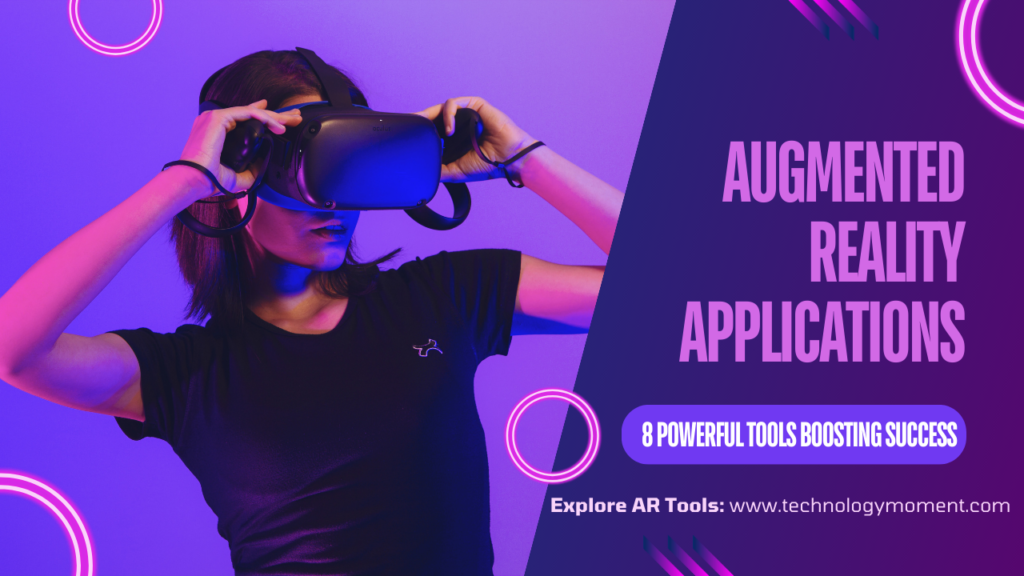
Augmented Reality (AR) is changing how businesses grow in the digital age. It blends digital content with the real world using smartphones, tablets, or smart glasses. From virtual try-ons to interactive product demos, AR helps brands connect with users in a more real and engaging way. On Technology Moment, we explore how augmented reality for business growth is no longer a future idea—it’s a practical tool companies are using today to increase engagement, trust, and revenue.
For businesses focused on ROI, AR offers a clear advantage. It improves customer experience by letting users “see before they buy.” Imagine placing a virtual sofa in your living room or previewing a machine part before installation. These augmented reality use cases for business reduce uncertainty and speed up decisions. As a result, companies see higher conversion rates, fewer returns, and better customer satisfaction—all key drivers of business growth.
Another major benefit of augmented reality in business is efficiency. AR tools help train employees faster with visual guides and real-time overlays. New hires learn by doing, not just reading manuals. In manufacturing, AR-assisted workflows reduce errors and downtime. These practical AR business applications save time and money, making operations smoother and more reliable. That’s the real value you can measure.
Marketing and sales teams also gain a powerful edge with AR technology. Interactive AR campaigns grab attention in crowded digital spaces. Instead of passive ads, users engage with products in real time. This leads to longer dwell time, stronger brand recall, and better lead quality. When used right, augmented reality marketing strategies turn curiosity into action—and action into revenue.
At Technology Moment, we believe AR is a smart investment for businesses ready to scale. It’s flexible, data-driven, and customer-first. Whether you’re a startup or an enterprise, understanding how augmented reality drives business growth helps you stay competitive in a fast-moving tech world. AR isn’t just about innovation—it’s about smarter growth, higher ROI, and future-ready business models.
Why Companies Are Investing in Augmented Reality
Companies are investing in augmented reality because customer behavior has changed faster than traditional digital strategies. People no longer want to just read or watch; they want to interact. AR turns passive users into active participants. When customers engage more, they trust brands more, and trust directly impacts buying decisions.
Another big reason is differentiation in crowded markets. Almost every industry today feels saturated. AR helps brands stand out without shouting louder. Instead of pushing ads, companies invite users to experience products in real life through their screens. This creates a strong emotional connection, which is hard to achieve with plain text or images.
AR also shortens the decision-making cycle. When customers can visualize a product in their own space or environment, doubts fade quickly. Fewer doubts mean faster conversions. Faster conversions mean better cash flow. That’s why AR is no longer seen as an experiment but as a strategic investment.
From a global perspective, AR scales well. One AR experience can serve users across countries without physical expansion. This makes it attractive for global brands aiming to reduce operational costs while increasing reach. In simple terms, AR helps companies do more with less.
Understanding ROI in Augmented Reality Projects
Return on investment in augmented reality is not just about immediate sales. It’s about long-term value creation. AR improves how users understand products, which reduces confusion and hesitation. When customers know what they’re getting, satisfaction goes up, and refunds go down.
There is also operational ROI that many businesses overlook. AR reduces the need for physical demos, printed manuals, and in-person training. These savings add up over time. Less waste, fewer errors, and faster processes quietly improve profit margins.
Another key ROI factor is data. AR experiences generate valuable insights about user behavior. Businesses learn where users focus, how long they engage, and what features attract attention. This data helps optimize future campaigns and products, making every next investment smarter.
Most importantly, AR builds brand memory. People remember experiences more than messages. When a brand lives in a user’s real-world environment through AR, it stays top of mind. That brand recall often leads to repeat purchases, which is the strongest ROI of all.
Augmented Reality Use Cases:
Use Case 1 – AR in Retail and E-Commerce
Retail and e-commerce are among the biggest winners of augmented reality adoption. AR allows customers to see products in their real environment before buying. Furniture in the living room. Glasses on the face. Shoes on the feet. This removes guesswork from online shopping.
When customers visualize products accurately, confidence increases. Higher confidence leads to higher conversion rates. Many global retailers now use AR product visualization to reduce cart abandonment. Customers don’t leave because they feel sure about their choices.
AR also plays a major role in reducing returns. Returns are expensive for e-commerce businesses. When customers know how a product looks and fits beforehand, they are less likely to send it back. This directly improves ROI without increasing marketing spend.
From a branding angle, AR creates a premium shopping experience. Even small brands can compete with giants by offering smart AR tools. In a world where attention is currency, AR helps retailers earn it naturally.
Use Case 2 – AR in Marketing and Advertising
Marketing with augmented reality feels less like advertising and more like entertainment. Instead of telling people why a product is great, AR lets them experience it. This shift increases engagement time, which is a key metric in modern digital marketing.
AR campaigns often go viral because they are interactive and fun. Users share their AR experiences on social media without being asked. This organic reach reduces paid advertising costs. Lower costs and higher engagement are a powerful ROI combination.
Another advantage is personalization. AR marketing can adapt experiences based on user location, preferences, or behavior. Personalized experiences feel relevant, and relevance drives action. People respond better when content feels made just for them.
Finally, AR improves brand perception. This perception matters in competitive markets. When people trust a brand’s vision, they are more likely to buy from it, again and again.
Use Case 3 – AR for Employee Training and Skill Development
Employee training often feels boring, slow, and expensive. Augmented Reality changes that by turning learning into a hands-on experience. Instead of reading manuals or watching long videos, employees learn by doing. AR places digital instructions, 3D models, and real-time guidance directly in their field of view. This makes complex tasks easier to understand, especially for technical and frontline roles. As a result, learning becomes faster, clearer, and more engaging.
Traditional training requires classrooms, trainers, and repeated sessions. AR removes many of these costs by enabling self-guided learning anytime, anywhere. New employees can practice tasks safely without risking real equipment or mistakes. This shortens onboarding time and boosts confidence from day one. Companies see faster productivity and fewer errors. That’s a direct boost to ROI through reduced training expenses and improved performance.
AR training solutions for enterprises focus on real business outcomes. Employees retain information better because they learn visually and interactively. Error rates drop because instructions appear exactly where action is needed. Teams become skilled faster, even in remote or global locations. Over time, this reduces rework, downtime, and supervision costs. That’s how AR turns learning into measurable financial value.
Use Case 4 – AR in Manufacturing and Maintenance
Manufacturing environments are complex and time-sensitive. When a machine breaks, waiting for an expert can cost hours or even days. AR-powered remote assistance solves this problem instantly. A technician can see step-by-step instructions or connect with a remote expert in real time. Visual guidance appears directly on the equipment. This speeds up problem-solving and keeps operations moving.
AR helps workers fix issues correctly the first time. Clear visual overlays reduce confusion and guesswork. Even less-experienced staff can perform advanced maintenance tasks confidently. Fewer mistakes mean fewer shutdowns and safer workplaces. The result is smoother operations and stronger ROI.
AR maintenance solutions for industrial ROI focus on efficiency and accuracy. Companies reduce travel costs by solving issues remotely. Machines last longer because maintenance is done properly. Productivity increases because workers spend less time figuring things out. Over time, these gains compound into major cost savings. AR becomes a smart investment, not an experiment.
Use Case 5 – AR in Real Estate and Architecture
Real estate buyers want to see before they believe. AR allows them to visualize properties in real-world scale. Clients can walk through virtual homes, offices, or interiors using their phones or AR glasses. Architects can overlay designs onto physical spaces instantly. This removes imagination gaps and builds trust faster. Decisions become easier and quicker.
AR shortens the sales cycle in real estate. Buyers no longer need multiple site visits or physical mockups. They can explore layouts, furniture, and finishes instantly. This emotional connection increases buyer confidence. More confidence leads to faster approvals and higher deal closure rates. That directly boosts revenue and ROI.
AR real estate visualization tools save both time and money. Developers reduce the cost of physical models and sample units. Agents handle more clients with fewer resources. Global buyers can explore properties remotely. This expands market reach without increasing overhead. AR turns visualization into a powerful sales engine.
Use Case 6 – AR in Healthcare and Medical Training
Healthcare demands precision, speed, and accuracy. AR helps doctors visualize organs, veins, and data in real time. Surgeons can plan procedures using 3D overlays before making any incisions. This improves confidence and reduces risks. Better planning leads to better outcomes. Patients benefit, and hospitals save costs.
Medical errors are expensive and dangerous. AR reduces these errors by providing real-time guidance. Training doctors with AR simulations improves skill without risking patient safety. Hospitals spend less on repeated procedures and corrections. Recovery times also improve. That’s a clear financial and operational win.
Augmented reality healthcare applications focus on long-term value. Training becomes safer and more effective. Equipment usage improves with guided assistance. Patient education becomes clearer and more engaging. All of this reduces operational waste. AR helps healthcare systems deliver better care with smarter spending.
How to Choose the Right AR Use Case for Your Business
Choosing the right augmented reality use case is not about following hype. It is about solving a real problem. Every business has pain points, and AR works best when it directly fixes one of them. Start by asking yourself where customers struggle, where teams lose time, or where costs quietly grow.
If your customers hesitate before buying, AR product visualization may help. If training takes months, AR-based learning can speed it up. The goal is simple: connect AR to a clear business outcome. More conversions, fewer errors, or faster decisions. If the use case does not support a measurable goal, it is not the right one.
You should also think about your audience and their behavior. Are they mobile-first users? Do they prefer quick, visual information? AR works best when it feels natural, not forced. For example, WebAR is perfect for global audiences because it works without apps and lowers friction instantly.
Budget and scalability matter too. Start small, test fast, and improve. A focused AR pilot is better than a big, unclear launch. When AR aligns with your business model, audience habits, and ROI goals, it stops being an experiment and becomes a growth tool.
Common Challenges in AR Adoption and How to Overcome Them
AR adoption sounds exciting, but it is not always smooth. Many businesses assume AR is expensive and complex. In reality, modern AR tools, especially WebAR and cloud-based platforms, have reduced entry costs significantly.
Another common issue is a lack of technical skills. Teams may feel overwhelmed by 3D content or AR development. The solution is simple. Use no-code or low-code AR platforms. Partner with experienced vendors. Train teams step by step instead of all at once.
Hardware limitations can also slow adoption. Not every user owns high-end devices. That is why mobile-friendly and browser-based AR experiences are trending. They work on common smartphones and reach a wider global audience without extra hardware.
Finally, unclear success metrics can kill AR projects. If you do not track engagement, conversions, or time saved, ROI stays invisible. Define KPIs early. Measure results continuously. When challenges are addressed with the right strategy, AR becomes practical, not painful.
Future Trends in Augmented Reality
The future of augmented reality looks personal, fast, and intelligent. One major trend is the integration of AI with AR. AI-powered AR can adapt content in real time, personalize experiences, and improve accuracy. This combination is already shaping retail, healthcare, and training solutions.
WebAR is another fast-growing trend. Users no longer want to download apps. They want instant experiences. WebAR removes friction and increases adoption, especially in emerging global markets. This makes it ideal for marketing, education, and product demos.
AR glasses and lightweight wearables are also evolving. While mass adoption may take time, businesses are preparing now. Remote assistance, hands-free training, and real-time guidance will become common in manufacturing and healthcare.
Social and collaborative AR is gaining momentum, too. Shared AR experiences allow teams and customers to interact together, even from different locations. As AR becomes more connected and accessible, its impact on ROI will only grow stronger.
Conclusion – Turning Augmented Reality into a Profitable Investment
Augmented reality is not about flashy visuals. It is about smarter experiences. When used with purpose, AR reduces friction, improves understanding, and builds trust. These factors directly influence revenue and efficiency.
The key to success lies in clarity. Clear goals. Clear use cases. Clear metrics. Businesses that treat AR as a strategic tool, not a trend, see long-term value. They start small, learn fast, and scale wisely.
AR works best when it feels helpful, not overwhelming. It should simplify decisions, not complicate them. When customers and teams feel empowered, ROI follows naturally.
In a world where attention is limited and expectations are high, AR bridges the gap between digital and real. Used right, it turns curiosity into confidence and investment into profit.
Frequently Asked Questions (FAQs)
Is augmented reality suitable for small businesses?
Yes, AR is suitable for small businesses. WebAR and mobile-based solutions make AR affordable and easy to launch. Small brands often see faster ROI because AR improves trust and engagement quickly.
How long does it take to see ROI from AR projects?
ROI timelines depend on the use case. Marketing and retail AR often show results within weeks. Training and industrial AR may take a few months, but deliver long-term cost savings.
Do users need special devices to use AR?
Most AR experiences work on smartphones. No special hardware is required for WebAR. This makes AR accessible to global audiences across regions and devices.
What industries benefit most from augmented reality?
Retail, healthcare, manufacturing, real estate, education, and marketing benefit greatly. Any industry that relies on visualization, learning, or decision-making can use AR effectively.
Is AR a long-term technology or just a trend?
AR is a long-term technology. With AI integration, WebAR growth, and wearable innovation, AR is becoming a core part of digital transformation strategies worldwide.