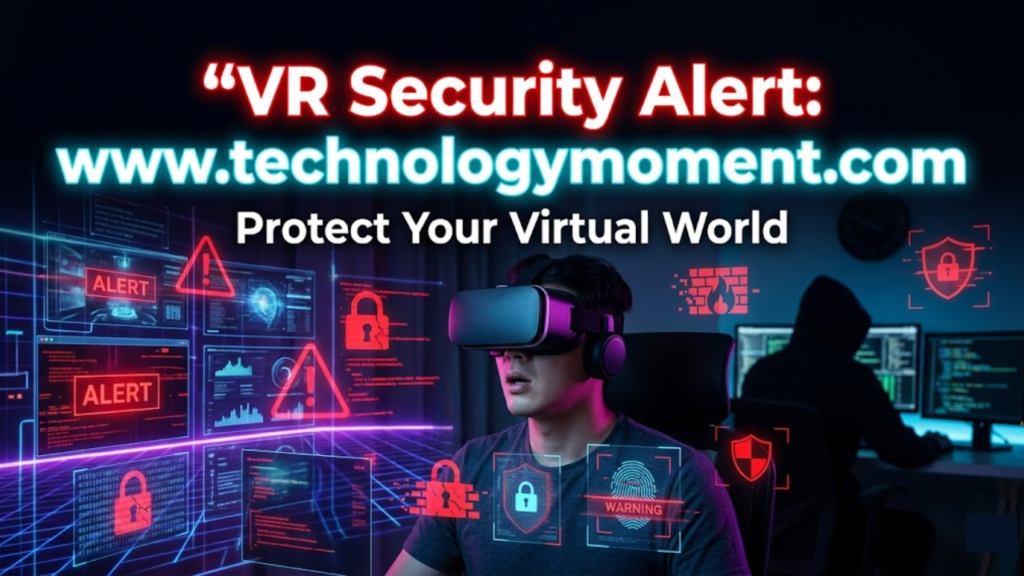
Virtual reality cybersecurity challenges are becoming a serious topic as immersive technology spreads across the world. At Technology Moment, we often talk about how fast VR is changing industries like gaming, healthcare, remote work, and education. Millions of people now use VR headsets to enter digital environments where they interact, work, and even shop. But here’s the problem—every connected device also creates a new entry point for hackers. When users wear a VR headset, they are not just entering a game; they are sharing personal data, movement patterns, voice inputs, and behavioral information. This makes virtual reality security risks an important issue for developers, businesses, and everyday users who want safe digital experiences.
One major concern involves biometric data security in virtual reality systems. VR devices collect unique information such as eye tracking, body movement, hand gestures, and sometimes even emotional responses. This data helps VR platforms create realistic and immersive environments, but it can also become a goldmine for cybercriminals if it falls into the wrong hands. Imagine a hacker accessing detailed biometric patterns that reveal how a person reacts to situations or what they focus on in a virtual world. That information could be used for identity theft, behavioral profiling, or targeted manipulation. Because of this, experts say protecting biometric data in VR environments must become a top priority for technology companies and developers.
Another growing concern is the security of immersive digital environments and VR platforms. Unlike traditional websites or apps, VR spaces are interactive worlds where users communicate through avatars and perform actions in real time. If a platform lacks strong security measures, attackers can exploit these systems to create fake environments, manipulate user interactions, or spread malicious software. In some cases, cybercriminals could design a virtual meeting room that looks real but secretly records conversations or steals login credentials. These risks show why cybersecurity for metaverse and VR ecosystems must include strong authentication, encryption, and platform monitoring.
Businesses are also beginning to realize the importance of enterprise virtual reality cybersecurity strategies. Many organizations now use VR for employee training, product simulations, virtual meetings, and customer experiences. This shift means sensitive corporate data may travel through VR platforms. Without proper security controls, attackers could intercept communications, access confidential files, or disrupt operations. Companies must adopt advanced protections such as secure networks, endpoint protection, and identity management to reduce these threats. At Technology Moment, we encourage businesses to treat VR security with the same seriousness as cloud security or enterprise network protection.
Finally, understanding why virtual reality cybersecurity challenges matter today helps users make smarter decisions about the technology they adopt. VR offers exciting possibilities—from immersive classrooms to digital workplaces—but security must evolve alongside innovation. Developers must design safer platforms, businesses must implement strong policies, and users must stay aware of privacy risks. When these elements work together, VR can grow into a safe and powerful digital ecosystem. Through guides and insights on Technology Moment, readers can stay informed about emerging tech trends while learning how to navigate the future of virtual reality securely.
How Virtual Reality Systems Work
Virtual reality systems create digital worlds that feel real to the human brain. When you wear a VR headset, tiny screens inside the device display images directly in front of your eyes. Sensors track the movement of your head and body in real time. The system then adjusts the visual scene instantly. This makes the virtual environment respond just like the real world. Your brain begins to believe that you are actually inside that digital space.
Most modern VR platforms combine several technologies to make this experience possible. Headsets include motion sensors, cameras, microphones, and sometimes eye-tracking tools. Hand controllers or gloves allow you to interact with objects inside the virtual world. Powerful computers or cloud servers process all the data and render the environment quickly. This constant flow of information between hardware, software, and networks creates a smooth, immersive experience for users around the globe.
Behind the scenes, VR platforms rely heavily on internet connectivity and complex software ecosystems. Many VR applications run on cloud servers and connect users through shared virtual spaces. For example, people can attend meetings, play games, or learn skills together in the same virtual environment. This connectivity is what makes immersive virtual collaboration platforms so powerful. At the same time, it also opens the door for virtual reality cybersecurity risks because data is constantly moving across networks.
The biggest security concern comes from the massive amount of data VR systems collect. Devices track eye movement, gestures, voice commands, and physical behavior. These details help create more realistic experiences, but they also form a detailed digital profile of each user. If attackers gain access to this information, they can analyze habits, emotions, and personal preferences. That is why experts now see virtual reality cybersecurity challenges as one of the fastest-growing issues in the tech industry.
Risk #1: Stealing biometric data and personal information
One of the most serious virtual reality cybersecurity risks involves the theft of biometric data. VR headsets gather sensitive information such as eye movement patterns, facial expressions, and body motion. This type of information is far more personal than a simple password or email address. Biometric data cannot easily be changed once it is stolen. If hackers access it, the consequences may follow a user for years.
Eye-tracking technology is becoming a major feature in advanced VR headsets. It helps systems understand where a person is looking inside a virtual environment. This allows developers to create more realistic interactions and improve performance. However, eye movement data can reveal a surprising amount of personal information. Researchers have shown that it can expose emotional reactions, cognitive patterns, and even health conditions.
Voice recordings also create privacy risks in immersive digital environments. Many VR platforms include voice chat and spatial audio features so users can communicate naturally. These conversations are often processed through servers to improve sound quality or enable real-time translation. If these systems are compromised, attackers could capture private discussions or collect voice biometrics. Voice prints are unique identifiers that criminals may misuse for identity fraud.
Another issue appears when companies store massive amounts of behavioral data in centralized databases. These databases become attractive targets for cybercriminals. A single breach could expose millions of users’ biometric profiles. As the global virtual reality market continues to grow, protecting biometric privacy is becoming a critical challenge. Developers must design strong encryption systems and transparent data policies to keep users safe in immersive environments.
Risk #2 – Avatar Identity Theft and Impersonation
An avatar acts as your digital identity. It shows how you look, move, and interact with others in a VR environment. Because social interaction is a core feature of many virtual platforms, avatars play a very important role. Unfortunately, this also creates a new cybersecurity risk known as avatar identity theft in virtual reality.
In some cases, attackers create fake avatars that imitate real users. They may copy someone’s name, appearance, or voice style. Once inside the virtual environment, the fake identity can trick others into trusting it. This type of impersonation can lead to scams, data theft, or manipulation. For example, a hacker might pretend to be a company manager during a virtual meeting and ask employees for confidential information.
Social engineering attacks become even more powerful in immersive environments. In traditional online scams, people interact through text or simple video calls. In VR spaces, users feel physically present with others. The brain processes these interactions as real social experiences. Because of this psychological effect, users may trust people faster and question them less. Attackers can exploit this trust to run virtual reality phishing and impersonation attacks.
Another challenge appears in virtual marketplaces and digital communities. Many platforms allow users to buy items, attend events, or conduct business using their avatars. If someone steals or clones an avatar identity, they could commit fraud using the victim’s reputation. The victim may not even realize what happened until damage is already done. This makes avatar security in VR platforms a growing concern for developers and cybersecurity experts worldwide.
Risk #3 – Malware and Ransomware in VR Platforms
Malware has been a major cybersecurity threat for decades, and virtual reality platforms are no exception. As VR ecosystems grow, they attract attackers who want to exploit new opportunities. Many VR applications are downloaded from digital stores or third-party platforms. If a malicious app enters this ecosystem, it can infect users’ devices and gain access to sensitive data.
VR systems rely heavily on connected software components. Headsets, controllers, mobile apps, and cloud services all work together to create the immersive experience. This interconnected structure increases the number of entry points for attackers. A vulnerability in just one component can compromise the entire system. Cybercriminals can use this weakness to install spyware, steal login credentials, or track user activity inside virtual environments.
Ransomware attacks are another emerging threat in immersive technology. Imagine putting on your VR headset and seeing a message that says your device is locked until you pay a cryptocurrency ransom. This scenario may sound extreme, but security researchers warn that ransomware attacks in VR ecosystems could become more common as the technology spreads.
The risk increases when organizations use VR for training, healthcare, or remote collaboration. Companies often store confidential information in these environments. If malware infects a corporate VR platform, attackers could steal intellectual property or disrupt business operations. That is why many experts now emphasize cybersecurity for enterprise virtual reality systems. Strong software vetting, regular security updates, and secure app marketplaces are essential to protect users from malware threats.
Risk #4 – Phishing and Manipulated Virtual Environments
Virtual reality phishing attacks feel very different from normal phishing emails. In VR, the attack happens inside a fully immersive environment, not just through a fake message or link. Imagine entering a virtual office meeting or training session. Everything looks real. The room feels familiar. The system asks you to log in again to access files or dashboards. Without thinking much, you type your credentials. That login page might actually be a fake interface created by a hacker. This kind of virtual reality phishing attack works well because users trust the environment around them.
Cybercriminals can design entire fake virtual spaces that look exactly like trusted platforms. A fake virtual bank branch, a fake company meeting room, or even a fake VR marketplace can trick people easily. When users interact with objects or dashboards in VR, they often assume the system is legitimate. The brain treats immersive experiences as real. Attackers use this psychological effect to steal login details, wallet credentials, or personal information. Because everything happens in a 3D environment, many people fail to notice small signs of fraud.
Another growing threat is interface manipulation inside VR platforms. Attackers can modify the layout of buttons, menus, and forms in a virtual world. For example, a payment confirmation screen might secretly redirect funds to a hacker’s wallet. The user believes they are paying for a product or service, but the transaction goes somewhere else. This technique is sometimes called immersive phishing because it blends social engineering with virtual world design. As VR becomes more common in workspaces and digital commerce, these attacks could become a serious security risk.
The solution starts with stronger VR security design and identity verification systems. Platforms must add multi-factor authentication, encrypted identity layers, and verified environments. Users also need training. People should learn to question unexpected login requests inside virtual spaces. Just like email phishing, awareness is the strongest defense. If the VR industry grows as expected, phishing in virtual reality environments may become one of the most common cyber threats in the immersive internet.
Risk #5 – Theft of Virtual Assets and Digital Property
Virtual worlds now contain real economic value. People buy land, clothing for avatars, digital artwork, collectibles, and even business spaces inside VR ecosystems. Many of these assets are linked to blockchain technology, cryptocurrencies, and NFTs. This means virtual items can carry real financial value. If hackers gain access to a user’s account or wallet, they can steal these digital assets instantly. Unlike traditional banking systems, recovering stolen assets in decentralized environments can be extremely difficult.
The problem becomes more serious when users store their assets in integrated VR wallets or linked crypto accounts. If a hacker compromises the VR platform or steals login credentials, they may gain access to both the virtual environment and the financial assets connected to it. A stolen avatar account might also contain valuable items such as limited-edition skins, NFTs, virtual land, or tokens. Many users underestimate this risk because virtual items still feel like “game objects.” In reality, some digital assets sell for thousands or even millions of dollars.
Another growing concern involves virtual marketplace manipulation. Hackers can exploit vulnerabilities in VR marketplaces to manipulate prices, create fake listings, or steal items during transactions. In some cases, attackers intercept trades between users. One user thinks they are exchanging a digital asset safely, but the item disappears before the transaction completes. This type of exploit is similar to online gaming fraud, but on a much larger economic scale because metaverse economies are growing rapidly.
Protecting virtual property requires a combination of secure wallet systems, blockchain verification, and strong platform security policies. Users should enable two-factor authentication and avoid storing large amounts of cryptocurrency inside platform-linked wallets. VR companies also need to implement better asset verification tools and transaction monitoring. As immersive economies expand worldwide, digital asset security in virtual reality will become a critical cybersecurity topic for both users and developers.
Risk #6: Man-in-the-Middle Exploits and Network Attacks
Virtual reality systems rely heavily on high-speed internet connections and real-time data transmission. Every movement, voice command, and interaction travels through a network. This creates opportunities for cybercriminals to intercept or manipulate data while it moves between devices and servers. One common method is the Man-in-the-Middle (MITM) attack, where an attacker secretly positions themselves between two communicating systems.
In a VR environment, an MITM attack can be extremely dangerous. The attacker might intercept voice conversations, capture login credentials, or record behavioral data. Because VR platforms transmit large amounts of sensory information, attackers may gain access to motion tracking data, eye tracking signals, and biometric identifiers. This information can reveal personal habits and behavioral patterns that traditional online systems do not collect.
Another threat involves public Wi-Fi networks and unsecured connections. Many users access VR platforms from home networks, gaming cafés, or public internet connections. If the network lacks strong encryption, hackers can capture data packets and analyze them later. Even worse, attackers can inject malicious code into the data stream. This might alter the virtual environment, display fake information, or redirect users to malicious servers without their knowledge.
The best defense against these threats involves end-to-end encryption, secure network protocols, and strong authentication systems. VR platforms must implement encrypted communication channels to protect user interactions. Developers should also monitor network behavior to detect suspicious traffic patterns. For users, avoiding unknown networks and enabling security settings can reduce risk. As immersive technology becomes more connected to cloud infrastructure, network security in virtual reality systems will play a vital role in protecting user data worldwide.
Risk #7: Psychological Manipulation and Physical Safety
Cybersecurity threats in VR are not limited to digital damage. Some risks extend into real-world physical and psychological harm. Because virtual reality fully immerses users in simulated environments, attackers can manipulate experiences in ways that affect how people move, react, and feel. A malicious actor might alter a virtual environment to cause confusion or panic. If a user reacts suddenly in the real world, they could trip, collide with objects, or hurt themselves physically.
Another serious issue is psychological manipulation through immersive experiences. Virtual environments can strongly influence emotions because the brain treats the experience as real. Attackers could design scenes that cause fear, stress, or emotional pressure. In extreme cases, they might simulate dangerous situations to manipulate user decisions. This technique could be used for scams, social engineering, or harassment inside shared virtual spaces.
Harassment and stalking also become more complex in VR platforms. Instead of simple text messages, attackers can approach avatars, follow users, or invade personal virtual space. This creates a stronger sense of discomfort than traditional online harassment. Victims may feel like someone is physically present even though the interaction happens digitally. As social VR platforms grow, preventing virtual harassment and psychological abuse will become an essential safety priority.
Developers must design VR platforms with user safety systems and moderation tools. Features like personal safety zones, avatar blocking, and environment reporting can help reduce harassment risks. Researchers also suggest adding AI-based monitoring systems to detect abnormal behavior. The future of immersive technology depends not only on innovation but also on responsible safety design. Without strong protections, physical and psychological risks in virtual reality environments could undermine user trust in the entire ecosystem.
Best Practices to Secure Virtual Reality Environments
Virtual reality systems collect huge amounts of sensitive information, and that makes VR cybersecurity best practices extremely important. Every user and organization must understand that a VR headset is not just a gaming device. It behaves more like a powerful computer connected to cloud servers and social networks. When people enter virtual spaces, they share voice data, movement patterns, location details, and sometimes even payment information. If security is weak, hackers can exploit these entry points quickly. That is why developers and companies must build secure virtual reality platforms from the very beginning instead of treating cybersecurity as an afterthought.
Strong authentication is one of the most effective ways to protect virtual environments. Platforms should use multi-factor authentication for VR accounts, which means users verify their identity using more than just a password. This can include biometrics, device verification, or one-time codes. Passwords alone are too weak in modern digital systems. When multi-factor authentication becomes standard, attackers find it much harder to hijack accounts or steal digital assets. Encryption also plays a major role. Secure VR platforms must encrypt communication between devices, servers, and applications so that sensitive data cannot be intercepted while traveling across networks.
Developers must also focus on secure VR application design. Many cybersecurity problems begin with poorly written software. VR apps should go through strict testing, vulnerability scanning, and penetration testing before they are released. This process helps identify weaknesses before cybercriminals discover them. Developers also need to restrict the permissions that apps request from users. For example, an educational VR application should not require access to unnecessary data such as microphone recordings or biometric tracking unless it truly needs them. Limiting data access reduces the damage that attackers can cause if an application becomes compromised.
User awareness is another powerful defense that many people underestimate. Even the most advanced security systems fail when users ignore basic safety habits. VR users should avoid installing unknown applications or downloading software from unofficial stores. They should also keep devices updated because VR security updates often fix vulnerabilities discovered by researchers. Think of updates like repairing cracks in a wall before thieves find them. Regular updates, strong passwords, and safe browsing habits help create a much safer immersive virtual reality ecosystem for everyone.
Future Trends in Virtual Reality Cybersecurity
The future of virtual reality cybersecurity trends will be shaped by the rapid growth of immersive technologies. As VR becomes more common in education, healthcare, and enterprise collaboration, the need for stronger protection will increase. Experts predict that virtual environments will soon handle financial transactions, digital identities, and confidential business meetings. When that happens, cybercriminals will see VR platforms as valuable targets. Organizations must therefore invest heavily in next-generation VR security solutions to stay ahead of these emerging threats.
Artificial intelligence will likely play a major role in protecting virtual worlds. Advanced security systems will use AI-powered threat detection in VR platforms to analyze user behavior and detect suspicious activities. For example, if an avatar suddenly behaves in ways that differ from normal user patterns, the system could automatically trigger security alerts. AI can also monitor network traffic in real time, identifying potential attacks before they cause damage. This proactive approach will become essential because traditional security methods often react too slowly to modern cyber threats.
Another important trend involves the rise of blockchain technology for virtual asset protection. Many VR ecosystems already include digital economies where users buy virtual land, avatars, accessories, and services. Blockchain can help secure these assets by recording ownership in transparent and tamper-resistant ledgers. When digital property is protected through decentralized systems, it becomes harder for hackers to steal or manipulate virtual goods. This technology is expected to become a key component of secure metaverse infrastructure in the coming years.
Privacy protection will also become a central issue in future VR development. Governments and international regulators are beginning to discuss global standards for immersive technology security. These regulations may require companies to limit biometric data collection and provide users with clear control over their personal information. As VR expands worldwide, companies that prioritize privacy and cybersecurity will earn more trust from users. In the long run, strong regulations and responsible innovation will shape a safer and more reliable virtual world.
Conclusion
Virtual reality is transforming the way people interact with technology, and its influence will continue to grow across many industries. From entertainment and gaming to education and remote work, immersive environments are becoming a normal part of digital life. However, the rapid expansion of VR also brings serious cybersecurity challenges. Devices collect highly sensitive data, and virtual worlds create entirely new opportunities for cybercriminals. Understanding these risks is essential for both individuals and organizations that want to safely explore immersive technology.
The seven risks discussed in this article show that virtual reality cybersecurity challenges are not just theoretical concerns. Data theft, avatar impersonation, malware attacks, and digital asset theft can cause real financial and emotional harm. Unlike traditional internet threats, VR attacks can manipulate environments and influence human perception in powerful ways. This makes security in immersive systems even more important. Developers, companies, and policymakers must work together to build stronger protections before these threats become widespread.
Users also play an important role in protecting virtual spaces. Safe browsing habits, secure passwords, device updates, and cautious app installation can significantly reduce security risks. Platforms must build strong defenses, but users must also follow smart practices. When both sides work together, the entire ecosystem becomes more secure and trustworthy.
The future of immersive technology looks exciting and full of innovation. With proper security frameworks, ethical design, and global cooperation, virtual reality can grow into a safe digital environment where creativity and collaboration thrive. The key is to recognize cybersecurity as a fundamental part of VR development rather than an optional feature. When security becomes a core priority, the full potential of virtual reality can unfold without exposing users to unnecessary risks.
FAQs
What are the biggest cybersecurity risks in virtual reality platforms?
Virtual reality platforms face several unique security threats because they collect detailed behavioral and biometric data. Hackers can attempt to steal personal information such as voice recordings, eye-tracking data, and movement patterns. Another major risk involves avatar identity theft, where attackers impersonate users to manipulate social interactions or steal digital assets. Malware attacks are also possible when malicious applications are installed inside VR systems. These threats make cybersecurity an essential part of any immersive technology environment.
Why is biometric data protection important in VR?
VR devices often track eye movements, facial expressions, and body motion to create immersive experiences. This information is known as biometric data, and it is extremely sensitive because it reveals unique characteristics about a person. If cybercriminals gain access to this data, they could misuse it for identity fraud or behavioral profiling. Protecting biometric information through encryption and strict privacy policies helps ensure that virtual reality privacy and security remain strong as the technology grows.
How can companies protect virtual assets in VR environments?
Many VR platforms include digital marketplaces where users buy and sell virtual goods. These items can include clothing for avatars, virtual land, or exclusive digital experiences. Companies can protect these assets by using secure authentication systems, blockchain verification, and encrypted transactions. These technologies create transparent ownership records and prevent unauthorized transfers. Strong asset protection builds trust in virtual reality digital economies, which is essential for long-term growth.
Is VR safer when using official app stores?
Yes, downloading applications from official VR stores is generally safer because those platforms review software before publishing it. Developers must follow security guidelines, and many stores scan malware applications. Installing apps from unknown sources increases the risk of malicious software entering your device. Sticking with trusted platforms is one of the simplest ways to maintain secure virtual reality environments.
What role will artificial intelligence play in VR cybersecurity?
Artificial intelligence will likely become a major defense tool in immersive systems. AI algorithms can analyze user behavior, network traffic, and system activity in real time. When unusual patterns appear, the system can quickly respond and prevent potential attacks. This kind of intelligent monitoring helps detect threats that traditional security tools might miss. As VR platforms continue to evolve, AI-driven cybersecurity solutions will become an essential layer of protection.