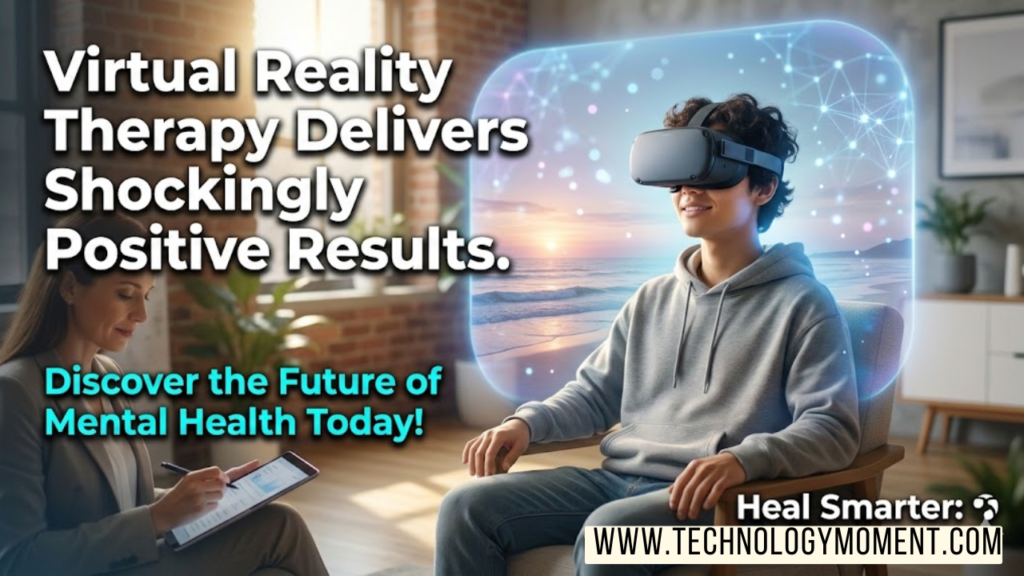
If you have ever wondered how virtual reality therapy for mental health treatment works, you are not alone. At Technology Moment, we explore how new tech shapes real lives. Virtual reality therapy, also called VR therapy, uses immersive headsets and smart software to help people heal. Instead of only talking about fear, stress, or pain, patients step into a safe digital world. They see it. They hear it. They feel present in it. This powerful mix of immersive technology, AI-driven simulations, and guided therapy sessions is changing how modern healthcare works.
So, what is virtual reality therapy, and how does it work in real life? It combines VR headsets, motion tracking, and clinical psychology methods. A therapist creates a controlled virtual space. For example, someone with a fear of flying can sit in a simulated airplane cabin. The setting feels real, but it is safe. The brain reacts as if the situation is real, which helps retrain emotional responses. This method, known as virtual reality exposure therapy, supports anxiety treatment, PTSD recovery, and phobia management. It is practical, measurable, and often faster than traditional talk therapy alone.
One of the biggest reasons people search for the benefits of virtual reality therapy for anxiety and PTSD is simple: results. Studies show that immersive therapy can lower stress levels and reduce panic symptoms. Patients feel more engaged because sessions feel interactive, not passive. VR therapy also supports pain management, stroke rehabilitation, and even addiction recovery. Imagine a burn patient using VR to “escape” into a calm beach scene during treatment. The brain shifts focus. Pain signals reduce. That is not science fiction. It is happening now in hospitals and clinics worldwide.
You might ask, is virtual reality therapy safe and effective for everyday use? In most cases, yes—when guided by trained professionals. Costs are dropping as VR hardware becomes more affordable. Remote VR therapy and AI-powered mental health apps are also rising trends. This makes care more accessible across the globe. At Technology Moment, we believe this blend of healthcare innovation and immersive technology marks a turning point.
If you want to stay ahead of breakthroughs like this, keep exploring with us. The future of mental health technology is already here—and it is more positive than anyone expected.
How the Brain Responds to Virtual Environments
When you enter a virtual world, your brain does not treat it like a cartoon. It reacts as if the experience is real. Your eyes see depth, motion, and space, and your brain quickly builds a story around it. The amygdala, which handles fear and emotion, becomes active if the scene feels intense. That is why virtual reality exposure therapy works so well for anxiety and phobias.
Your nervous system also joins the conversation. Your heart rate may rise if you stand on a virtual cliff. Your palms may sweat during a simulated public speaking task. This reaction proves that immersive VR therapy taps into real emotional circuits. It creates safe stress so your brain can learn new responses.
The brain loves patterns and repetition. When you face a fear in virtual reality mental health treatment again and again, your brain starts to calm down faster each time. It learns that the threat is not dangerous. This rewiring builds confidence. Over time, your emotional response changes in the real world, too.
Virtual environments also trigger memory networks. The hippocampus stores context, and VR gives it rich details. This makes therapy sessions feel vivid and meaningful. That is why virtual reality therapy delivers shockingly positive results for many people across the globe.
Neuroplasticity and Immersive Healing
Your brain is not fixed. It is flexible and always changing. This ability is called neuroplasticity. Virtual reality therapy uses this natural power to reshape how you think and feel. Each immersive session builds new neural pathways.
When you practice calm breathing in a virtual crowd, your brain links crowds with safety instead of panic. That link grows stronger with repetition. Immersive healing through VR therapy makes learning emotional control feel real and practical. You are not imagining success. You are living it in a controlled space.
The beauty of immersive mental health treatment is that it engages multiple senses at once. You see, hear, and sometimes even interact with objects. This full-body engagement strengthens memory and emotional learning. The more senses involved, the deeper the change.
Neuroplasticity also explains long-term results. After several sessions, many people report reduced anxiety, better mood, and stronger coping skills. Their brains have literally practiced new patterns. That is powerful. And it shows why virtual reality therapy for mental health is gaining global attention.
Virtual Reality Therapy for Anxiety Disorders
Anxiety disorders affect millions of people worldwide. Social anxiety, generalized anxiety disorder, and panic disorder can make daily life exhausting. Virtual reality therapy for anxiety disorders offers a modern solution that feels safe yet effective. You face your fear step by step in a guided virtual environment.
Let’s say you fear public speaking. In VR exposure therapy, you stand in front of a digital audience. At first, the crowd may be small and quiet. As you build confidence, the environment becomes more challenging. Your therapist controls the pace, and you stay in control the whole time.
This approach reduces avoidance. Avoidance keeps anxiety alive. When you gently face fear in virtual reality mental health treatment, your brain learns that discomfort fades. That learning lowers panic over time. Many people notice improved confidence even outside therapy sessions.
What makes VR therapy for anxiety trending right now is its realism. It feels close to real life but remains safe. That repetition builds resilience. And resilience changes everything.
VR Therapy for PTSD and Trauma Recovery
Post-traumatic stress disorder can trap a person in painful memories. Loud sounds, certain places, or simple reminders can trigger intense reactions. VR therapy for PTSD creates a controlled space to process trauma safely. It allows gradual exposure without overwhelming the patient.
In trauma-focused virtual reality therapy, the environment is carefully designed. The therapist adjusts sights and sounds to match the person’s experience. You revisit memories in small doses. This reduces emotional intensity over time. Your brain learns that the memory is not happening now.
This method supports emotional regulation. You practice grounding skills while inside the virtual scenario. Your nervous system slowly shifts from fear to calm. Over repeated sessions, traumatic triggers lose their power. That is a life-changing shift for many people.
Global research on immersive trauma therapy shows promising outcomes. Veterans, accident survivors, and disaster victims have reported reduced flashbacks and anxiety. VR therapy for PTSD recovery gives people a sense of control. And control helps rebuild safety.
Virtual Reality Therapy for Depression
Depression can make the world feel dull and heavy. Motivation drops. Joy feels distant. Virtual reality therapy for depression introduces new experiences in a safe, guided way. It encourages action even when energy feels low.
In immersive mood therapy, you may explore calming landscapes or complete small tasks in a virtual setting. These tasks build a sense of achievement. That feeling matters. Small wins help break the cycle of hopelessness. Your brain begins to associate action with reward again.
VR mental health treatment also supports behavioral activation. Instead of waiting to feel better, you do something structured and engaging. This shifts your focus outward. The immersive environment reduces rumination and negative thought loops. You feel present instead of stuck.
Many therapists now combine cognitive behavioral therapy with virtual reality therapy for depression. This blend enhances engagement. It makes sessions dynamic and interactive. For people who struggle with motivation, that interaction can spark change. And sometimes, that spark is enough to start healing.
Pain Management Using Virtual Reality
Pain can feel like a loud alarm that never stops ringing. It drains energy and steals focus. Now imagine slipping on a headset and stepping into a calm beach, a snowy mountain, or even a guided breathing world. That is how virtual reality pain management works. It shifts your brain’s attention away from pain signals and toward immersive digital scenes that feel real and soothing.
When you focus deeply on a virtual world, your brain has less space to process pain. This is not magic. It is neuroscience in action. So when immersive VR therapy captures your senses, pain intensity often drops. Many hospitals now use virtual reality for acute pain relief during wound care and physical therapy sessions.
Chronic pain management with VR therapy is also gaining attention worldwide. People with long-term back pain, nerve pain, or arthritis use guided VR relaxation sessions. These sessions combine movement, breathing, and calming visuals. The result is often lower stress and better body awareness. And when stress drops, pain often follows.
Virtual reality for post-surgical pain is another trending topic. Instead of relying only on medication, doctors add VR sessions to recovery plans. Patients report feeling calmer and more in control. This sense of control matters. When you feel empowered, healing feels possible.
VR Therapy for Phobias
Fear can shrink your world. It can stop you from flying, speaking, or even leaving your home. Virtual reality exposure therapy offers a safe way to face that fear. You enter a digital setting that mirrors your trigger. But you stay in control the entire time. That sense of safety changes everything.
Take fear of flying treatment with VR as an example. You can sit in a virtual airplane cabin and hear the engine start. You can practice breathing while the plane “takes off.” Your therapist adjusts the level of intensity step by step. Over time, your brain learns that the situation is not as dangerous as it feels. That learning sticks.
The same method works for fear of heights and fear of public speaking. You might stand on a virtual balcony or address a digital audience. At first, your heart may race. But with repeated sessions, the fear response weakens. This is how virtual reality therapy for phobias retrains the brain. It builds confidence in small, safe steps.
What makes VR exposure therapy powerful is repetition without real-world risk. You can practice again and again. No plane ticket needed. No tall building required. Just you, the headset, and guided support. That accessibility makes it a global solution for common fears.
Benefits of Virtual Reality Therapy
Virtual reality mental health treatment offers something unique. It blends technology with human care. One major benefit is deep engagement. When you step into a virtual space, you feel present. That presence helps you focus and respond in real time. It turns therapy from abstract talk into a lived experience.
Another key advantage is personalization. Therapists can tailor virtual scenarios to your needs. If you struggle with social anxiety, your session can simulate a small gathering or a busy event. If pain relief is the goal, the system can adjust visuals and sounds to match your comfort level. This level of customization makes immersive therapy more effective.
Accessibility is also improving fast. With affordable VR headsets and online platforms, virtual reality therapy at home is becoming a reality. Remote VR mental health sessions allow people in rural areas or different countries to access support. This global reach is one reason why VR therapy is trending worldwide.
There is also a strong emotional impact. VR can create hope. When you face a fear in a virtual space and succeed, you feel proud. That pride builds momentum. And momentum fuels change. In a world where mental health challenges are rising, virtual reality therapy offers a fresh, innovative path toward healing.
Limitations and Challenges of VR Therapy
Virtual reality therapy sounds exciting, but it is not perfect. The first big challenge is cost. High-quality VR headsets, software, and trained therapists are expensive, especially in low-income countries. If someone searches for “affordable virtual reality therapy near me,” they may not find many options yet. Access is growing, but it is still limited in many parts of the world.
Another issue is technology comfort. Not everyone feels safe wearing a headset or entering a digital world. Some people experience motion sickness, dizziness, or eye strain during immersive therapy sessions. If you already struggle with anxiety, the device itself may feel overwhelming at first. Therapists must move slowly and adjust the experience to fit each person.
Privacy and data security also raise serious concerns. VR therapy platforms collect sensitive mental health data, behavior patterns, and emotional responses. In a time when cybersecurity threats are trending globally, protecting that data is critical. Patients want to know that their personal trauma stories and emotional reactions stay private. Without strong encryption and ethical standards, trust can break quickly.
There is also the human connection factor. Traditional therapy depends on facial expressions, body language, and emotional cues. In virtual sessions, some of that natural warmth can feel reduced. While VR mental health treatment works well for exposure therapy, it may not replace deep human empathy. Technology can guide healing, but it cannot fully replace human care.
The Future of Virtual Reality Mental Health Treatment
The future of virtual reality mental health treatment looks powerful and promising. As technology becomes cheaper, more clinics and online platforms will adopt VR-based therapy solutions. Imagine searching for “virtual reality therapy for anxiety at home” and finding safe, licensed programs you can use anywhere. That future is nearer than we think.
Artificial intelligence will play a major role in shaping personalized VR therapy. AI can analyze emotional responses, voice tone, and behavioral patterns inside virtual environments. This means treatment plans can adjust in real time. If your stress level rises, the system may soften the scene automatically. That kind of adaptive mental health care feels like having a smart guide walking beside you.
Remote therapy will also expand access across borders. A therapist in one country can guide a patient thousands of miles away through immersive exposure therapy. This helps people in rural or underserved regions access modern mental health treatment. It breaks geographic barriers and opens global doors.
We may also see VR therapy integrated with wearable devices. Smartwatches and biometric sensors can track heart rate, breathing, and stress signals. Combined with immersive therapy sessions, this data can help create safer and more effective treatment. The future blends neuroscience, AI, and virtual reality into one powerful healing system.
Conclusion
Virtual reality therapy delivers shockingly positive results, but it is still evolving. It offers hope for anxiety disorders, PTSD recovery, depression treatment, and chronic pain management. At the same time, we must face its limits with honesty and responsibility. Technology alone is not magic; it works best when paired with skilled professionals and ethical care.
As costs drop and innovation grows, immersive mental health therapy may become part of everyday healthcare worldwide. We are standing at the edge of a new era in psychological treatment. Just like smartphones changed communication, VR could transform how we heal our minds. The journey is just beginning, and the possibilities feel endless.
FAQs
Is virtual reality therapy safe for everyone?
Virtual reality therapy is generally safe when guided by trained professionals. However, some people may experience motion sickness or mild discomfort during sessions. Therapists usually start slowly to reduce these effects. If you have severe neurological or vision conditions, you should consult a medical expert first.
How effective is VR therapy for anxiety disorders?
Research and clinical reports show strong results for anxiety treatment using VR exposure therapy. It allows people to face fears in a safe and controlled space. Many patients report reduced panic symptoms after repeated sessions. The key is consistent guidance and personalized scenarios.
Can I do virtual reality therapy at home?
Home-based VR therapy is becoming more common. Some platforms offer guided programs supervised remotely by licensed therapists. However, serious trauma or complex mental health conditions require professional oversight. Self-guided use should always be done carefully.
Is VR therapy expensive compared to traditional therapy?
At present, VR therapy can cost more due to equipment and software needs. Over time, as technology becomes more affordable, prices are expected to drop. Many experts believe virtual mental health treatment will become more accessible globally. Insurance coverage is also expanding in some regions.
Will VR therapy replace traditional talk therapy?
VR therapy is unlikely to replace traditional therapy completely. It works best as a complementary tool, especially for exposure-based treatments. Human connection remains central to emotional healing. Think of VR as a powerful assistant, not a replacement for real human care.