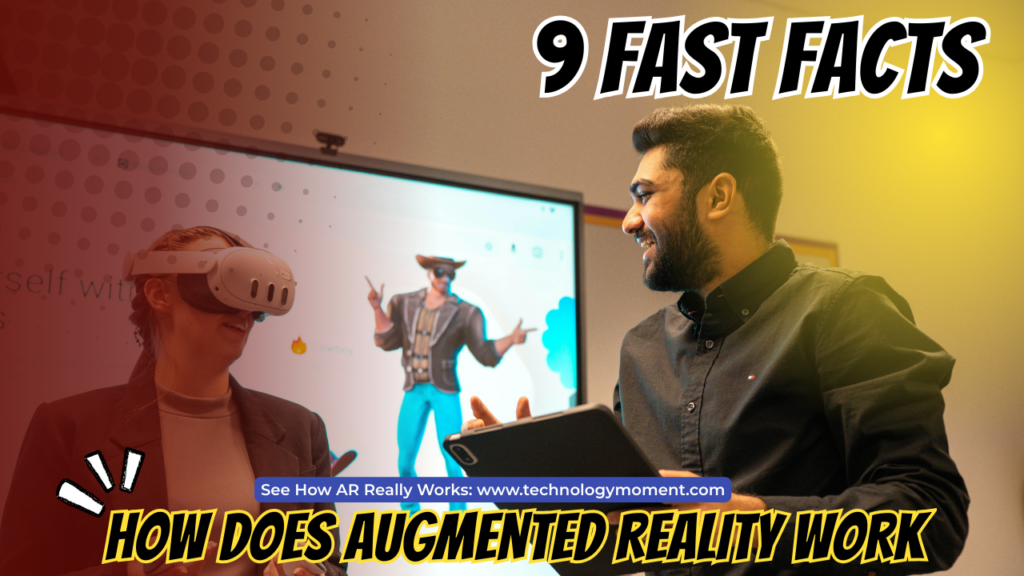
Welcome to Technology Moment, where complex tech ideas slow down for a minute and actually make sense. If you’ve ever wondered how new technologies shape your daily life without you even noticing, you’re in the right place. Here, we break down trending tech topics into clear, friendly stories you can enjoy with your morning coffee. No jargon. No confusion. Just real explanations for real people.
Today, we’re diving into one of the hottest digital trends right now: augmented reality technology. You may not realize it, but AR already lives inside your phone, your apps, and even your shopping experience. From social media filters to virtual try-ons, augmented reality is changing how we see and interact with the world. And the best part?
In this blog post, “How Does Augmented Reality Work: 9 Fast Facts,” we start with the basics and build from there. We’ll explain what augmented reality really is, how it works behind the scenes, and why it’s growing so fast worldwide. Each fact is short, clear, and designed for global readers. No tech overload. Just smart insights you can actually use.
If you’re curious about AR in gaming, education, shopping, healthcare, or future digital experiences, you’ll love what’s coming next. This introduction to augmented reality sets the stage for everything that follows. So stay with us, explore the facts, and take a clear, simple look at how augmented reality works—right now, and in the future.
How does augmented reality work – The Basics
Augmented Reality works by mixing the digital world with the physical one you see around you. Instead of taking you to a virtual space, AR adds digital objects to your real environment. This happens in real time, so everything feels natural and smooth. You stay grounded in reality while getting extra digital information layered on top.
At its core, AR follows a simple loop. First, it looks at the real world using a camera. Then it understands what it sees using software. After that, it places digital content in the right spot. Finally, it shows the combined view on your screen. All of this happens in milliseconds.
The magic of AR comes from how well it understands space. It knows where floors, walls, faces, or objects are. This allows digital items to sit still instead of floating randomly. That’s why an AR chair looks like it’s really on your floor.
What makes AR exciting today is speed and accessibility. Faster processors and better cameras make experiences smooth. Just open an app, point your camera, and AR does the rest.
Fast Fact #1 – AR Uses the Real World as a Base
Augmented Reality always starts with the real world. Your room, street, desk, or face becomes the foundation. AR does not replace reality. It builds on top of it. That’s the key difference that makes AR feel so natural.
When you move your phone, the AR content moves with you. If you walk closer, the object looks bigger. Step back, and it looks smaller. This happens because AR constantly reads the physical space around you. It reacts just like a real object would.
This real-world base makes AR useful in daily life. You can preview furniture in your home. You can see navigation arrows on real roads. You can try makeup on your own face. The experience feels personal because it uses your environment.
This is why AR works so well for shopping, learning, and entertainment. It meets you where you are. No headset required. No separate world. Just reality, enhanced.
Fast Fact #2 – AR Relies on Cameras and Sensors
Cameras are the eyes of augmented reality. They capture the real world frame by frame. Every AR experience starts when your camera turns on. Without it, AR cannot see or understand anything around you.
Sensors act like the sense of balance and movement. Your phone has accelerometers, gyroscopes, and depth sensors. These tell AR how fast you move, which way you turn, and how far objects are. This keeps digital content stable and realistic.
Together, cameras and sensors help AR track position. This process is called motion tracking. It allows AR objects to stay in place even when your hands shake. That’s why an AR game character doesn’t slide away when you move your phone.
As hardware improves, AR becomes more accurate. New phones detect surfaces faster. They understand lighting better. This leads to more immersive and believable AR experiences worldwide.
Fast Fact #3 – AR Needs Powerful Software Algorithms
Behind every AR experience is smart software doing heavy work. Algorithms analyze camera input in real time. They identify shapes, edges, faces, and surfaces. This is how AR knows what it is looking at.
Computer vision plays a huge role here. It teaches machines to see like humans. When AR recognizes a table or a face, it uses pattern matching and image detection. This allows digital objects to interact with real ones.
These algorithms also handle depth and scale. They decide how big an object should look. They adjust shadows and angles. This makes AR objects feel grounded instead of fake or flat.
As AI improves, AR becomes smarter. It can understand gestures, expressions, and environments. This is why modern AR feels smoother than older versions. Software is the silent hero behind the scenes.
Fast Fact #4 – AR Operates Using Equipment You Already Possess
One of the best things about augmented reality is accessibility. You don’t need special equipment to start. Your smartphone or tablet is enough. Millions of people already use AR without realizing it.
Apps on iOS and Android support AR out of the box. Social media filters, shopping apps, and navigation tools use AR daily. You just open the app, and AR activates automatically. No learning curve. No setup stress.
AR glasses and headsets also exist, but they are optional. Phones remain the most popular AR devices globally. They are portable, powerful, and familiar. This makes AR easy to adopt across cultures and age groups.
Because AR runs on everyday devices, it grows fast. Developers build more apps. Businesses invest more. Users explore more. AR feels less like future tech and more like a natural part of life.
Fast Fact #5 – AR Uses Real-Time Data Processing
Augmented reality feels magical because it works in real time. The moment you move your phone or turn your head, AR updates what you see instantly. This happens because AR systems process huge amounts of data every second. Cameras, sensors, and software communicate with each other in real time, so digital objects stay perfectly aligned with the real world.
Imagine AR like a live sports commentator. It doesn’t record and edit later; it reacts instantly to what’s happening on the field. In the same way, AR analyzes your surroundings on the spot. It tracks movement, light, depth, and position in milliseconds. That speed is what makes AR feel natural instead of fake.
Real-time data processing also keeps AR experiences smooth. If there were even a small delay, the illusion would break. A virtual chair might slide across the floor or float in the air. Fast processing prevents this and keeps digital objects locked in place.
This is why powerful processors and optimized software matter so much in augmented reality technology. As devices get faster, AR becomes more realistic. That’s also why trending AR apps feel better today than they did a few years ago.
Fast Fact #6 – AR Depends on Tracking Technologies
Tracking is the backbone of augmented reality. Without tracking, AR wouldn’t know where to place digital content. Tracking helps AR understand your position, your movement, and the space around you. It’s how AR decides where a virtual object should sit in the real world.
There are different ways AR tracks the environment. Sometimes it uses visual markers like QR codes or images. Other times it tracks surfaces, corners, and edges without any markers at all. This markerless AR is now very popular because it feels more natural.
Location-based tracking adds another layer. Using GPS, AR apps can display digital content based on your location. That’s how navigation apps add arrows on roads or tourism apps show information about nearby landmarks. It turns the entire world into an interactive map.
As tracking technology improves, AR becomes more stable and accurate. Digital objects stop shaking or drifting. This makes AR more useful for serious tasks like training, design, and remote assistance.
Fast Fact #7 – Augmented Reality is Driven by Artificial Intelligence.
Artificial intelligence is the brain behind modern augmented reality. AI helps AR understand what it sees. When your camera looks at a room, AI identifies walls, floors, faces, and objects. This allows AR to place digital elements correctly and realistically.
Machine learning makes AR smarter over time. That’s why face filters fit better today, and object scanning feels more accurate. AR learns from millions of interactions across the globe.
AI also helps AR predict behavior. It can guess how you might move next and adjust the visuals smoothly. This prediction reduces lag and improves comfort. It’s one reason AR feels fluid instead of robotic.
As AI technology advances, AR will become more human-like. It won’t just react; it will anticipate. This combination of AI and AR is one of the hottest trending topics in immersive technology right now.
Fast Fact #8 – AR Is Everywhere Today
Augmented reality is no longer limited to tech labs. It’s already part of everyday life across the world. Social media filters, mobile games, shopping apps, and navigation tools all use AR. Many people use it daily without even realizing it.
In education, AR turns lessons into experiences. Students can explore the human body or ancient history through their phones. In healthcare, AR helps doctors visualize organs and plan surgeries. These real-world uses show how practical AR has become.
Retail and marketing also rely heavily on AR. This builds confidence and reduces returns. Businesses love AR because it boosts engagement and trust.
From entertainment to productivity, AR has quietly spread everywhere. Its ability to blend digital content into real environments makes it useful across industries and cultures.
Fast Fact #9 – AR Is Shaping the Future of Digital Interaction
Instead of staring at flat screens, we interact with digital content in our physical space. This feels more intuitive and more human. It’s like bringing the internet into the real world.
AR is also playing a major role in the future of the metaverse. It acts as a bridge between physical and virtual spaces. Instead of escaping reality, AR enhances it. This shift makes digital interaction more inclusive and accessible.
Workplaces are evolving with AR, too. Remote collaboration, virtual training, and real-time guidance are becoming common. AR allows experts to assist from anywhere, reducing travel and saving time. This is especially powerful for global teams.
As hardware improves and software becomes smarter, AR will feel invisible yet essential. It won’t replace reality; it will upgrade it. That’s why augmented reality is seen as a key technology shaping the digital future.
Benefits of Augmented Reality
Augmented reality makes experiences more engaging by blending digital content with the real world. Instead of just reading or watching, people can interact in real time. This hands-on feeling improves attention and memory. That’s why AR is becoming popular across industries worldwide.
One major benefit of augmented reality is better learning. Students understand complex topics faster when they see 3D models in front of them. Doctors, engineers, and technicians can practice skills safely using AR simulations. Learning feels natural, like learning by doing rather than memorizing.
AR also improves customer experience in shopping and marketing. People can try products virtually before buying, which builds trust. This reduces returns and boosts satisfaction. Brands use augmented reality marketing to create interactive campaigns that feel personal and fun.
In workplaces, augmented reality increases productivity. Employees get step-by-step instructions overlaid on real tasks. This reduces errors and saves time. As remote work grows, AR collaboration tools are becoming a game-changer globally.
Challenges and Limitations of AR
Even with its growth, augmented reality still faces technical challenges. AR needs strong hardware, good cameras, and fast processors. Older devices struggle to deliver smooth experiences. This limits access for many users around the world.
Privacy is another big concern with augmented reality technology. AR apps often use cameras, location data, and sensors. Users worry about how this data is stored and shared. Without clear rules, trust becomes an issue.
Content creation is also a challenge in AR development. Building high-quality AR experiences takes time and skilled developers. Small businesses may find it costly. This slows down adoption in some regions.
Lastly, AR depends heavily on stable internet and real-time data. Poor connectivity breaks the experience. Until global infrastructure improves, AR performance will vary from place to place.
Conclusion
Augmented reality is changing how we interact with the digital world. It doesn’t replace reality; it enhances it. From education to healthcare to shopping, AR brings information to life. It makes experiences richer and more human.
Understanding how augmented reality works helps us see its real value. While challenges exist, innovation is moving fast. As devices improve and costs drop, AR will become more accessible. The future of augmented reality looks immersive, interactive, and incredibly exciting.
FAQs
What is augmented reality used for today?
Augmented reality is used in gaming, education, healthcare, retail, and marketing. It helps people learn, shop, and work more efficiently. Many smartphones already support AR apps globally.
Is augmented reality the same as virtual reality?
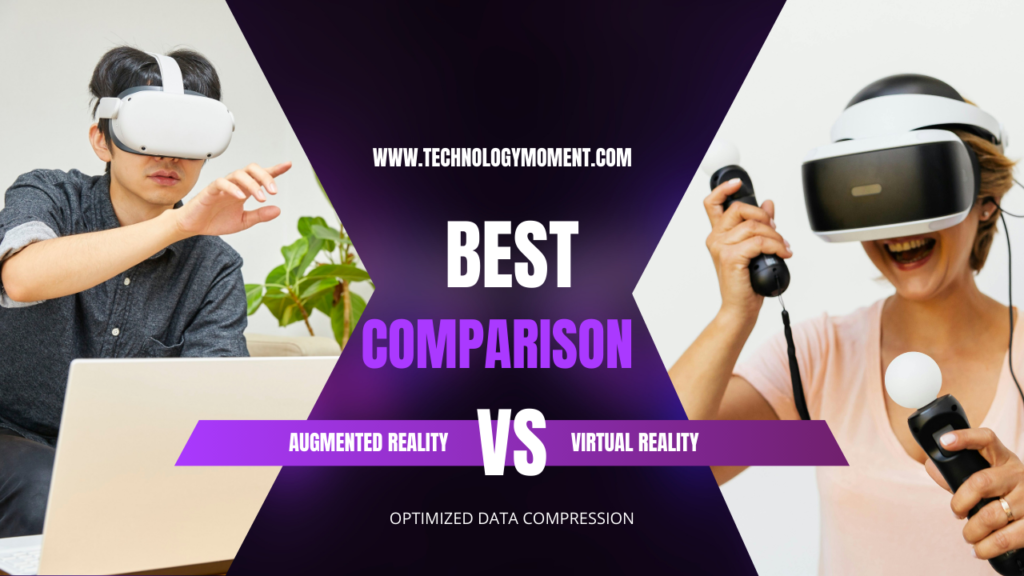
No, they are different technologies. Augmented reality adds digital elements to the real world. Virtual reality replaces the real world completely with a digital one.
Do I need special devices to use AR?
No, you don’t always need special devices to use augmented reality. Most AR experiences work smoothly on smartphones and tablets that have a camera, sensors, and a modern operating system. Many popular apps already include built-in AR features, so you may be using AR without even realizing it.
Is augmented reality safe to use?
Yes, but users should be careful with privacy settings. AR apps use cameras and sensors, so trusted apps are important. Awareness helps keep usage safe.
What is the future of augmented reality?
The future of augmented reality is closely tied to AI, 5G, and the metaverse. AR will become more realistic and widely used. It will shape how people learn, work, and connect globally.