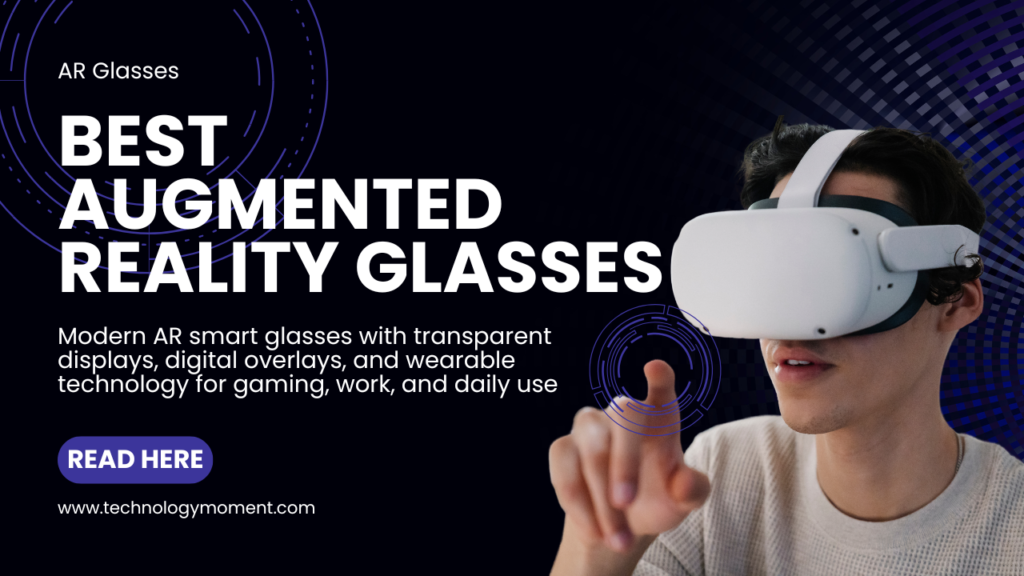
Where we break down complex tech into simple, human-friendly stories. Today, we’re diving into one of the most exciting trends shaping the future—augmented reality glasses you can buy today. These aren’t sci-fi dreams anymore. They’re real, practical, and already changing how people work, play, and connect with the digital world.
Augmented reality glasses blend digital content with real life. Imagine checking directions, watching videos, or seeing work instructions right in front of your eyes. No phones. No distractions. Just smart visuals layered over your world. That’s why AR smart glasses for daily use are trending across the globe.
At Technology Moment, we focus on what truly matters to you. We explore the best AR glasses for consumers, lightweight augmented reality glasses, and even enterprise AR headsets for professionals. Whether you’re a tech lover, a gamer, or someone curious about future gadgets, this guide is built for you.
In this article, we’ll start with a clear introduction to augmented reality glasses. Then we’ll walk you through how they work, what makes them special, and which models stand out today. We’ll keep it simple, honest, and practical—just like a conversation with a friend who loves tech.
So, if you’re ready to understand the future without the confusion, you’re in the right place. Let’s explore the best augmented reality glasses you can buy today and see how they fit into your life—right now.
How Augmented Reality Glasses Work
Augmented Reality glasses work by blending the digital world with the real one you see every day. When you wear AR glasses, tiny displays project digital images directly into your field of view. These images appear as if they are floating in front of you or attached to real objects around you. The goal is simple: add useful digital information without blocking your natural vision.
Inside AR glasses, multiple sensors and cameras constantly scan your surroundings. They track your head movement, eye direction, and even hand gestures. This allows the glasses to understand where you are looking and adjust the digital content in real time. If you turn your head, the virtual object stays in place, just like a real one would. This creates a smooth and natural experience.
The display system is another key part of how augmented reality glasses work. Most modern AR glasses use waveguide or micro-OLED display technology. These systems reflect light into your eyes in a way that feels transparent and lightweight. You can still see the real world clearly while digital images sit comfortably on top of it.
Processing plays a huge role as well. Some AR glasses have built-in processors, while others connect to smartphones or computers. These processors handle graphics, apps, and AI features. With the rise of artificial intelligence, many AR glasses now recognize objects, translate languages, or show real-time navigation, making them smarter and more useful every day.
Key Factors to Consider Before Buying AR Glasses
Before buying augmented reality glasses, comfort should be your first thought. You may wear them for hours, so they must feel light and balanced. If the glasses press too hard on your nose or ears, the experience quickly becomes frustrating. A good fit makes all the difference, especially for daily use.
Display quality matters more than many people expect. A wide field of view and sharp visuals help digital content feel natural instead of distracting. If the display looks dim or blurry, your eyes may tire quickly. High-resolution AR glasses offer a clearer blend of real and digital worlds, which improves immersion and usability.
Battery life is another crucial factor to consider. AR glasses rely on constant processing, which can drain power fast. Short battery life limits how useful the device is, especially for travel, work, or gaming. Many users now look for AR glasses that balance performance with efficient power usage.
Software support often decides long-term value. Some AR glasses work only with specific apps or ecosystems. Others offer open platforms with frequent updates. If you want future-proof augmented reality glasses, choose a model with strong developer support, regular updates, and compatibility with popular devices.
Price always plays a role, but value matters more than cost. Some AR glasses are expensive because they target enterprise users. Others offer affordable options for entertainment and daily tasks. The best choice depends on how you plan to use them and what features you truly need.
Best Augmented Reality Glasses
Microsoft HoloLens 2 stands out as one of the most advanced augmented reality glasses available today. It focuses on enterprise and professional use, offering excellent spatial tracking and hand recognition. The experience feels natural and powerful, especially for training, design, and remote collaboration. While it comes at a high price, it delivers unmatched performance for serious users.
Magic Leap 2 pushes the boundaries of immersive AR experiences. It offers improved visuals, better comfort, and strong enterprise features. Developers and businesses appreciate its accurate environment mapping and advanced optics. These AR glasses are designed for people who want cutting-edge technology rather than casual entertainment.
XREAL Air 2 has gained global attention for its lightweight design and affordability. These augmented reality glasses focus on media consumption, gaming, and productivity. You can connect them to smartphones, laptops, or gaming consoles. They feel more like stylish sunglasses than heavy tech gear, making them popular among everyday users.
Vuzix Blade 2 blends smart glasses design with practical AR features. It works well for navigation, notifications, and simple augmented reality applications. The slim design makes it suitable for daily wear, especially for professionals who want discreet AR glasses without drawing attention.
Lenovo ThinkReality A3 targets business users who need reliable and scalable AR solutions. It integrates smoothly with enterprise software and supports remote assistance and virtual monitors. These augmented reality glasses work best when paired with compatible devices, making them ideal for structured work environments.
Rokid Max AR Glasses focus on entertainment and portability. They offer a cinematic viewing experience in a compact form. Users enjoy watching movies, playing games, or working on virtual screens while traveling. This makes them a strong choice for people who want immersive AR without complexity.
Best AR Glasses for Different Use Cases
Not all augmented reality glasses are built for the same job. Some feel like a powerful workstation on your face, while others are closer to stylish screens for fun and media. Choosing the best AR glasses depends on how you plan to use them in real life, not just on specs.
If you are a developer, you need AR glasses that support advanced tools, spatial mapping, and frequent updates. Devices like Microsoft HoloLens 2 or Magic Leap 2 shine here because they handle complex 3D environments smoothly. They are made for building, testing, and breaking things until they work perfectly.
For enterprise and industrial use, accuracy matters more than style. AR glasses used in factories, warehouses, or construction sites must stay stable for hours. Lenovo ThinkReality A3 and similar enterprise AR headsets focus on reliability, security, and integration with business software.
Gamers and entertainment lovers usually want immersive visuals without heavy hardware. Lightweight AR glasses such as XREAL Air 2 or Rokid Max are popular because they connect easily to phones, consoles, or laptops. They turn any place into a personal cinema or gaming zone.
For daily casual use, comfort becomes king. Smart AR glasses with simple overlays, notifications, and media playback work best here. These devices may not feel futuristic, but they fit real human routines, which makes them more practical.
Augmented Reality Glasses for Work and Productivity
Workplace AR glasses are quietly transforming how people do their jobs. They don’t shout for attention. They simply make work faster, clearer, and smarter. When information appears exactly where you need it, everything flows better.
In remote assistance, AR glasses allow experts to guide workers from anywhere in the world. A technician can see what you see and give live instructions. This saves travel time and cuts costs while improving accuracy on the ground.
Training also changes completely with AR. Instead of reading manuals, workers learn by seeing instructions layered over real equipment. This hands-on learning feels natural and reduces mistakes, especially in high-risk industries.
Healthcare professionals use AR glasses for surgery planning, patient data viewing, and medical training. Doctors can keep their hands free while accessing critical information. This small shift can make a big difference in care quality.
In offices, AR glasses are becoming virtual multi-screen setups. Imagine having floating screens around you without carrying extra monitors. For remote work and global teams, this feels like stepping into the future of productivity.
AR Glasses for Consumers and Entertainment
For consumers, AR glasses are less about work and more about experience. They turn ordinary moments into something interactive and memorable. Entertainment is where AR feels playful and personal.
Gaming with AR glasses blends the digital and physical worlds. Games no longer live inside a screen. They appear in your room, your street, or your favorite café. This makes gameplay feel alive and unpredictable.
Streaming movies and shows on AR glasses feels like carrying a giant screen in your pocket. Lightweight AR display glasses create a private cinema anywhere. Long flights and commutes suddenly feel shorter.
Travel and navigation also benefit from AR. Directions appear in front of you instead of on your phone. Landmarks come with instant information. Exploring new cities becomes easier and more engaging.
Social media and content creation are slowly entering AR, too. Filters, live overlays, and first-person storytelling feel more immersive. As platforms evolve, AR glasses may become the next big content tool.
Advantages and Limitations of AR Glasses
Augmented reality glasses offer clear advantages that explain their growing popularity. They provide hands-free access to information, which feels natural and efficient. Once you try it, going back to phones feels limiting.
They improve focus by keeping your eyes forward. Instead of switching screens, data stays in your field of view. This is powerful for work, navigation, and learning.
AR glasses also unlock new ways to interact with digital content. Gestures, voice commands, and spatial controls feel more human than typing. This makes technology feel less intrusive.
Still, AR glasses are not perfect yet. High-quality models remain expensive for most consumers. Battery life also limits long sessions, especially on powerful devices.
Privacy concerns and social acceptance are real challenges. Wearing smart glasses in public can make people uncomfortable. Until designs become more subtle, mass adoption will take time.
Future Trends in Augmented Reality Glasses
Augmented Reality glasses are moving fast, and the next few years will feel like a major leap rather than a slow upgrade. Right now, AR glasses already overlay digital content on the real world, but the future is about making that experience feel natural. Imagine wearing glasses that feel no different from your regular eyewear, yet quietly give you useful information when you need it. That shift toward invisibility is one of the biggest trends shaping AR glasses globally.
Artificial intelligence will play a huge role in future AR glasses. Instead of tapping buttons or using voice commands all the time, glasses will understand context. They will know where you are, what you’re looking at, and what you might need next. For example, while walking in a new city, your AR glasses could show directions, translate signs, and suggest nearby places, all without interrupting your view.
Design is also changing fast. Future AR glasses will be lighter, thinner, and more stylish. Tech companies know that people won’t wear bulky devices every day. That’s why the focus is shifting toward slim frames, better weight balance, and longer battery life. These improvements will help AR glasses move from niche gadgets to everyday accessories.
Another big trend is the connection between AR glasses and the digital economy. AR glasses will blend with remote work, virtual collaboration, and even digital shopping. You may soon attend meetings, design products, or try on clothes using AR glasses from your living room. This mix of reality and digital space is pushing AR glasses toward mass adoption.
Are Augmented Reality Glasses Worth Buying in 2026?
If you’re asking whether augmented reality glasses are worth buying in 2026, the short answer is yes, but it depends on your needs. By 2026, AR glasses will be more refined, more affordable, and more useful than ever before. Early limitations like short battery life and limited apps will improve significantly.
For professionals, AR glasses will be a strong investment. Engineers, doctors, designers, and remote workers will benefit from hands-free data access and real-time guidance. Instead of switching between screens, information will appear right where the work happens.
For everyday users, the value will come from convenience and experience. Navigation, fitness tracking, media consumption, and communication will feel smoother and more immersive. AR glasses won’t replace smartphones overnight, but they will reduce screen dependency. That alone makes them appealing to many people.
However, if you only want AR glasses for fun and casual use, waiting might still make sense. Prices will continue to drop, and ecosystems will grow stronger. But by 2026, AR glasses will no longer feel experimental. They will feel practical, reliable, and ready for daily life.
Conclusion
Augmented Reality glasses are no longer just a futuristic idea. They are becoming real tools that blend digital information with everyday life. From work and learning to travel and entertainment, AR glasses are opening new ways to interact with the world around us.
The best augmented reality glasses you can buy today already show how powerful this technology can be. As hardware improves and software ecosystems expand, AR glasses will feel more personal and more useful. They will quietly assist rather than distract, which is exactly what users want.
Looking ahead, the future of AR glasses feels exciting and realistic at the same time. Lighter designs, smarter AI, and broader global adoption will push AR glasses into the mainstream. If you enjoy staying ahead of technology trends, this is a space worth watching closely.
In the coming years, AR glasses won’t just change how we see screens. They will change how we see the world itself.
Frequently Asked Questions (FAQs)
What are augmented reality glasses used for today?
Augmented reality glasses are used for navigation, remote assistance, training, entertainment, and productivity. They display digital information in the real world, making tasks faster and more interactive. Many industries already use them for hands-free work and real-time guidance.
Are AR glasses safe for daily use?
Yes, AR glasses are generally safe when used responsibly. Modern designs focus on eye comfort, balanced displays, and reduced strain. Taking breaks and using them in well-lit environments helps maintain a healthy experience.
Do augmented reality glasses need a smartphone?
Some AR glasses work independently, while others connect to a smartphone or computer. Many lightweight AR glasses rely on phones for processing power. Future models are expected to become more standalone.
Can AR glasses replace smartphones in the future?
AR glasses are unlikely to replace smartphones completely in the near future. Instead, they will work alongside them. AR glasses reduce screen time by showing information directly in your view, but phones will still handle many tasks.
Which augmented reality glasses are best for beginners?
Lightweight and affordable AR glasses are best for beginners. Models focused on media, navigation, and basic productivity offer an easy entry point. These glasses help users understand AR without feeling overwhelmed.