
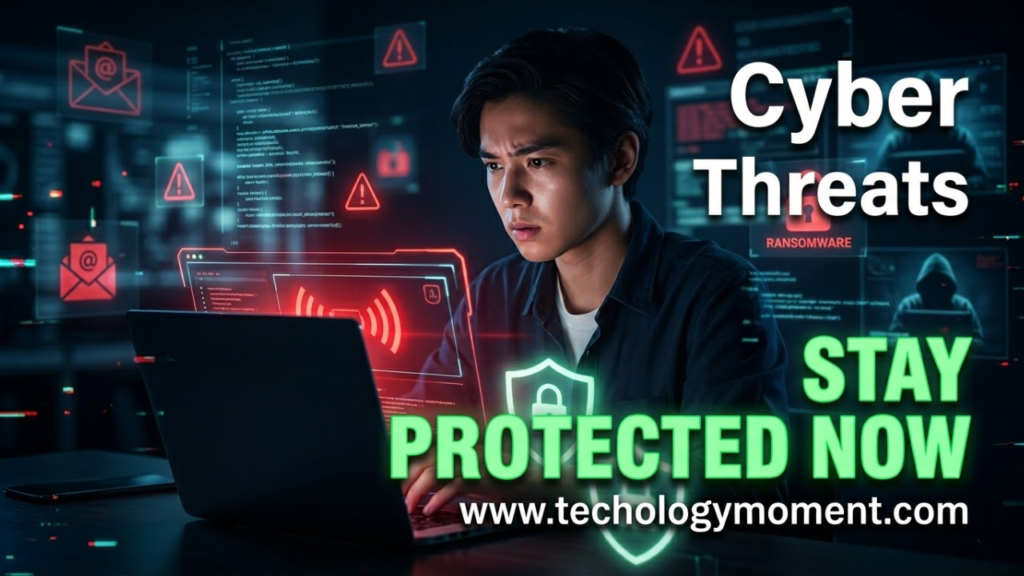
If you’ve ever wondered why modern cyber threats are increasing so fast, you’re not alone. At Technology Moment, we see how deeply our lives depend on the internet—banking, shopping, chatting, even working. That convenience is powerful, but it also opens doors to risk. Today’s hackers don’t just target big companies; they target everyday users like you and me. A simple click on a fake email or a weak password can lead to serious damage. When you understand how these threats work, you gain control. And that’s exactly what this guide is here to help you do.
Let’s talk about the types of cyber threats in today’s digital world. Now we face phishing scams, ransomware attacks, spyware, and even AI-driven hacking techniques. Imagine getting an email that looks exactly like it came from your bank—same logo, same tone—but it’s fake. That’s phishing, and it tricks millions of users every year. Or think about ransomware, where hackers lock your files and demand payment to unlock them. These aren’t rare events anymore—they’re happening daily. Understanding these threats helps you spot danger early and avoid costly mistakes.
Another growing concern is how cyber attacks impact individuals and small businesses. Many people assume hackers only go after big corporations, but that’s not true anymore. In fact, smaller targets are often easier to exploit because they lack strong security systems. A hacked social media account, stolen credit card details, or leaked personal data can cause stress, financial loss, and even identity theft. For small businesses, a single cyber attack can shut down operations completely. When you stay informed, you reduce your risk significantly.
So, what can you actually do to stay safe? Let’s focus on simple cybersecurity tips for beginners that really work. Start with strong, unique passwords for every account. Use two-factor authentication whenever possible—it adds an extra layer of protection. Keep your software updated because updates often fix security gaps. Avoid clicking on suspicious links, even if they look trustworthy. And always double-check before sharing personal information online. These small steps might seem basic, but they are incredibly powerful when practiced consistently.
At Technology Moment, we believe that cybersecurity awareness for everyday users should be simple, practical, and accessible to everyone. You don’t need to be a tech expert to protect yourself—you just need the right knowledge and habits. As cyber threats continue to evolve, staying informed is your biggest advantage. The digital world isn’t going anywhere, so learning how to navigate it safely is one of the smartest decisions you can make today.
Rising Global Cybercrime Trends
Cybercrime is not slowing down. It is growing faster than ever, and it affects people in every country. You might think only big companies get targeted, but that is no longer true. Today, hackers go after small businesses, students, freelancers, and even regular social media users. Reports show that global cybercrime costs are expected to cross trillions of dollars yearly. That means more attacks, more data leaks, and more financial losses for people like you and me.
One major reason behind this rise is how connected the world has become. We use smartphones, cloud apps, and online payments daily. Every click creates a new chance for hackers to attack. Cybercriminals also use advanced tools like AI and automation. These tools help them launch attacks faster and on a bigger scale. So instead of targeting one person, they can target millions in seconds.
Another important trend is the shift toward data theft and identity fraud. Hackers are not just stealing money anymore. They want your personal data, login details, and even your digital identity. This data can be sold on the dark web or used for future attacks. The scary part is that many victims don’t even know they have been hacked until it is too late.
If you look closely, cybercrime is becoming more organized. It now works like a business model. There are hacker groups, service providers, and even customer support for cyber attacks. This makes cyber threats more dangerous and harder to stop. That is why understanding these trends is the first step to staying safe in this digital world.
Hidden Danger #1: Phishing Attacks Evolving Faster
Phishing attacks are no longer easy to spot. Gone are the days of poorly written emails with obvious mistakes. Today’s phishing messages look real, professional, and highly convincing. You might receive an email that looks exactly like your bank or a trusted app. It may even include your name and personal details, making it feel authentic.
The biggest change is the use of AI in phishing. Cybercriminals now create personalized messages in seconds. These messages match your behavior, interests, and even your recent online activity. Imagine getting a message that refers to something you actually searched for yesterday. That makes it much harder to ignore or detect as fake.
Phishing is also moving beyond emails. Attackers now use SMS, social media, and even voice calls. This is called “multi-channel phishing.” You might get a message on WhatsApp, followed by a call that confirms it. This layered approach builds trust and increases the chances of success. It feels real because it comes from different directions.
The real danger is how simple mistakes can lead to big losses. One wrong click can give hackers access to your bank account, emails, or even your entire device. That is why phishing remains one of the most powerful cyber threats today. It plays on human emotions like fear, urgency, and curiosity, making it very effective.
Hidden Danger #2: Ransomware Attacks Growing Aggressively
Ransomware attacks are becoming more aggressive and more personal. In simple terms, ransomware locks your data and demands money to unlock it. But today, it is not just about locking files. Hackers now steal your data before locking it. Then they threaten to leak it if you don’t pay. This double attack makes the situation even worse.
What makes ransomware more dangerous is how fast it spreads. A single infected file or link can shut down entire systems. Businesses, hospitals, schools, and even government offices have been affected. In many cases, operations stop completely until the issue is resolved. This leads to financial loss, reputational damage, and sometimes even risk to human lives.
Another worrying trend is “Ransomware-as-a-Service.” This means even people with basic technical knowledge can launch attacks. They can simply buy tools from the dark web and start attacking targets. This increases the number of attackers in the system, making ransomware more common than ever before.
You might think paying the ransom solves the problem, but it doesn’t guarantee anything. Hackers may not return your data, or they may attack again later. That is why prevention is more important than cure. Regular backups, strong security systems, and awareness can reduce the risk of falling into this trap.
Hidden Danger #3: IoT Device Vulnerabilities
IoT devices are everywhere now. From smart TVs and fitness bands to home assistants and smart locks, these devices make life easier. But here’s the problem—they are often not secure.
You might not think your smart bulb or smartwatch is important. But hackers see them as entry points. Once they access one device, they can move to other devices on the same network. This can lead to data theft, spying, or even full control of your system. It is like leaving a small window open that leads to your entire house.
Unlike smartphones or laptops, many IoT devices don’t get frequent security updates. This leaves them exposed to known vulnerabilities. Hackers can exploit these weaknesses easily because there is no protection in place.
The rise of smart homes has made this problem even bigger. The more connected devices you have, the higher the risk. But you need to use them wisely. Small steps can make a big difference in protecting your digital life.
Hidden Danger #4: Insider Threats You Can’t Ignore
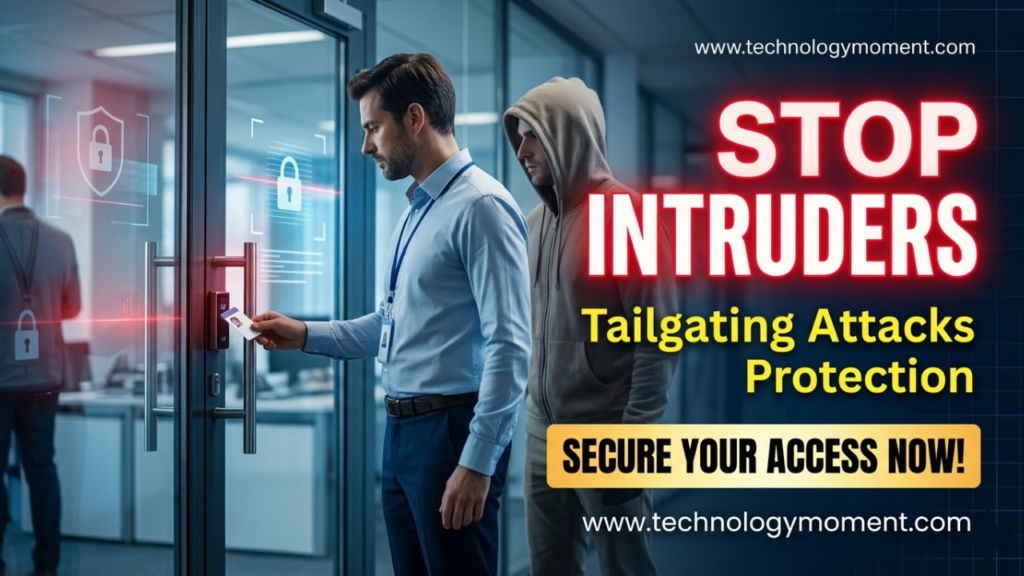
You might think the biggest cyber threats come from hackers sitting far away, but sometimes the real danger is already inside your organization. Insider threats happen when employees, contractors, or partners misuse access to systems and data. This can be intentional, like stealing sensitive data, or accidental, like clicking a harmful link. Both types can cause serious damage, and the worst part is that they are harder to detect because these users already have trusted access.
Let’s break it down in simple terms. A malicious insider acts with intent. They may leak confidential data, sell company secrets, or sabotage systems. On the other hand, a negligent insider doesn’t mean harm but still creates risk. For example, using weak passwords, sharing login details, or falling for phishing emails. These small mistakes can open the door to cybercriminals without anyone noticing.
What makes insider threats more dangerous is the level of access involved. Unlike external hackers, insiders already know the system. They understand where valuable data is stored and how to bypass basic security checks. It’s like giving someone the keys to your house and later realizing they know every corner better than you. This level of familiarity increases the risk of data breaches and financial loss.
To reduce this risk, organizations must focus on employee awareness and access control. Regular training, strong password policies, and limiting access based on roles can make a big difference. Monitoring user activity also helps detect unusual behavior early. In today’s digital world, trusting your team is important, but verifying their actions is even more critical.
Hidden Danger #5: Cloud Security Misconfigurations
Cloud computing has changed how businesses operate. But here’s the catch—if not configured properly, the cloud can become a major security risk. Many organizations rush to adopt cloud services without fully understanding the security settings. This leads to cloud security misconfigurations, which are one of the top causes of data breaches today.
Imagine storing your valuable files in a locker but forgetting to lock it. That’s exactly what happens with misconfigured cloud systems. Common mistakes include leaving storage buckets public, failing to enable encryption, and not setting proper access permissions. These errors make sensitive data visible to anyone on the internet, including cybercriminals actively searching for such gaps.
The scary part is that these issues are often unintentional. Teams may assume the cloud provider handles all security, but that’s not entirely true. Most providers follow a shared responsibility model, where users must secure their own data and configurations. Ignoring this responsibility can expose personal data, financial records, and even business strategies to attackers.
To stay safe, organizations must adopt cloud security best practices. Regular audits, automated monitoring tools, and proper configuration checks are essential. Using multi-factor authentication and limiting user access also adds an extra layer of protection. When handled correctly, the cloud is powerful and secure—but one small mistake can turn it into a major vulnerability.
Hidden Danger #6: Social Engineering Manipulation
Not all cyber attacks rely on advanced technology. Some simply target human emotions. That’s where social engineering attacks come in. Instead of hacking systems, attackers manipulate people into revealing sensitive information. It’s a clever trick, and it works more often than you might think because it plays on trust, fear, and urgency.
It says your account is at risk and asks you to verify your details immediately. Panic kicks in, and without thinking much, you click the link. That’s exactly how attackers win. They create a sense of urgency and pressure you to act fast, bypassing logical thinking.
Social engineering comes in many forms, including phishing, pretexting, baiting, and impersonation scams. These methods are becoming more advanced with the use of AI-driven content and deepfake technology. Attackers can now mimic voices, create realistic messages, and even pose as trusted individuals. This makes it harder to spot fake communications, especially for everyday users.
You need to pause and think before acting. Always verify the source of messages, avoid clicking unknown links, and never share sensitive information without confirmation. Training and regular reminders can help build a strong human firewall.
Hidden Danger #7: Zero-Day Exploits
Zero-day exploits are like hidden traps waiting to be triggered. These attacks target software vulnerabilities that developers don’t even know about yet. Because there’s no fix available at the time of the attack, they are extremely dangerous and difficult to stop. Hackers take advantage of this gap to access systems, steal data, or cause disruption.
The term “zero-day” means developers have had zero days to fix the issue. Imagine driving a car with a hidden fault that no one has detected yet. You wouldn’t know when it might fail. That’s exactly how zero-day vulnerabilities work. They exist quietly until attackers discover and exploit them, often before anyone else notices.
These attacks are commonly used in targeted cyber espionage, government-level hacking, and large-scale cybercrime operations. Once exploited, they can spread quickly across networks, causing massive damage. Businesses, governments, and even individuals can fall victim if they rely on vulnerable software without additional security layers.
To defend against zero-day threats, you need a proactive approach. Regular software updates, advanced threat detection tools, and strong endpoint security can reduce risk. While you can’t predict every unknown vulnerability, you can prepare your system to respond quickly. In the world of cybersecurity, staying alert is not optional—it’s essential.
How to Protect Yourself from Cyber Threats
Protecting yourself from cyber threats is not about being a tech expert. It is about building smart habits. You lock doors, right? The same idea applies here. Start with strong passwords. Use a mix of letters, numbers, and symbols. Do not reuse passwords across accounts. Turn on two-factor authentication whenever possible. Many recent reports show that accounts with two-factor authentication are far less likely to be hacked. Also, keep your software updated. Updates fix hidden bugs that hackers love to exploit.
Now let’s talk about daily behavior. Be careful with emails and links. If something feels odd, it probably is. Phishing attacks are getting smarter with AI tools. They look real and urgent. Pause before clicking. Avoid public Wi-Fi for sensitive work like banking. If you must use it, consider a VPN. It helps protect your data. Also, back up your files often. If ransomware hits, you will not lose everything. Simple actions like these can save you from big problems.
For businesses, the game is even bigger. You need strong security systems and trained employees. Many breaches happen due to human error. So, teach your team about cybersecurity basics. Use firewalls, encryption, and secure cloud settings. Monitor systems regularly. Think of cybersecurity as a continuous process, not a one-time setup. Investing in cybersecurity best practices today can prevent huge losses tomorrow.
Future of Cybersecurity
The future of cybersecurity is both exciting and challenging. At the same time, companies use AI to detect threats faster. It is like a digital cat-and-mouse game. The rise of AI in cybersecurity is one of the biggest trends shaping the future.
Another big shift is the growth of cloud computing and remote work. More people work from home now. This means more devices and networks to protect. Traditional security methods are not enough anymore. That is why concepts like Zero Trust Security are becoming popular. It sounds strict, but it works well in today’s world.
We will also see stronger laws and global cooperation. Governments are taking cybercrime seriously. New rules are being made to protect data and privacy. At the same time, technologies like blockchain may help improve security. It creates transparent and tamper-proof systems. Still, no system is 100% safe. The future will depend on how quickly we adapt. Staying informed and updated will be your biggest advantage.
Conclusion
Cyber threats are no longer hidden in the shadows. They are everywhere, and they are evolving every day. From phishing scams to zero-day attacks, the risks are real. But here is the good news—you are not powerless. Small steps can make a big difference. When you use strong passwords, stay alert online, and keep your systems updated, you reduce your risk a lot.
Think of cybersecurity as a daily habit, not a one-time task. Just like you brush your teeth or lock your door, you need to protect your digital life regularly. The world is becoming more connected, and that is not going to change. So, the smarter move is to adapt and stay prepared. Awareness is your first line of defense.
At the end of the day, cybersecurity is about control. It is about taking charge of your data, your privacy, and your digital future. When you stay informed and cautious, you turn the odds in your favor. And that is exactly how you stay safe in a world full of cyber threats.
FAQs
What are the most common cyber threats today?
The most common cyber threats today include phishing attacks, ransomware, malware, and data breaches. Phishing is especially dangerous because it tricks people into sharing personal information. These threats are growing fast due to advanced technology like AI. Staying aware of these risks helps you avoid them.
Online, how can I safeguard my personal information?
You can protect your personal data by using strong passwords and enabling two-factor authentication. Use trusted apps and websites only. Also, be careful when using public Wi-Fi. These small steps can greatly improve your online security.
Is antivirus software enough for protection?
Antivirus software is helpful, but it is not enough on its own. Cyber threats are more complex now. You need a layered approach. Combine antivirus with firewalls, secure passwords, and safe browsing habits. Think of antivirus as just one part of your defense system. Real protection comes from a mix of tools and smart behavior.
What is a zero-day vulnerability?
A zero-day vulnerability is a security flaw that developers do not know about yet. Hackers can exploit it before it gets fixed. This makes it very dangerous. Since there is no patch available, it is hard to defend against. Regular updates and strong security systems can help reduce the risk. Awareness is key when dealing with such threats.
Why is cybersecurity important for everyone?
Cybersecurity is important because everyone uses digital devices. Your data, money, and identity are all online. If not protected, they can be stolen or misused. Cyber attacks do not only target big companies. Individuals are also easy targets. By following basic cybersecurity tips, you can protect yourself and your digital life.





The identification of these seven common cyber threats underscores the importance of vigilance in today’s digital landscape. Organizations must prioritize cybersecurity awareness and training to defend against potential breaches.
In our interconnected world, understanding the landscape of cyber threats is essential for nurturing a sense of security. By recognizing these seven common threats, we empower ourselves to create a more resilient digital environment.
Just as we seek balance in our daily lives, let us also strive for balance in our digital presence by acknowledging and addressing these prevalent cyber threats. Together, we can create a safer online sanctuary.
As we navigate the complexities of the digital realm, it’s vital to remain aware of the common cyber threats that can disrupt our peace. Embracing knowledge about these challenges allows us to cultivate a proactive mindset towards our online safety.